
Obélisque, style Louis XVI, dans un jardin, 10 rue Cassini, début XIXème siècle — History & Facts
Where does light end, and longing begin? In a world where chaos reigns, the intersection of nature and man-made beauty offers a fragile solace. Begin by noticing the poised obelisk at the center of the composition, its sharp lines slicing through the soft foliage surrounding it. Look to the left, where vibrant greens of the garden sway gently, capturing the sunlight that spills across the canvas like a warm embrace. The artist’s meticulous brushstrokes create a sense of movement, demonstrating the interplay between the grounded structure and the ephemeral flora, inviting contemplation of permanence versus transience. As you explore further, subtle contrasts emerge: the harsh rigidity of the obelisk juxtaposed with the fluidity of the garden’s blossoms reflects an underlying tension between order and chaos.
Each petal, delicately rendered, embodies life’s fleeting nature, while the towering stone structure serves as a somber reminder of human ambition and its ephemeral aspirations. The overall palette blends soft pastels and earthy tones, evoking a peaceful yet poignant atmosphere that resonates with unspoken yearning. Fédor Hoffbauer created this piece in the early 20th century, during a time when Europe was engulfed in turmoil due to the First World War. Living in France, he navigated the complexities of an art world shifting under the weight of modernism.
This period challenged traditional aesthetics and pushed artists to explore the intersection of emotion and form, a testament to Hoffbauer’s ability to capture both beauty and struggle within a single frame.
More Artworks by Fédor Hoffbauer
Browse all →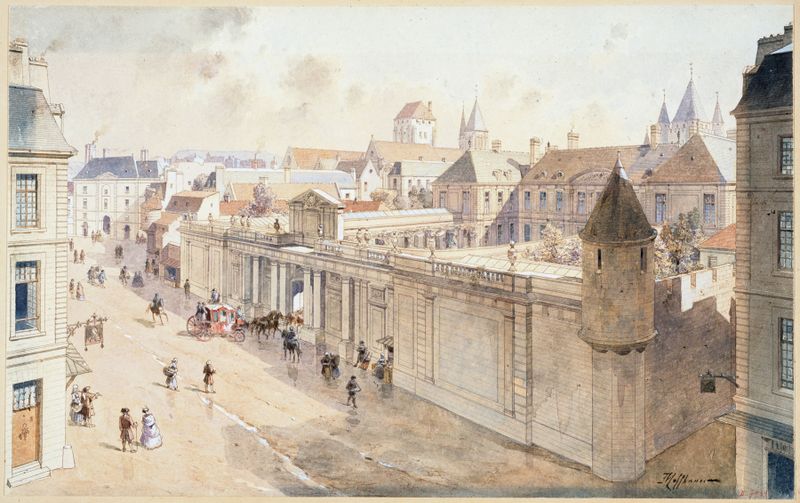
Le palais du Grand Prieur au Temple, en 1770
Fédor Hoffbauer
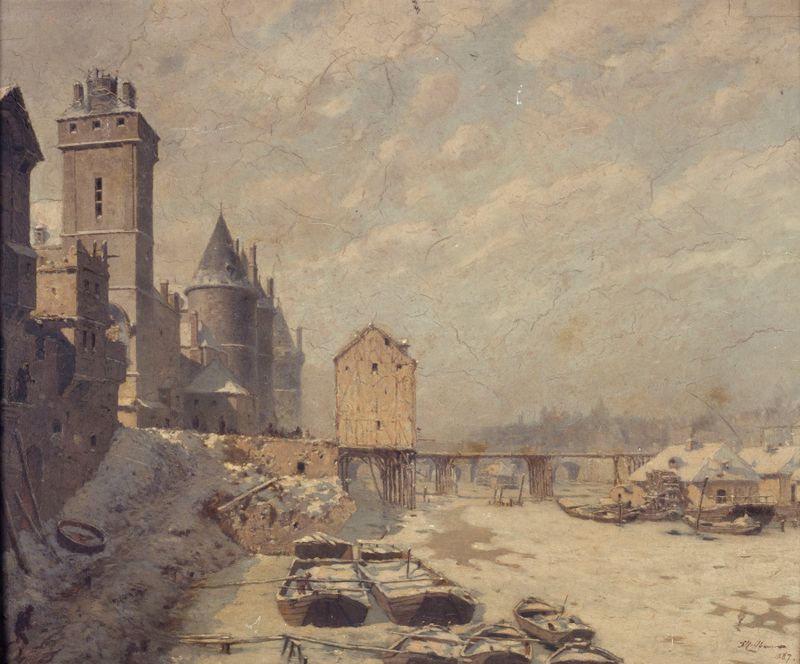
La tour de l’Horloge, la Conciergerie et le pont au Change, en 1621
Fédor Hoffbauer

Banquet des officiers de la marine Russe, dans la salle des fêtes à l’Hôtel de Ville. Fêtes Franco-Russes à Paris
Fédor Hoffbauer

Le Grand Châtelet et le pont de Bois, 1621-1645
Fédor Hoffbauer
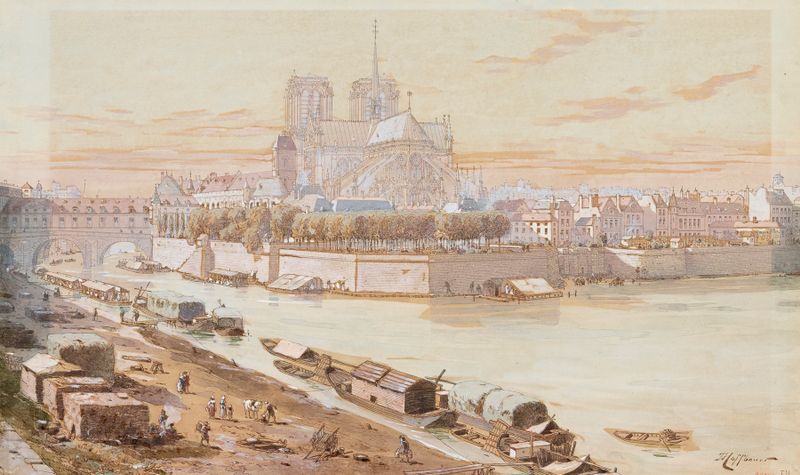
Notre-Dame et l’Evêché en 1750
Fédor Hoffbauer

Vue panoramique de Paris en 1588, depuis les toits du Louvre, avec le Pont-Neuf en construction
Fédor Hoffbauer
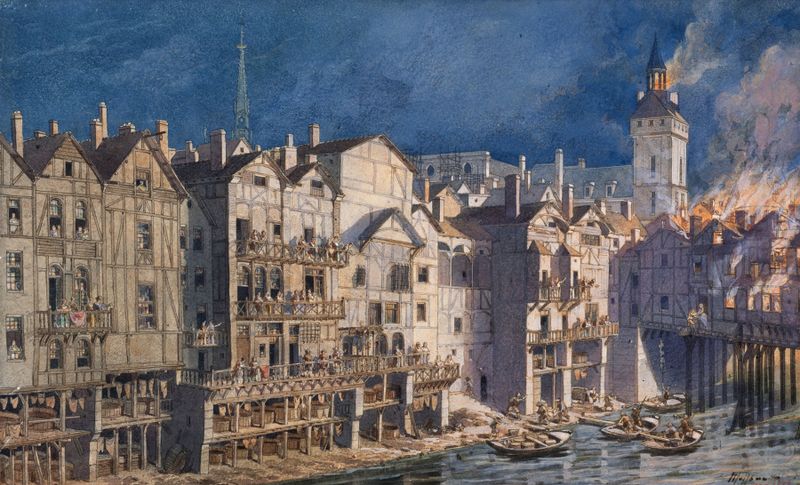
La Cité entre le pont Notre Dame et le pont au Change en 1621
Fédor Hoffbauer

L’Hôtel de Ville et le pont d’Arcole en 1842
Fédor Hoffbauer

Le Cimetière des Innocents en 1750
Fédor Hoffbauer
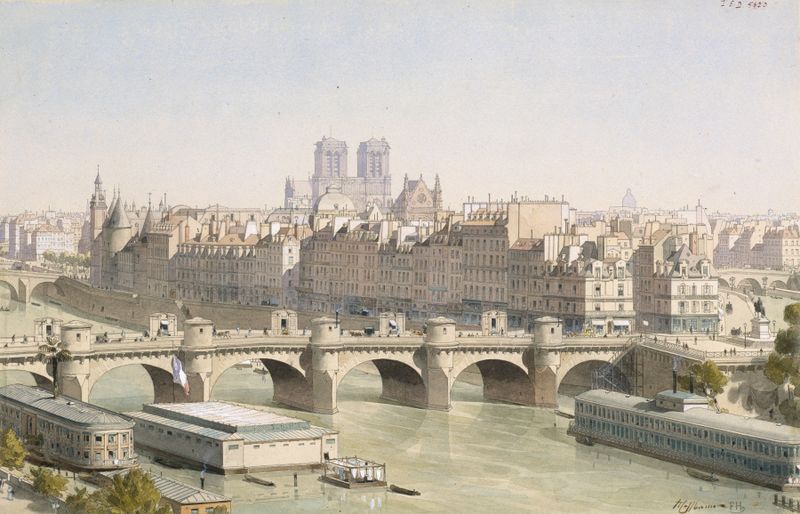
Vue de l’île de la Cité et le pont-Neuf avec ses boutique, vers 1840
Fédor Hoffbauer
More Architecture Art
Browse all →
The statue of Liberty
Frédéric Auguste Bartholdi

View of Houses in Delft, Known as ‘The Little Street’
Johannes Vermeer

View of Houses in Delft, Known as ‘The Little Street’
Johannes Vermeer

The Cathedral in Rouen. The portal, Grey Weather
Claude Monet

The yellow house
Vincent van Gogh

The Church in Auvers-sur-Oise, View from the Chevet
Vincent van Gogh