
"Og dybere bøjede Heksen sig ned over den hvide hals..." — History & Facts
A single, hunched figure bends over a prone body in the half-light, the intimacy of the gesture made all the more unsettling by the shadowy palette and the ambiguous setting. The viewer’s eye is drawn first to the luminous oval of the exposed throat, which glows against the darkness—an invitation or a warning, depending on how closely you read the hunched silhouette above it. The window in the background offers no escape, its panes blurred and opaque, while the heavy curtain of darkness presses in from all sides.
The frame-within-a-frame motif, with its curling, almost organic border, heightens the sense of peering into a forbidden scene, as if the viewer is intruding on a moment that should remain secret. Every brushstroke seems to flicker between tenderness and menace, never allowing the eye to rest. Created in the late nineteenth century, Og dybere bøjede Heksen sig ned over den hvide hals... by August Jerndorff is an illustration for Holger Drachmann’s "Hexen" in the collection "Troldtøj," published in Copenhagen between 1889 and 1890. This was a period when Scandinavian artists and writers were fascinated by folklore, the supernatural, and the psychological undercurrents of myth.
Illustrations like this were commissioned to bring literary works to life, often blurring the line between fine art and popular culture. Now held by the National Museum of Art, Architecture and Design, this piece is a rare survivor of its genre—a reminder that, in the flickering half-light of the imagination, the line between comfort and danger is always thin. Look again at the painting, and see how much is left unsaid.
More Artworks by August Jerndorff

Domorganist i Roskilde, professor Hans Matthison-Hansen,kunstnerens svigerfader
August Jerndorff

Arkitekten Thorvald Bindesbøll i en granskov på Kullen
August Jerndorff
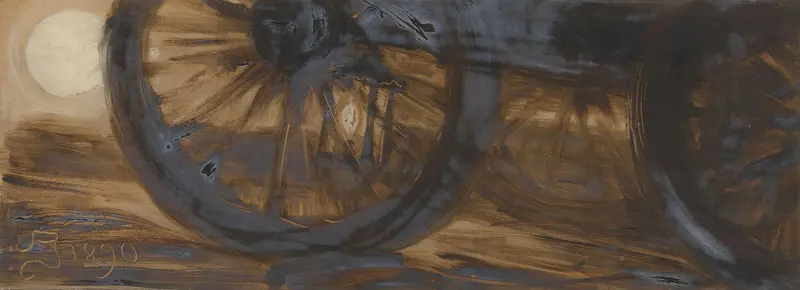
Wohnvognen
August Jerndorff
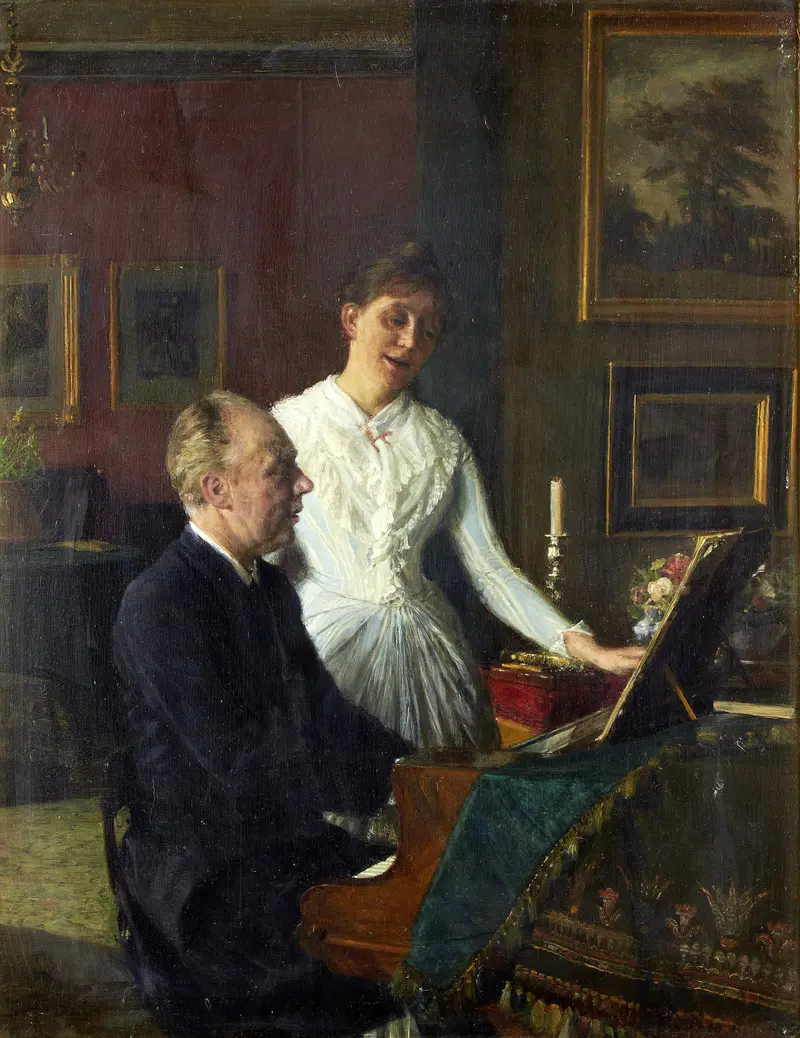
Actor Peter Jerndorff and his wife Amalie at the piano
August Jerndorff
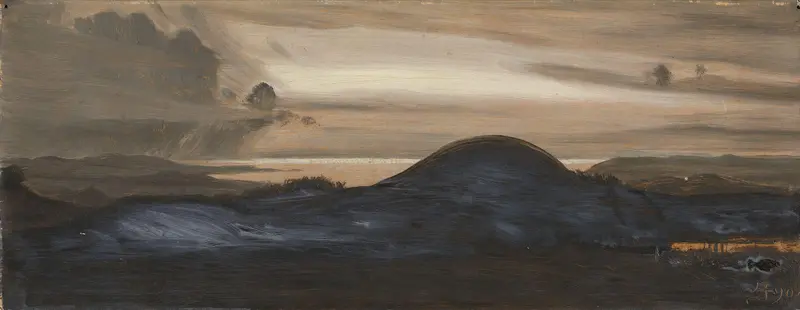
Illustrasjon til Holger Drachmanns "Elverkongen" i "Troldtøj", København 1889-
August Jerndorff
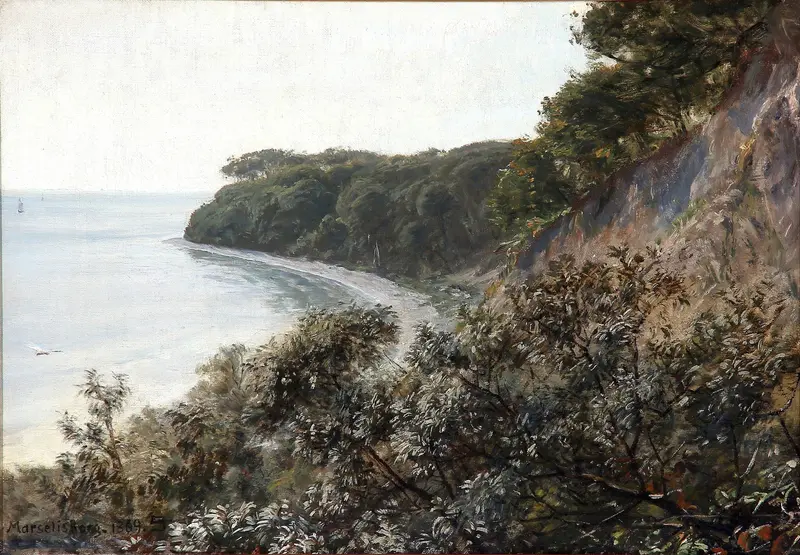
Coastal scene from Marselisborg
August Jerndorff

Huset laa i Byens yderste Udkant, om Sommeren ganske skjult af den tilgroede Have
August Jerndorff
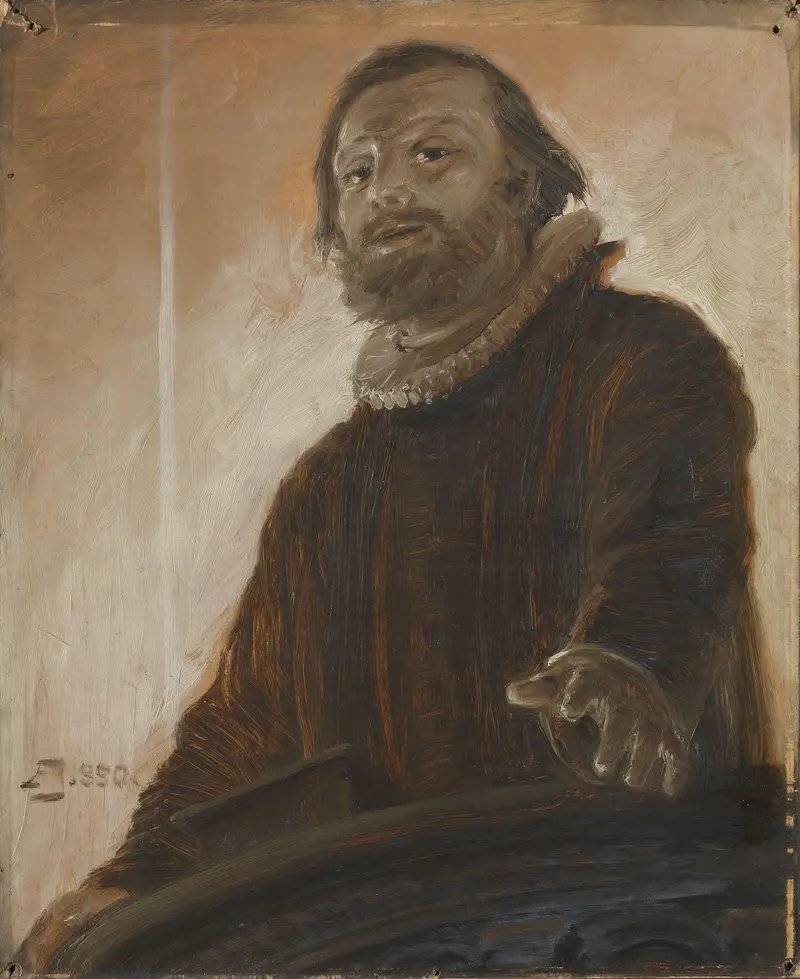
"da saa' jeg op paa ham, han ned paa mig..."
August Jerndorff
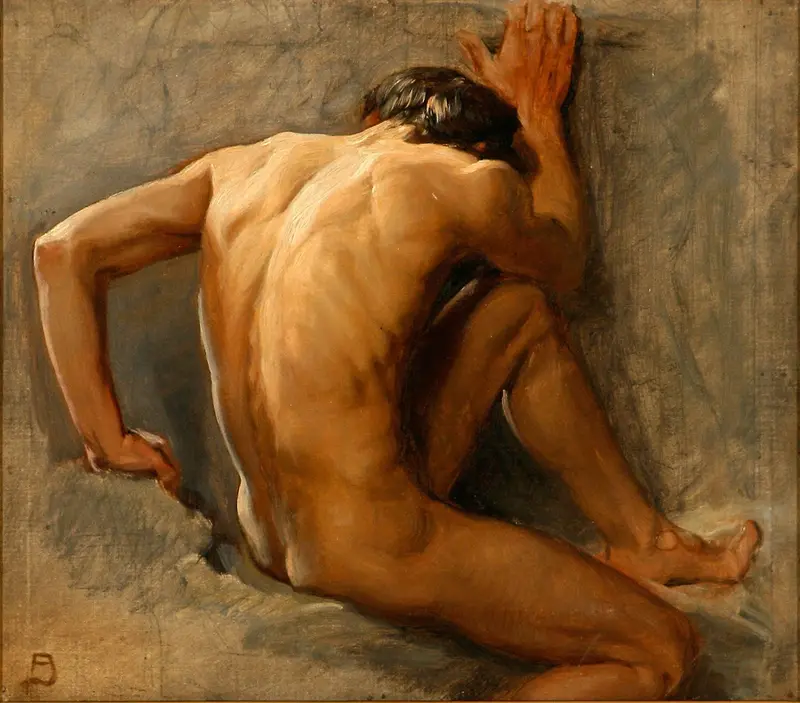
Study of a nude man
August Jerndorff
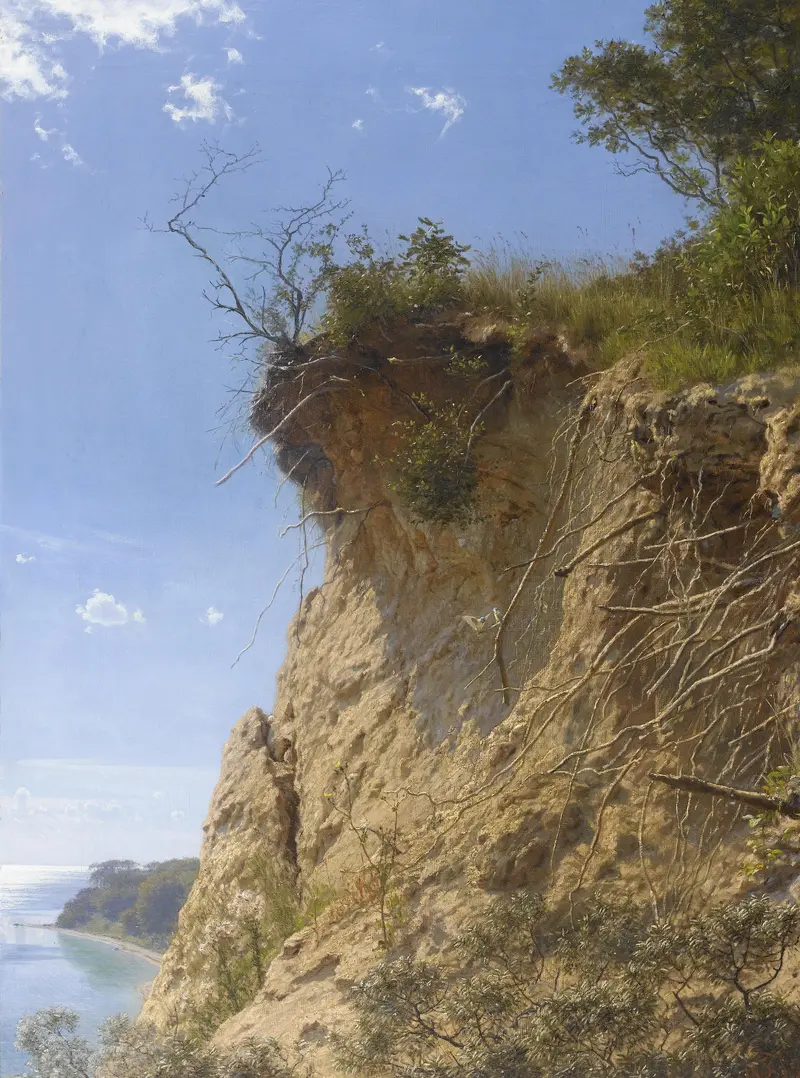
Cliff edge
August Jerndorff





