
Olieverfschets van de Triomfboog voor de Rubensfeesten — History & Facts
When did color learn to lie? In the hands of a master, pigments can dance between truth and illusion, revealing the hidden layers of reality. Look closely at the sweeping arch of the triumphal gate that dominates the canvas. The artist’s brushwork reveals a play of shadow and light, drawing the eye to the delicate, intricate carvings and the ornate details that seem to breathe life. Notice how the warm hues of ochre and gold intermingle with cooler blues, creating a sense of depth that invites you to step into the scene — a portal between celebration and history. Beneath the surface, emotional tensions whisper through the contrasts in the painting.
The grandeur of the arch symbolizes triumph and festivity, yet the shadows lurking around its base suggest an underlying weight of time and memory. Each stroke captures a moment suspended between joy and reflection, a reminder that even in celebration, shadows linger, hinting at stories untold and histories lived. In 1840, Ferdinand de Braekeleer created this work against a backdrop of vibrant cultural exchange in Belgium, where the Rubensfeesten were a significant artistic event celebrating the legacy of the great Baroque painter. At this time, de Braekeleer was gaining recognition for his skillful renderings and historical themes, as the art world began to embrace a blend of realism and romanticism, reflecting a society in search of both identity and expression.
More Artworks by Ferdinand de Braekeleer
Browse all →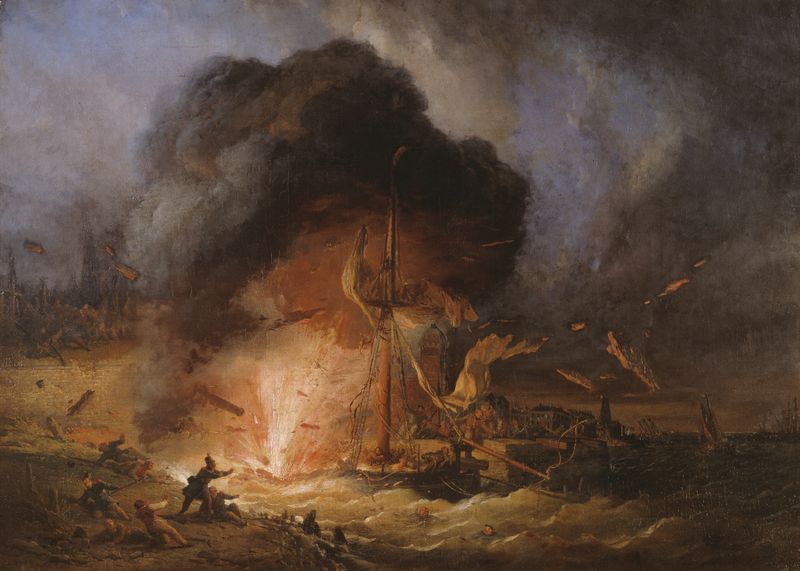
‘Kanonneerboot nr. 2’ ontploft te Antwerpen
Ferdinand de Braekeleer
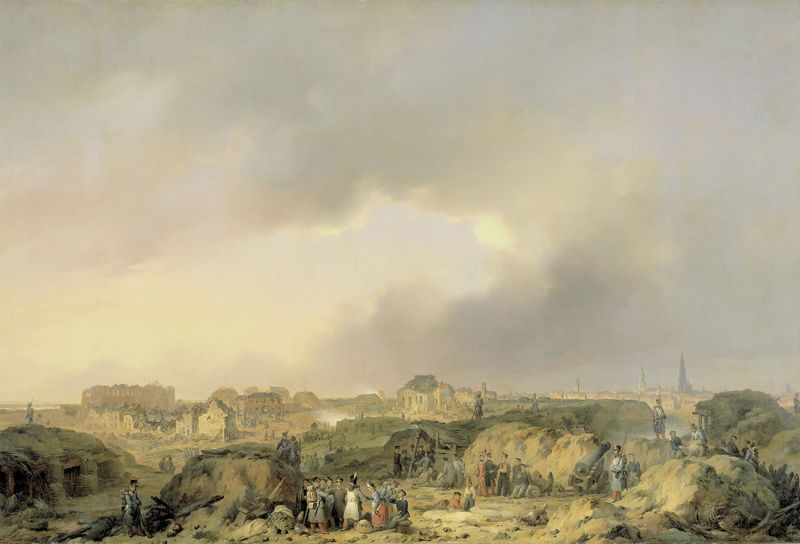
The Citadel of Antwerp shortly after the Siege of 19 November-23 December 1832, and the Surrender of the Dutch Garisson to the French
Ferdinand de Braekeleer
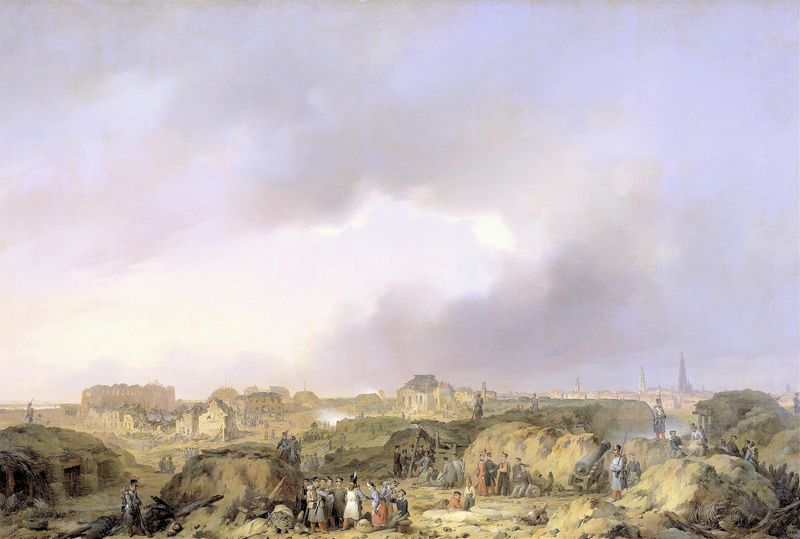
The Citadel of Antwerp shortly after the Siege of 19 November-23 December 1832, and the Surrender of the Dutch Garisson to the French
Ferdinand de Braekeleer
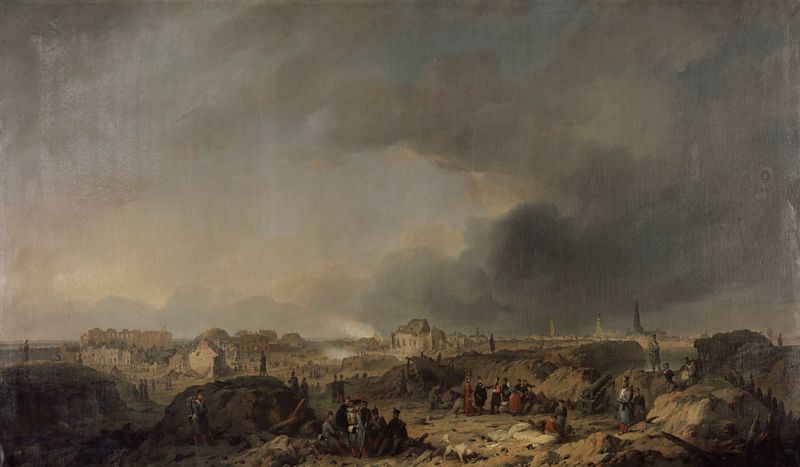
The Antwerp Castle after the Bombardement in 1832
Ferdinand de Braekeleer
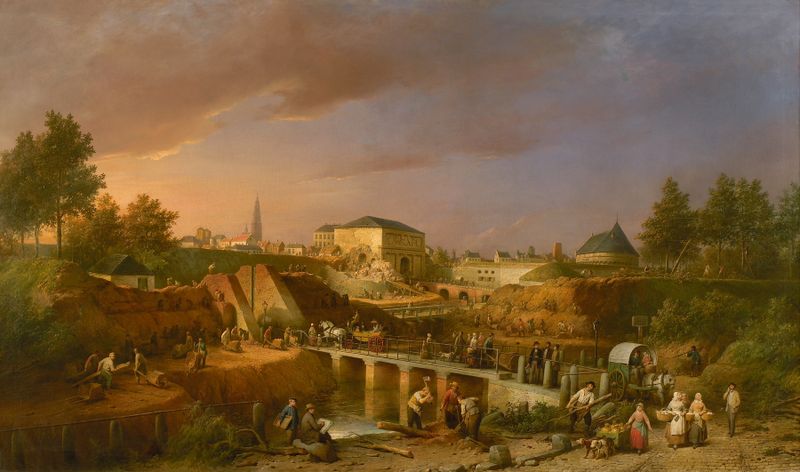
Afbraak van de St.-Jorispoort in 1866
Ferdinand de Braekeleer
More Architecture Art
Browse all →
The statue of Liberty
Frédéric Auguste Bartholdi

View of Houses in Delft, Known as ‘The Little Street’
Johannes Vermeer

View of Houses in Delft, Known as ‘The Little Street’
Johannes Vermeer

The Cathedral in Rouen. The portal, Grey Weather
Claude Monet

The yellow house
Vincent van Gogh

The Church in Auvers-sur-Oise, View from the Chevet
Vincent van Gogh