
The Citadel of Antwerp shortly after the Siege of 19 November-23 December 1832, and the Surrender of the Dutch Garisson to the French — History & Facts
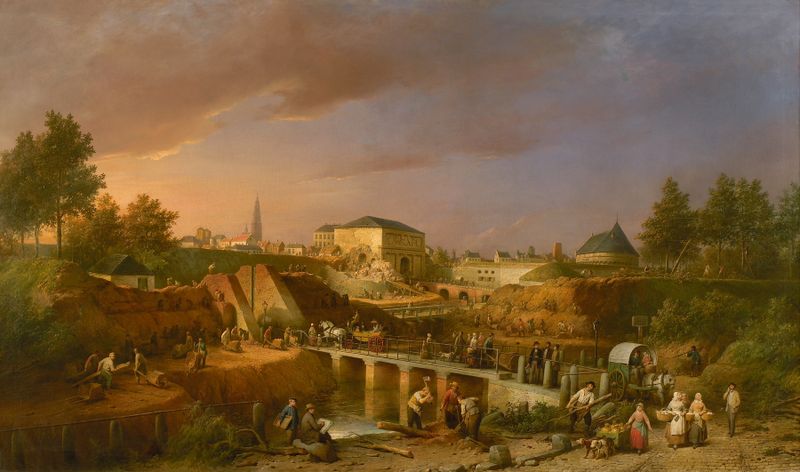
Can beauty exist without sorrow? In The Citadel of Antwerp shortly after the Siege of 19 November-23 December 1832, and the Surrender of the Dutch Garrison to the French, the artist captures the delicate balance between devastation and resilience. Look to the foreground, where the remnants of the siege are stark against a bruised sky. The devastation is palpable; crumbled walls and scattered debris create a somber landscape. Notice how the muted colors of gray and brown dominate, yet hints of light filter through, illuminating patches of hope.
The meticulous detailing in the architecture, particularly the crumbling stones, reveals the artist’s reverence for history, while the composition draws the viewer’s eye to the surrendering figures, both a symbol of defeat and a testament to endurance. As you delve deeper, consider the emotional tension between the opposing forces. The surrendering garrison represents vulnerability, contrasted sharply with the looming structure of the citadel that stands resilient. This duality speaks volumes about the aftermath of conflict, intertwining despair with the inevitability of new beginnings.
The delicate interplay of light and shadow emphasizes the lingering scars of war while inviting contemplation on the passage of time. Ferdinand de Braekeleer painted this work during a period marked by socio-political upheaval in Belgium, shortly after the tumultuous siege of the citadel. In the 1830s, as tensions between the Dutch and French escalated, the artist sought to document the poignant moment of surrender. This historical context adds depth to the painting, linking personal expression with the broader narrative of a nation in transition.
More Artworks by Ferdinand de Braekeleer
Browse all →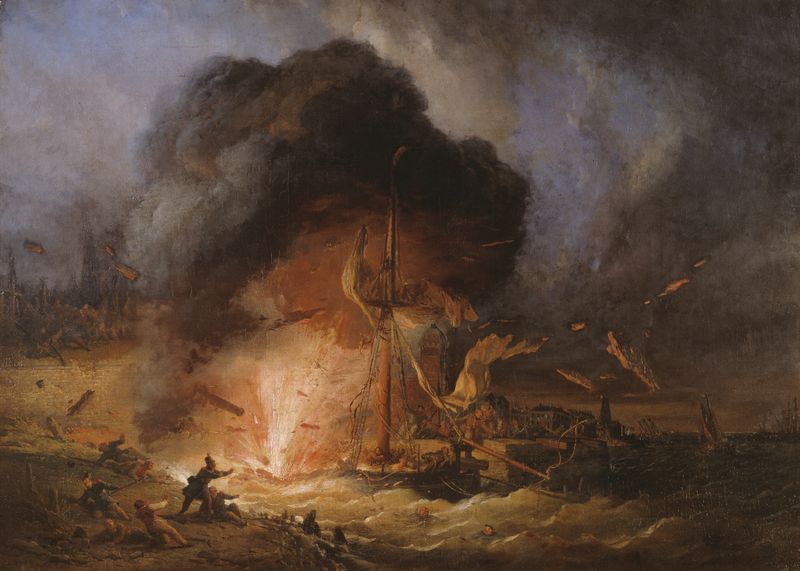
‘Kanonneerboot nr. 2’ ontploft te Antwerpen
Ferdinand de Braekeleer
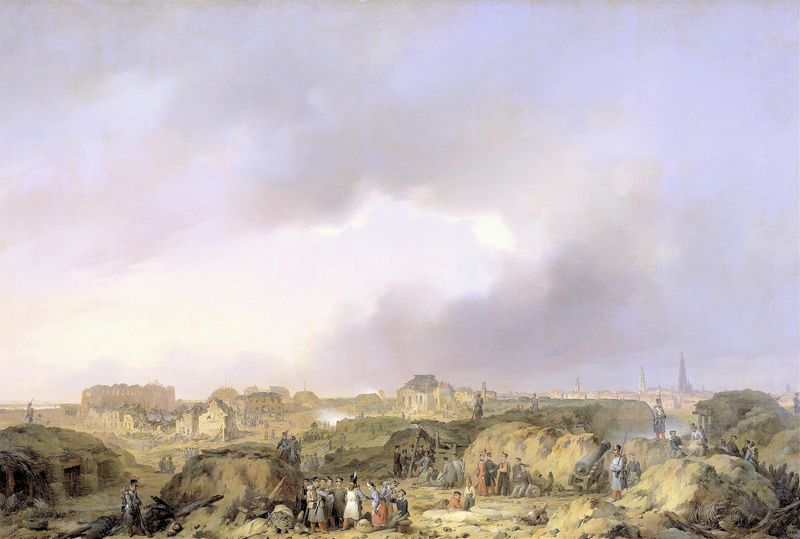
The Citadel of Antwerp shortly after the Siege of 19 November-23 December 1832, and the Surrender of the Dutch Garisson to the French
Ferdinand de Braekeleer
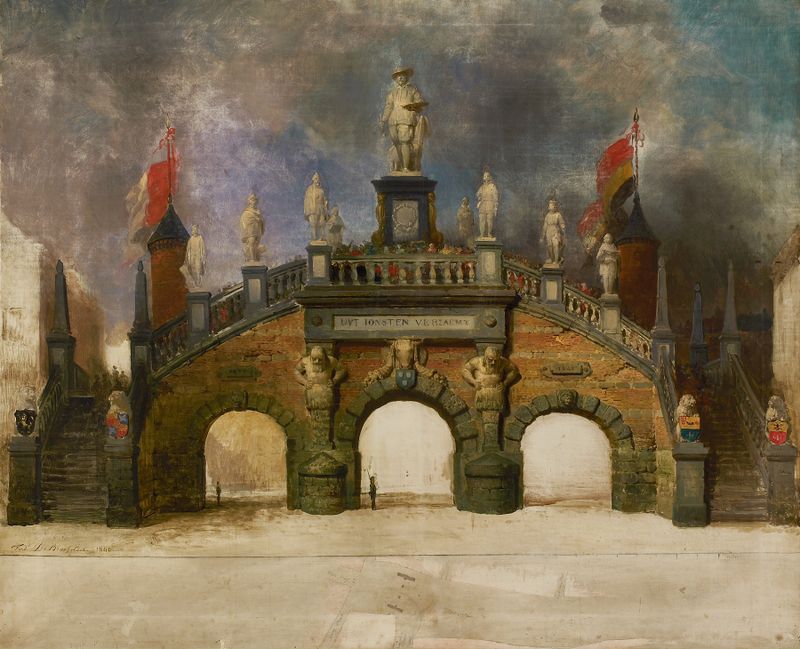
Olieverfschets van de Triomfboog voor de Rubensfeesten
Ferdinand de Braekeleer
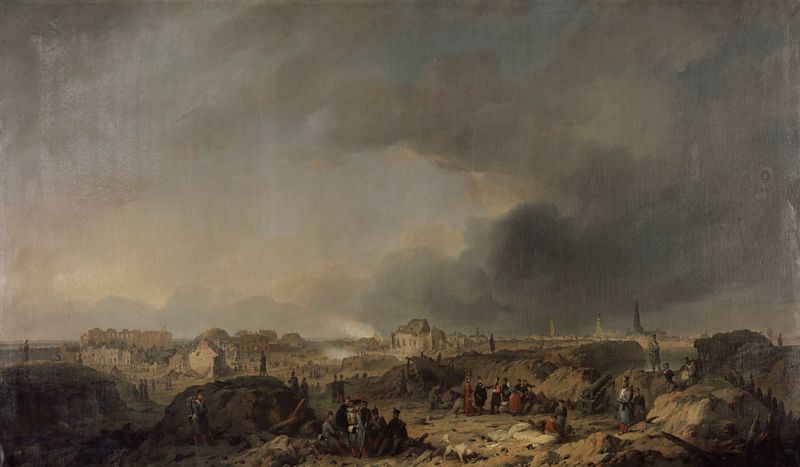
The Antwerp Castle after the Bombardement in 1832
Ferdinand de Braekeleer
Afbraak van de St.-Jorispoort in 1866
Ferdinand de Braekeleer
More Historical Art
Browse all →
The Night Watch Militia Company of District II under the Command of Captain Frans Banninck Cocq
Rembrandt van Rijn

Lincoln Memorial
Henry Bacon

The Third of May 1808
Francisco de Goya

Isaac and Rebecca, Known as ‘The Jewish Bride’
Rembrandt van Rijn

The Charge of the Mamelukes (1814)
Francisco de Goya

De vier ruiters van de apocalyps
Albrecht Dürer