
‘Kanonneerboot nr. 2’ ontploft te Antwerpen — History & Facts
In the delicate interplay of memory and reality, art becomes a vessel for truth—capturing moments that slip through our fingers like sand. Look closely at the chaotic composition of the canvas; the eye is immediately drawn to the intense explosion at the center, where fiery oranges and yellows clash against the cooler hues of the surrounding cityscape. The dramatic use of light reveals the stark contrast between destruction and the serene architecture of Antwerp’s skyline, emphasizing the fragility of human achievement. Notice how the brushwork captures the tumultuous energy of the moment, with jagged strokes conveying both horror and awe. Amidst the chaos, there are whispers of resilience: the figures in the foreground, though silhouetted against the blaze, exhibit a spectrum of emotions—fear, curiosity, and unity in tragedy.
The smoke billowing upward serves as a poignant reminder of the ephemeral nature of both life and art. This duality encapsulates the tension between destruction and creation, forcing us to grapple with the truths we often ignore in our pursuit of beauty. Ferdinand de Braekeleer painted this work during a period characterized by rapid industrialization and social change. While the exact date remains uncertain, it is suggested to have been created in the mid-19th century, reflecting the artist's response to the world around him.
At this time, the art community was shifting towards realism, focusing on depicting everyday life and monumental events, a trend that would deeply influence his approach to capturing the complexities of modern existence.
More Artworks by Ferdinand de Braekeleer
Browse all →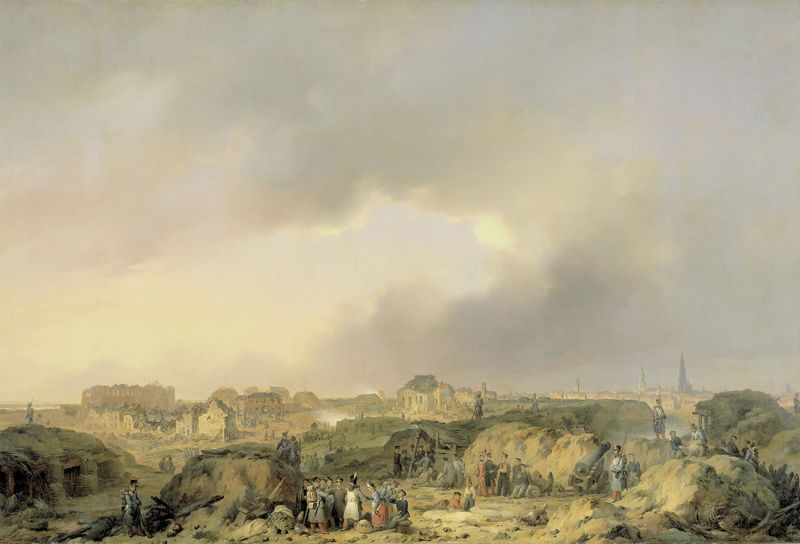
The Citadel of Antwerp shortly after the Siege of 19 November-23 December 1832, and the Surrender of the Dutch Garisson to the French
Ferdinand de Braekeleer
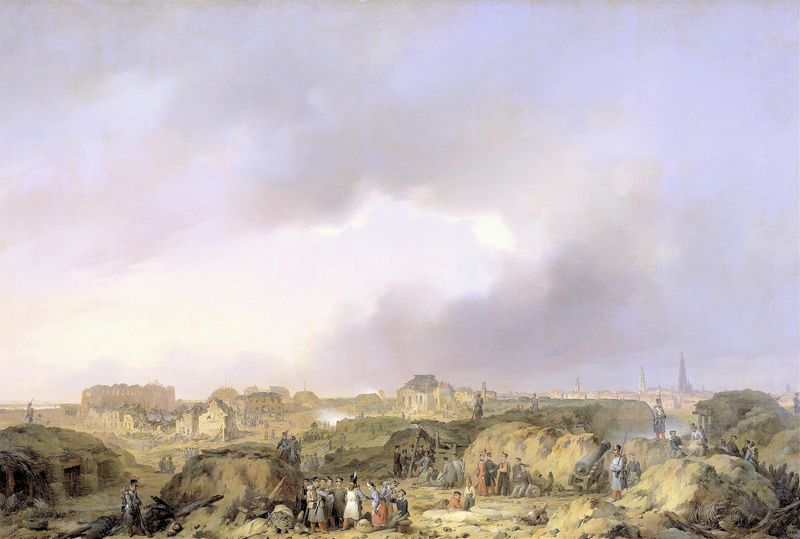
The Citadel of Antwerp shortly after the Siege of 19 November-23 December 1832, and the Surrender of the Dutch Garisson to the French
Ferdinand de Braekeleer
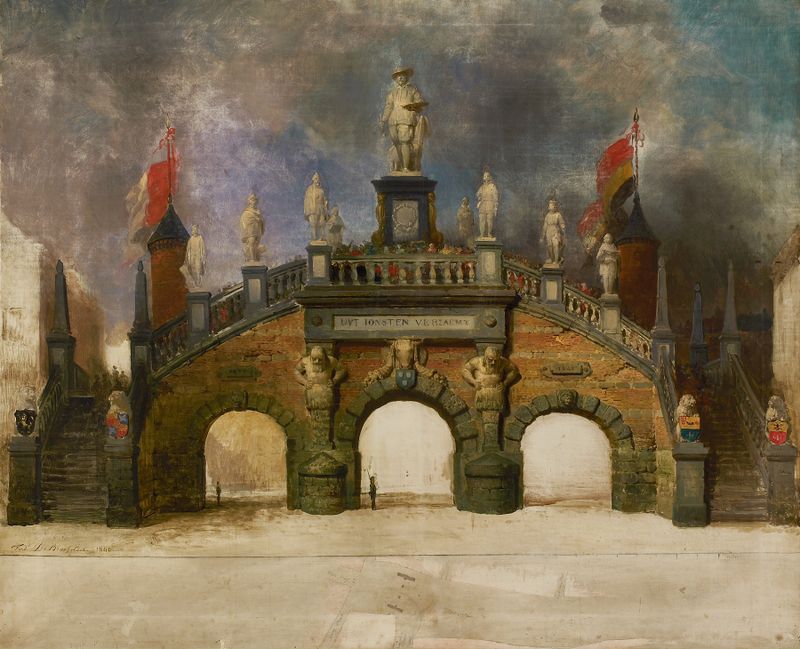
Olieverfschets van de Triomfboog voor de Rubensfeesten
Ferdinand de Braekeleer
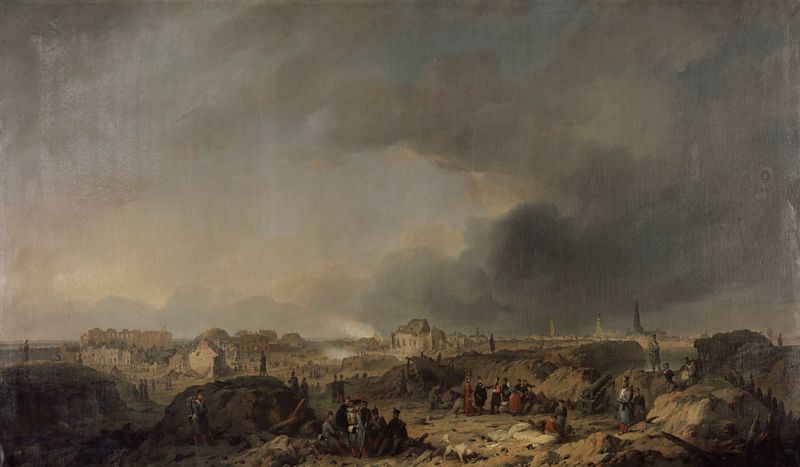
The Antwerp Castle after the Bombardement in 1832
Ferdinand de Braekeleer
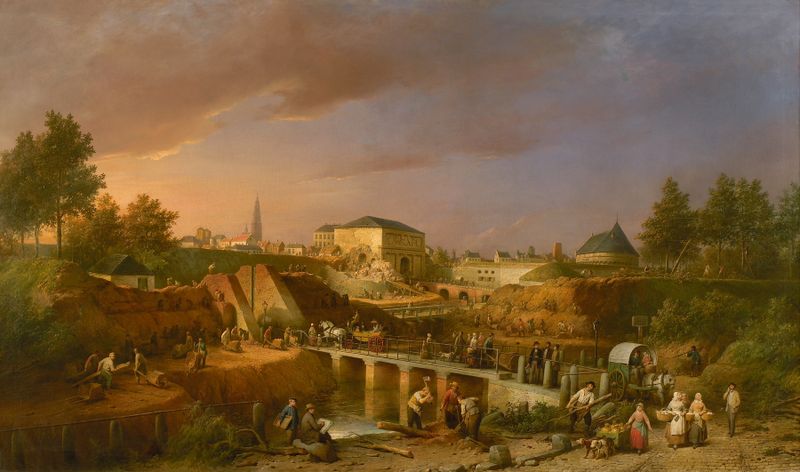
Afbraak van de St.-Jorispoort in 1866
Ferdinand de Braekeleer
More Historical Art
Browse all →
The Night Watch Militia Company of District II under the Command of Captain Frans Banninck Cocq
Rembrandt van Rijn

Lincoln Memorial
Henry Bacon

The Third of May 1808
Francisco de Goya

Isaac and Rebecca, Known as ‘The Jewish Bride’
Rembrandt van Rijn

The Charge of the Mamelukes (1814)
Francisco de Goya

De vier ruiters van de apocalyps
Albrecht Dürer