
The Citadel of Antwerp shortly after the Siege of 19 November-23 December 1832, and the Surrender of the Dutch Garisson to the French — History & Facts
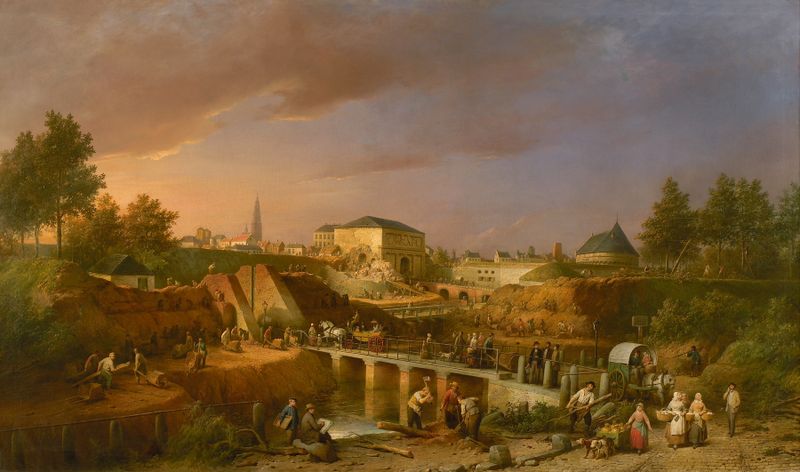
Did the painter know this moment would outlive them? In The Citadel of Antwerp shortly after the Siege of 19 November-23 December 1832, and the Surrender of the Dutch Garrison to the French, a vivid narrative unfolds — one of loss, triumph, and the haunting echoes of conflict. The painting captures a critical juncture in history, blending the personal and the monumental with a captivating sense of obsession hanging in the air. Focus on the foreground where soldiers, weary and resigned, stand in defiance of their fate. Notice how the muted colors of their uniforms contrast sharply with the gray, ominous sky overhead, suggesting an impending storm both in the weather and in their lives.
Look to the jagged outlines of the citadel, its weathered stone depicting years of wear and violence, while rays of fading sunlight illuminate the remnants of battle, emphasizing the gravity of surrender. The emotional tension is palpable, as the interplay between light and shadow creates a stark reminder of the duality of victory and defeat. There’s an unsettling stillness in the faces of the soldiers, revealing their internal struggles, torn between duty and despair. The distant figures engaged in negotiations highlight the fragility of power, while the artist’s meticulous detail immerses the viewer in the somber atmosphere of a moment where everything hangs in balance, echoing the obsessive nature of history itself. Ferdinand de Braekeleer painted this work between 1832 and 1839, shortly after the siege that marked the transition of power in Antwerp.
At this time, the artist was influenced by the Romantic movement, which emphasized emotional depth and the human experience. This painting serves as both a historical document and a personal reflection of de Braekeleer’s own fascination with the complexities of war and its lasting impact on collective memory.
More Artworks by Ferdinand de Braekeleer
Browse all →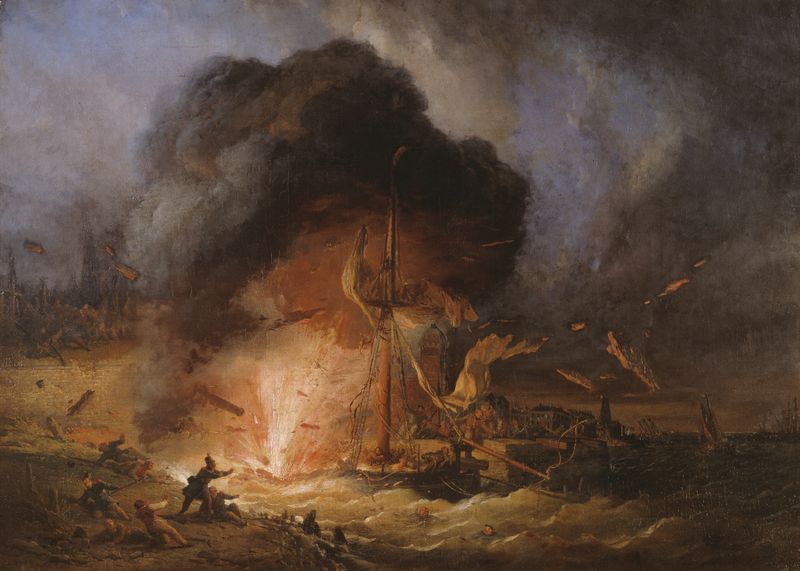
‘Kanonneerboot nr. 2’ ontploft te Antwerpen
Ferdinand de Braekeleer
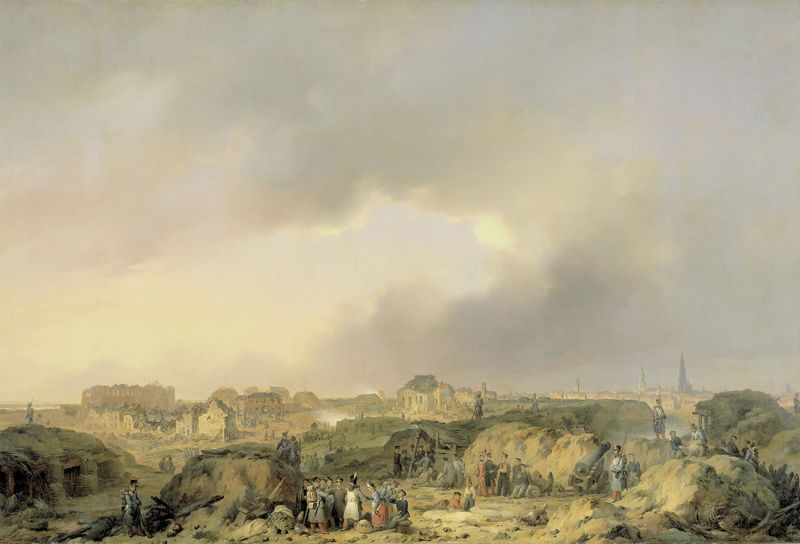
The Citadel of Antwerp shortly after the Siege of 19 November-23 December 1832, and the Surrender of the Dutch Garisson to the French
Ferdinand de Braekeleer
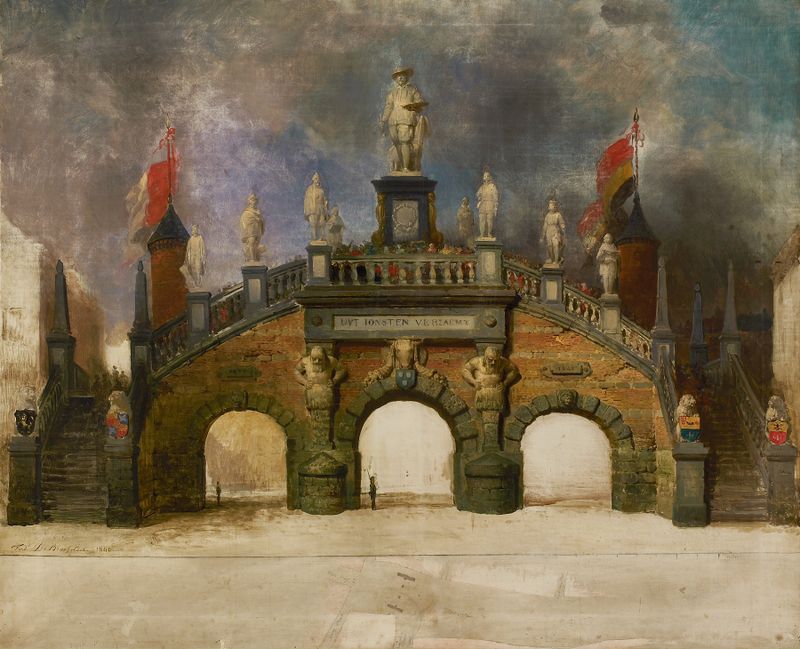
Olieverfschets van de Triomfboog voor de Rubensfeesten
Ferdinand de Braekeleer
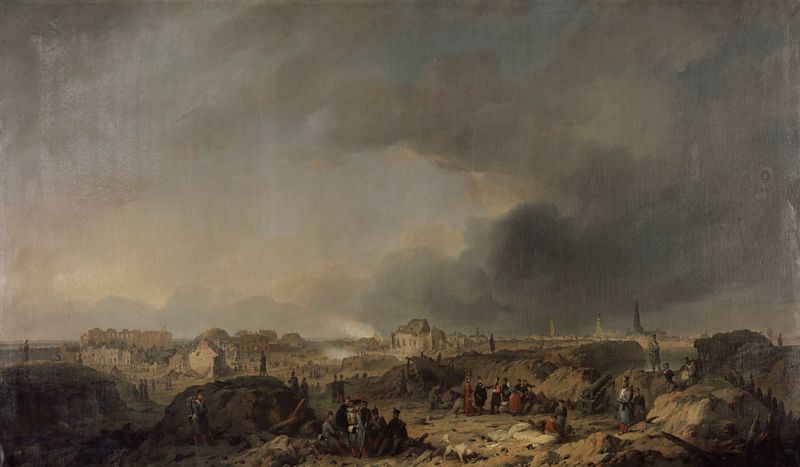
The Antwerp Castle after the Bombardement in 1832
Ferdinand de Braekeleer
Afbraak van de St.-Jorispoort in 1866
Ferdinand de Braekeleer
More Historical Art
Browse all →
The Night Watch Militia Company of District II under the Command of Captain Frans Banninck Cocq
Rembrandt van Rijn

Lincoln Memorial
Henry Bacon

The Third of May 1808
Francisco de Goya

Isaac and Rebecca, Known as ‘The Jewish Bride’
Rembrandt van Rijn

The Charge of the Mamelukes (1814)
Francisco de Goya

De vier ruiters van de apocalyps
Albrecht Dürer