
The Antwerp Castle after the Bombardement in 1832 — History & Facts
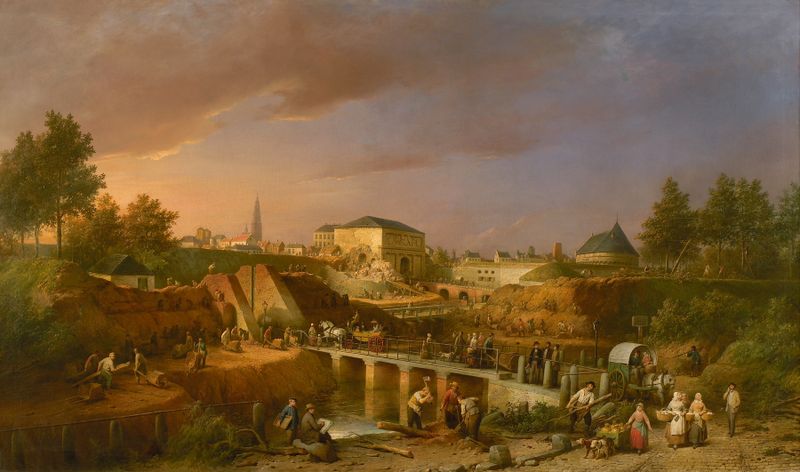
In the stillness of devastation, an echo of loneliness resonates from forgotten ruins, inviting introspection and reflection. Look to the foreground where the remnants of the once-majestic Antwerp Castle stand in stark relief against a muted sky. The crumbling stones are painted with a melancholic palette, intermingling somber grays and faint earth tones, capturing the aftermath of destruction. Notice how the artist's brushstrokes convey both the physical weight of the stone and the emotional burden of loss, drawing the viewer's eye along the jagged edges towards the distant horizon. This scene is more than mere architecture; it is a poignant reminder of the fragility of human endeavors.
The absence of life reinforces a haunting solitude, where the desolation of the castle reflects the scars of conflict. Shadows seep into the crevices of the structure, symbolizing the lingering fears of a community shattered by war, contrasting sharply with the faint light that struggles to illuminate the scene. Ferdinand de Braekeleer painted this piece during a turbulent period in the early 19th century, likely after the bombardment of Antwerp in 1832. At this time, the artist was navigating the evolving landscape of Romanticism, where themes of destruction and nostalgia were prevalent.
The painting captures not only a moment in history but also the artist's personal grappling with the tumultuous changes around him, embodying a shared sense of sorrow that permeated the art world.
More Artworks by Ferdinand de Braekeleer
Browse all →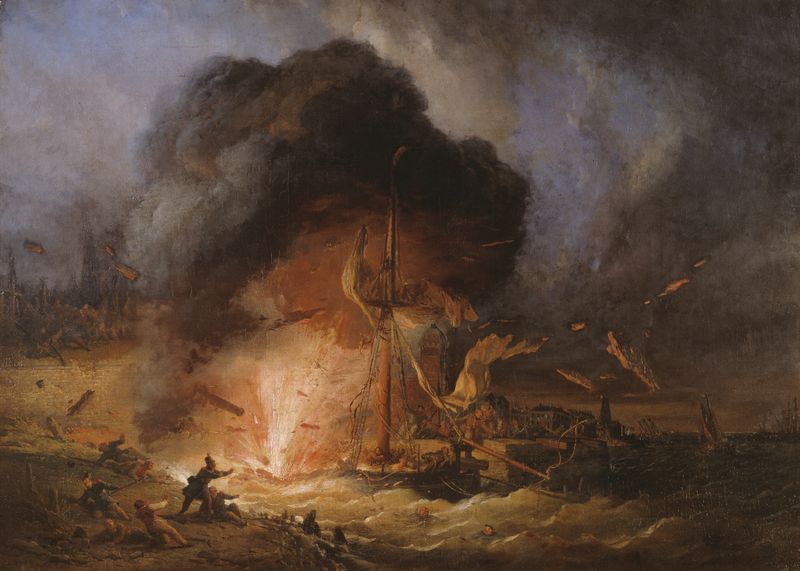
‘Kanonneerboot nr. 2’ ontploft te Antwerpen
Ferdinand de Braekeleer
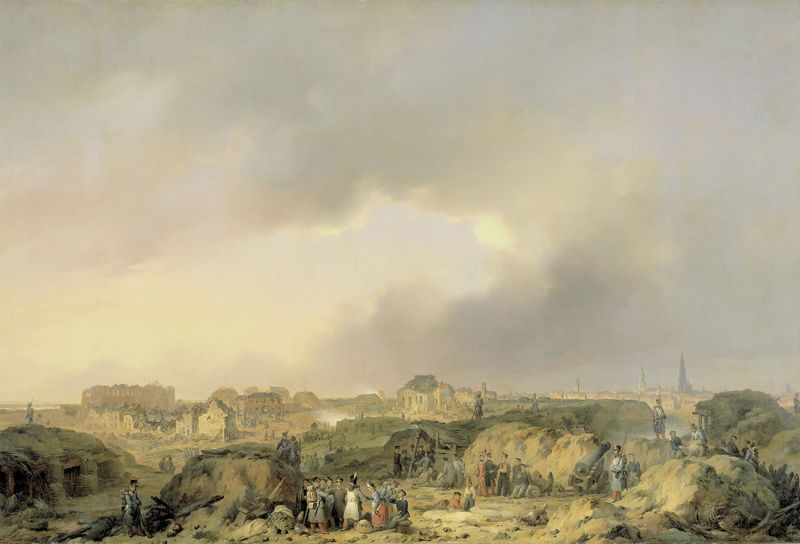
The Citadel of Antwerp shortly after the Siege of 19 November-23 December 1832, and the Surrender of the Dutch Garisson to the French
Ferdinand de Braekeleer
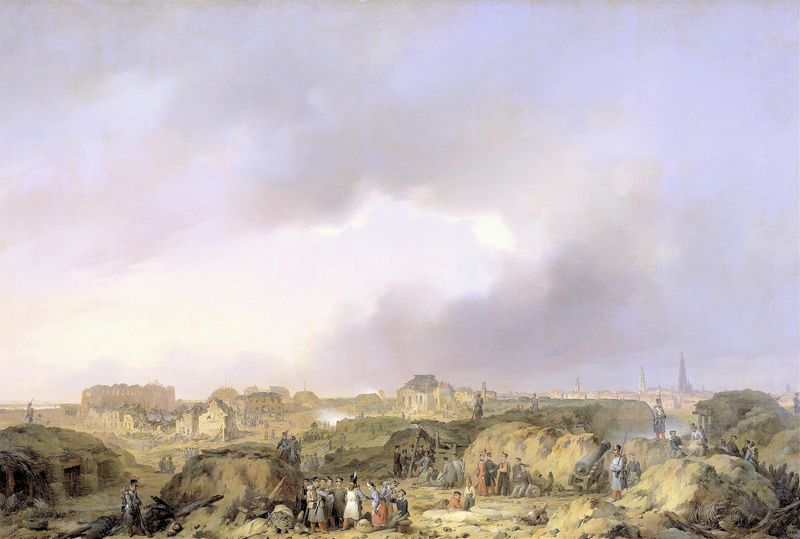
The Citadel of Antwerp shortly after the Siege of 19 November-23 December 1832, and the Surrender of the Dutch Garisson to the French
Ferdinand de Braekeleer
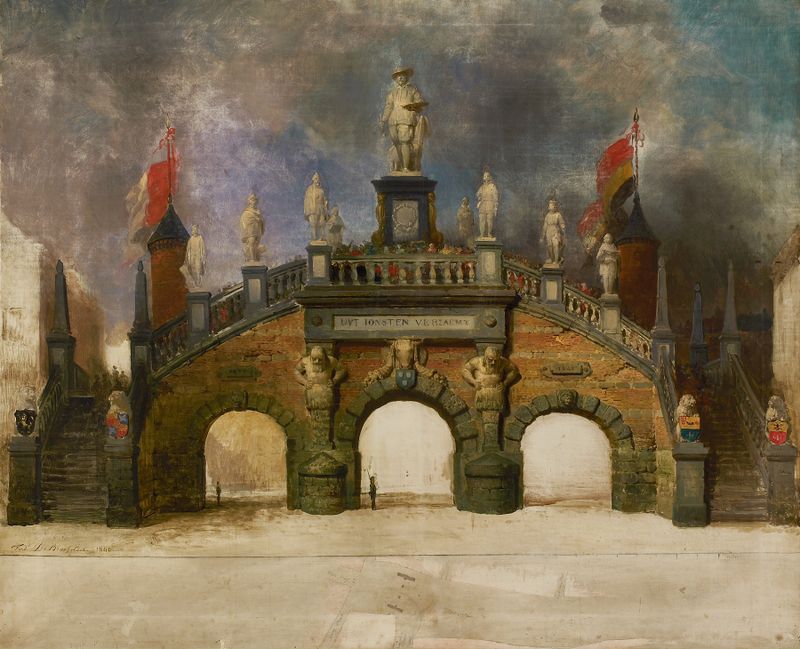
Olieverfschets van de Triomfboog voor de Rubensfeesten
Ferdinand de Braekeleer
Afbraak van de St.-Jorispoort in 1866
Ferdinand de Braekeleer





