
Omuro fukin — History & Facts
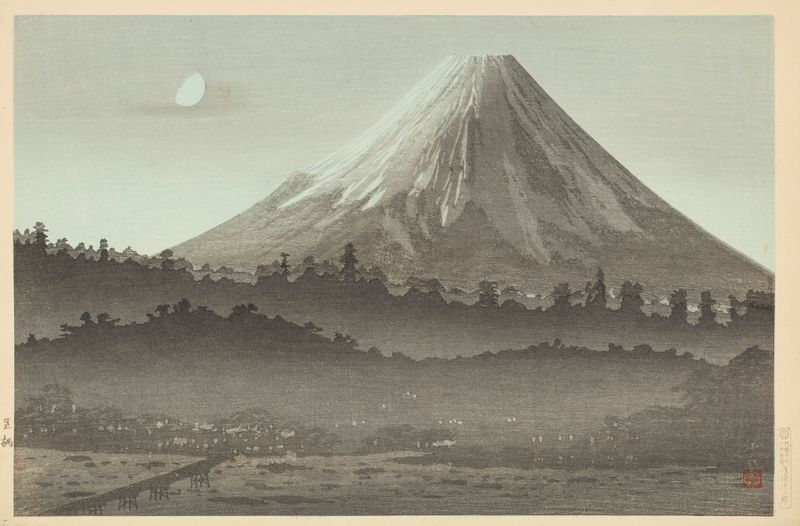
In a world awash with color, Takahashi Hiroaki’s work invites you into a vivid spectrum where each hue breathes life into the canvas. Look closely at the swirling patterns that dance across the surface, drawing your gaze towards the center where vibrant reds and deep blues collide. Notice how the delicate brushwork creates a rhythmic flow, echoing the movement of nature itself. The interplay of light and shadow reveals layers of nuance, encouraging viewers to linger and explore the depths of the nearly abstract forms.
Each stroke is not just a mark; it’s a pulse, a whisper of emotion rendered in paint. Delve deeper into the contrasting elements present within the piece. The juxtaposition of bold colors against softer pastels evokes a sense of tension and harmony, reflecting the dichotomy of chaos and tranquility inherent in life. Hidden motifs, perhaps inspired by the landscape of Omuro, emerge from the background, suggesting a deeper connection to place and memory.
These subtle details resonate with stories untold, inviting personal interpretation and reflection. Takahashi Hiroaki created this piece near Omuro in the early 20th century, a time when traditional Japanese art was evolving amidst the influence of Western styles. Hiroaki, a master of color woodblock prints, sought to capture the essence of fleeting beauty through his art, striving to preserve the transient moments of nature. His work during this period reflects both a respect for historical techniques and an exploration of modern expression, positioning him as a pivotal figure in the transition of Japanese art.
More Artworks by Takahashi Hiroaki
Browse all →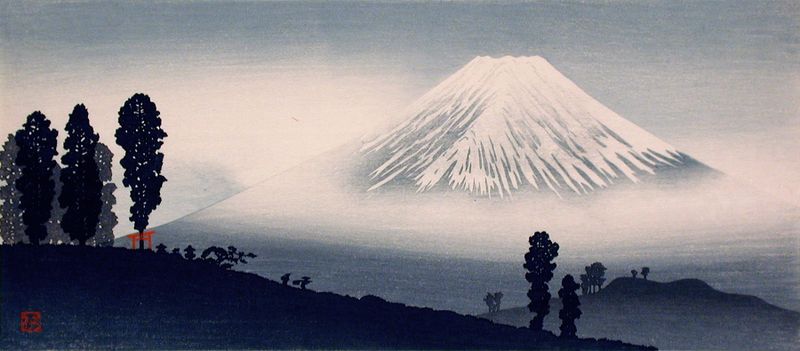
Mount Fuji
Takahashi Hiroaki

Mount Fuji seen near Tamaho, Dawn
Takahashi Hiroaki
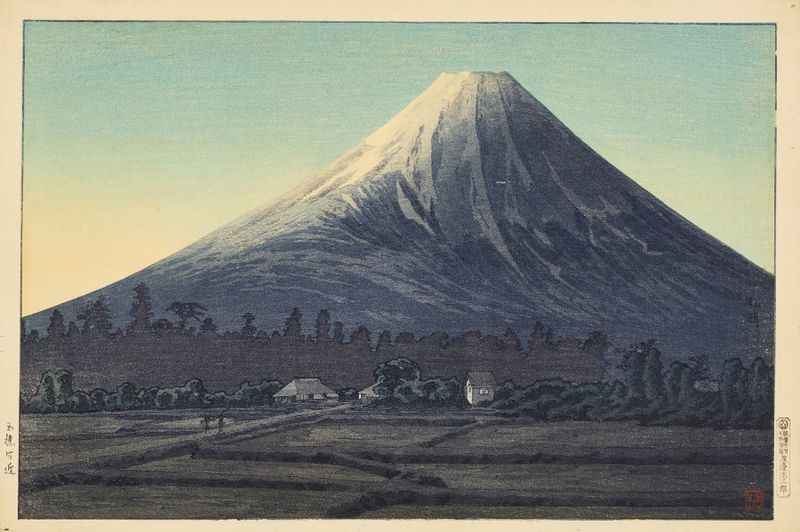
Mount Fuji seen near Tamaho, day
Takahashi Hiroaki
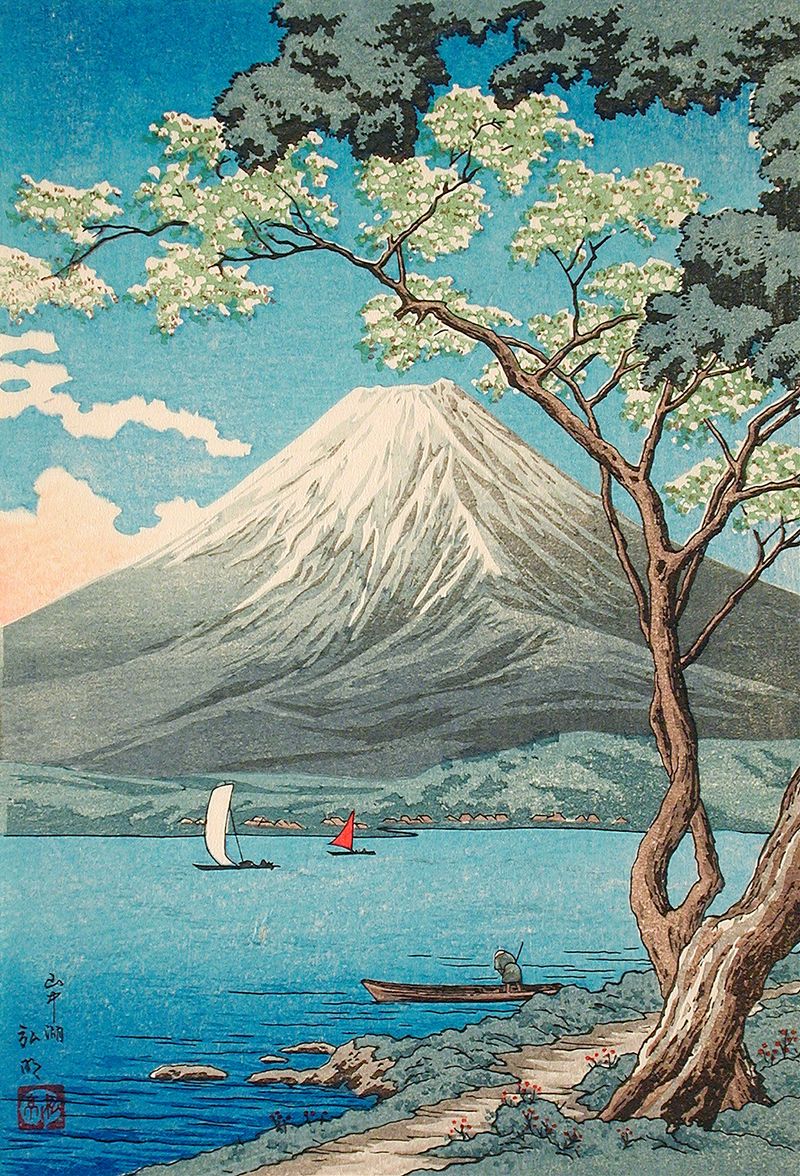
Mount Fuji from Lake Yamanaka
Takahashi Hiroaki

Mt. Fuji from Tagonoura, Snow Scene
Takahashi Hiroaki

Egoda no tsuki
Takahashi Hiroaki
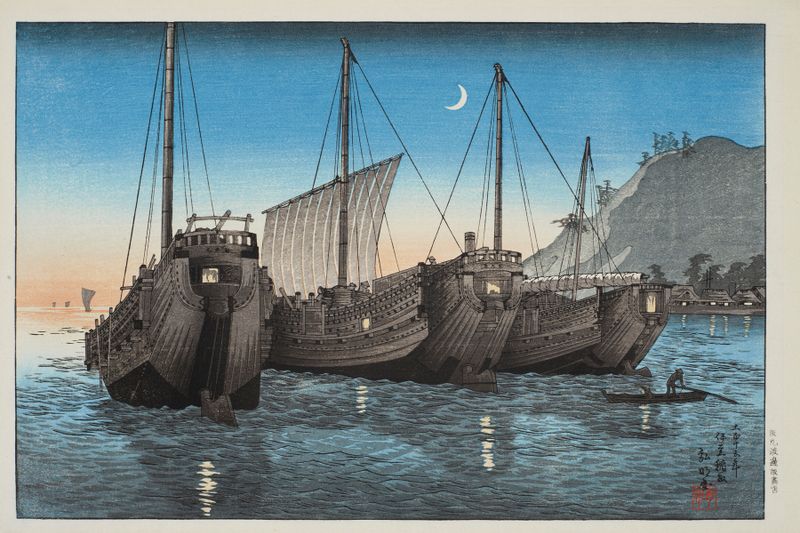
Junks in Inatori Bay, Izu
Takahashi Hiroaki

Izumibashi no ame
Takahashi Hiroaki
Mount Fuji seen near Tamaho, Night
Takahashi Hiroaki

Fishing nets at Tsukuda
Takahashi Hiroaki





