Ontwerp voor een tazza met het innemen van Troje — History & Facts
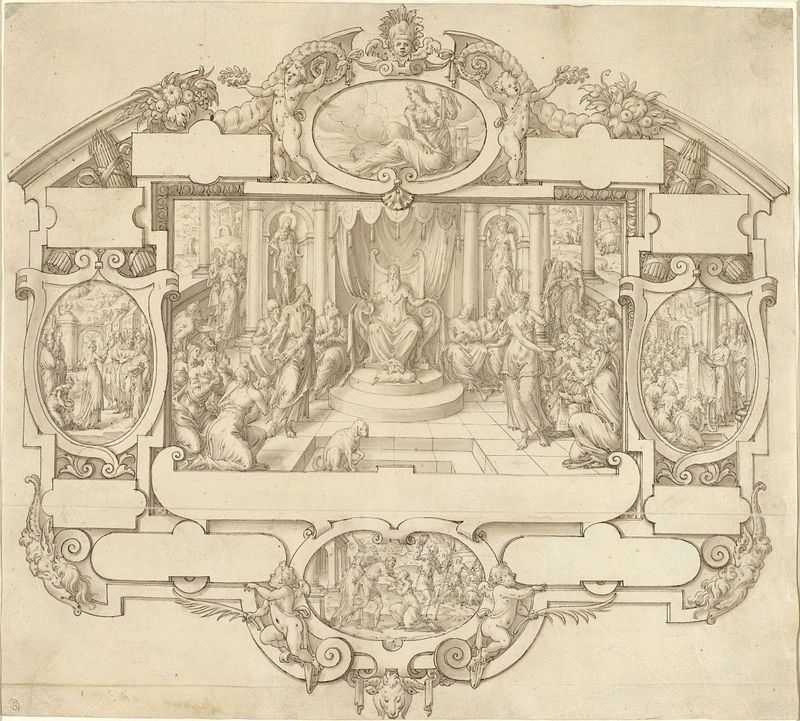
What secret hides in the quiet of the canvas? In the delicate strokes and nuanced shadows lies a memory waiting to be uncovered, a fleeting moment preserved for eternity. Look closely at the intricately designed tazza at the center of the composition; its elegant curves and rich detailing draw the eye. Notice how Delaune masterfully employs chiaroscuro to create depth, allowing the delicate lines to dance in the light. The contrast of dark and light colors enhances the sense of dimension, inviting viewers into a world of exquisite artistry.
Surrounding the tazza, the intricate allegorical figures echo tales of heroism and pathos, adding layers of meaning that beckon exploration. In this work, the intermingling of memory and mythology reveals a deeper narrative. The tazza serves not just as a vessel but as a symbol of triumph and loss, reflecting the bittersweet nature of remembrance. Each figure encapsulates emotions that oscillate between valor and vulnerability, inviting viewers to ponder the weight of history that shapes our present.
These hidden tensions create a rich tapestry of meaning, encouraging a personal response that transcends time. Etienne Delaune created this work in 1606, a period marked by a burgeoning interest in decorative arts in France. Situated in Paris, he was influenced by the Mannerist style prevalent in the Renaissance, which celebrated intricate designs and idealized forms. This moment in art history was characterized by a fascination with classicism and the revival of ancient themes, leading Delaune to draw inspiration from mythological narratives and the cultural memory of ancient civilisations.