
Ostmarksiedlung vom Militär – Invalidenhaus gesehen — History & Facts
Where does light end, and longing begin? In the contemplation of Oskar Laske's Ostmarksiedlung vom Militär – Invalidenhaus gesehen, such questions evoke the passage of time and the stories etched within its frames. Look to the horizon where structured lines of the Invalidenhaus intersect with the soft curves of the surrounding landscape. The artist employs muted colors, allowing the ochres and greens to blend seamlessly, evoking a sense of nostalgia. Pay attention to how the light filters through the clouds, casting gentle shadows and illuminating the façade, suggesting both the weight of history and the promise of renewal.
Each brushstroke seems to breathe life into a scene that straddles the line between past and present. Within this composition lies a complex interplay of resilience and vulnerability. The sturdy structure of the Invalidenhaus stands as a testament to survival amid the ravages of time, while the lush, encroaching nature hints at the inexorable passage that will eventually reclaim all. The quietude of the scene is punctuated by an underlying tension: the lingering presence of those who once inhabited this space.
It invites viewers to ponder the memories locked within its walls, creating a poignant connection to history. Laske created this work in 1936, a period when Europe was grappling with the aftermath of World War I and the rising tides of nationalism. Living in Vienna, he witnessed a world on the brink of change, where his art sought to capture the intersection of architecture, memory, and identity amidst the shifting social landscape. This painting reflects not only his personal artistic evolution but also the tumultuous atmosphere of a continent preparing for yet another chapter of conflict.
More Artworks by Oskar Laske
Browse all →
Faschingsumzug am Stock im Eisen Platz
Oskar Laske

Schönbrunn (Winter)
Oskar Laske
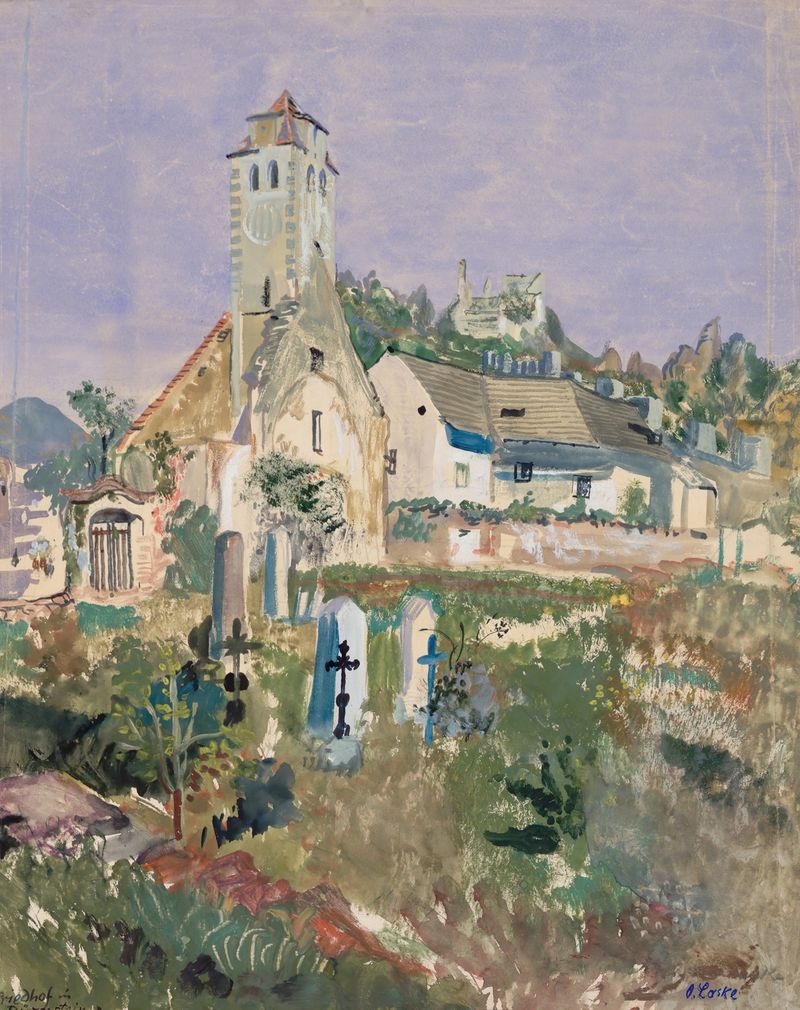
Friedhof in Dürnstein
Oskar Laske

Pratermotiv an der alten Donau
Oskar Laske

Frühjahrsnebel in Niederösterreich
Oskar Laske

Begräbnis des Wiener Bürgermeisters Dr. Karl Lueger
Oskar Laske

Maria Theresien-Denkmal mit Blick gegen das Burgtor
Oskar Laske
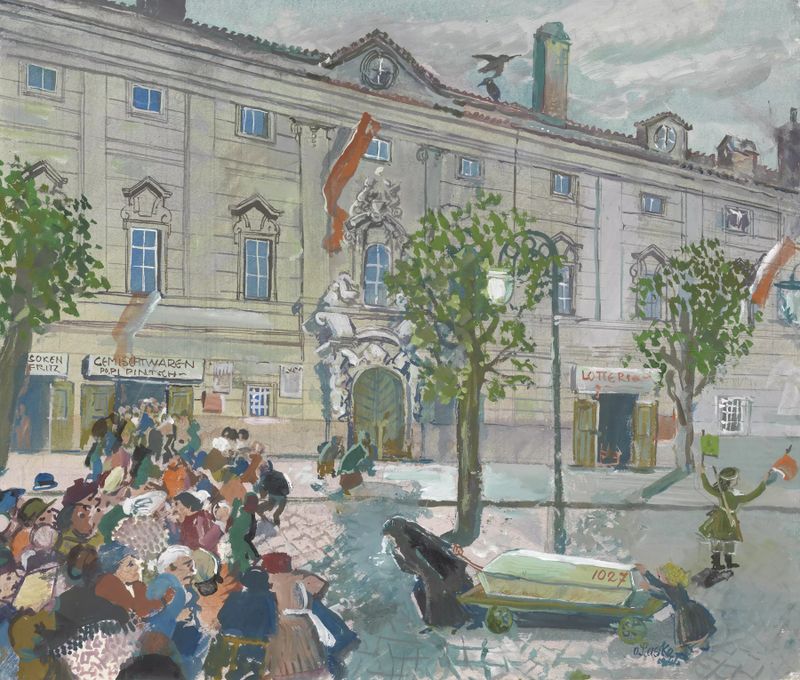
Wiener Straßenbild vom Mai 1945
Oskar Laske

Winterlandschaft in Pressbaum
Oskar Laske

Ansicht von Positano
Oskar Laske





