
Otome Pass — History & Facts
Can beauty exist without sorrow? The delicate interplay of vibrant hues and muted tones invites us to ponder the balance between joy and melancholy in our lives. Look closely at the foreground, where lush greenery unfurls, leading your eye towards the gentle slope of Otome Pass. The artist masterfully employs a gradient of blues and greens, suggesting both depth and tranquility, while the wispy clouds overhead diffuse sunlight, casting a soft glow that breathes life into the scene. Notice how the winding path disappears into the horizon, evoking a sense of journey and exploration, yet hints at an elusive destination. Amidst the serene landscape, contrasts emerge—the vividness of nature stands in stark relief to the understated human presence.
A lone figure, almost a silhouette, traverses the path, embodying solitude amid the expansive beauty. This tension between the individual and the environment stimulates a reflection on existence's duality, where moments of solitude are often underpinned by an underlying sense of longing. The painting was created during a period in which Takahashi Hiroaki found inspiration in the landscapes of Japan, reflecting both a personal journey and a broader national sentiment. While exact dates aren’t documented, the work embodies the essence of early 20th-century ukiyo-e art, a movement deeply rooted in the appreciation of nature's ephemeral beauty.
At this time, Hiroaki was exploring the balance between traditional techniques and modern influences, positioning himself as a significant figure in the realm of contemporary woodblock printing.
More Artworks by Takahashi Hiroaki
Browse all →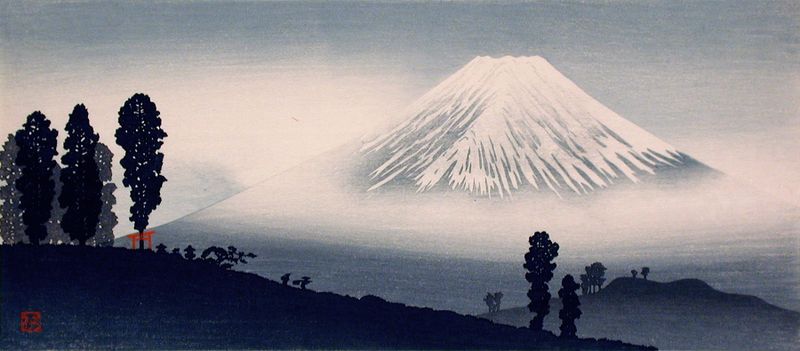
Mount Fuji
Takahashi Hiroaki

Mount Fuji seen near Tamaho, Dawn
Takahashi Hiroaki
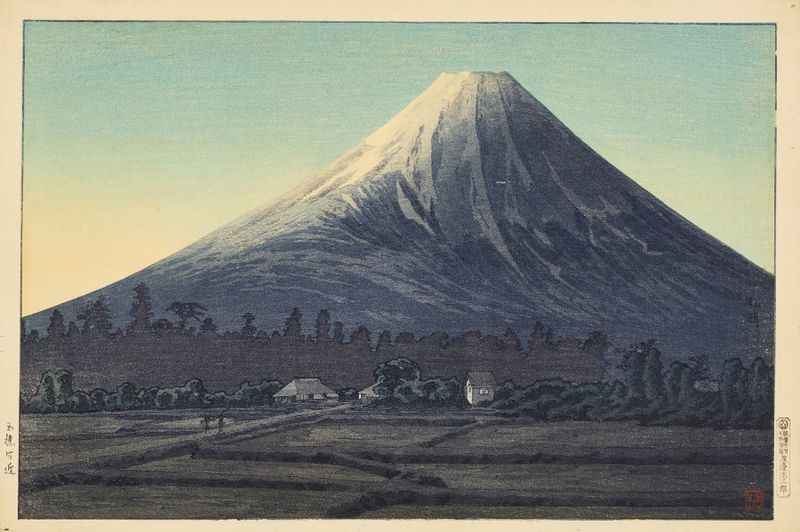
Mount Fuji seen near Tamaho, day
Takahashi Hiroaki
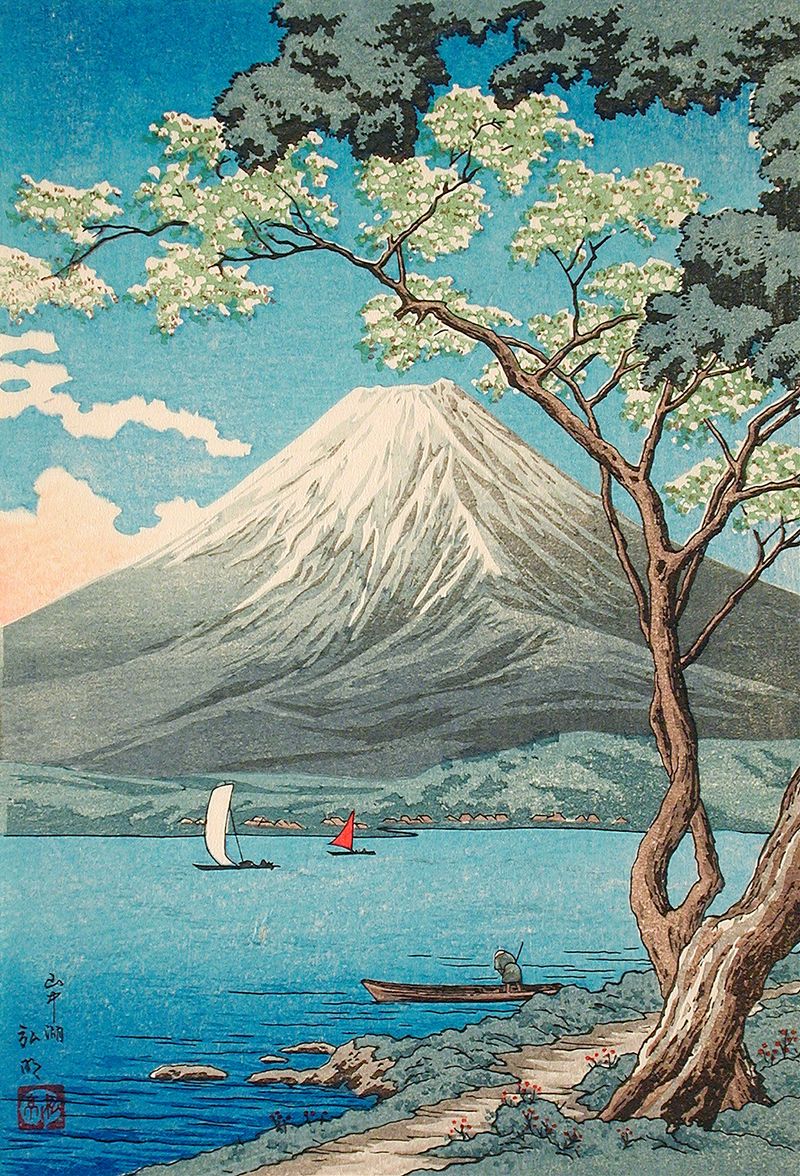
Mount Fuji from Lake Yamanaka
Takahashi Hiroaki

Mt. Fuji from Tagonoura, Snow Scene
Takahashi Hiroaki

Egoda no tsuki
Takahashi Hiroaki
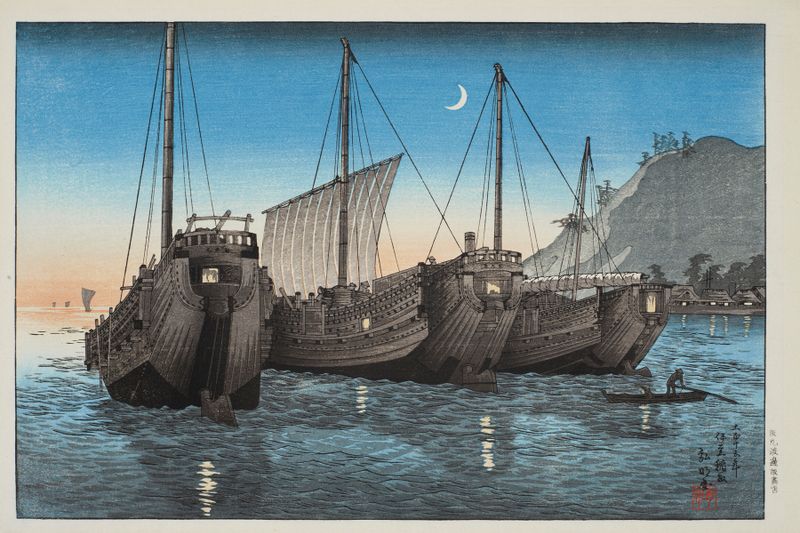
Junks in Inatori Bay, Izu
Takahashi Hiroaki

Izumibashi no ame
Takahashi Hiroaki
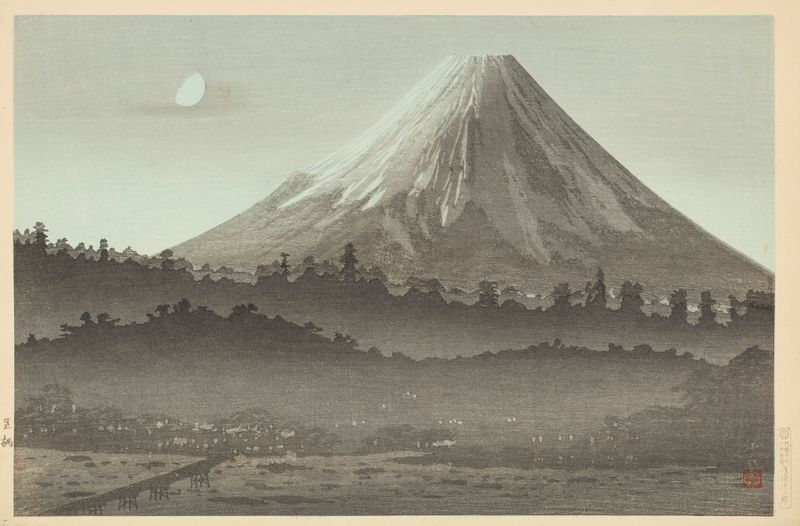
Mount Fuji seen near Tamaho, Night
Takahashi Hiroaki

Fishing nets at Tsukuda
Takahashi Hiroaki





