
Ownerless Horse on the Battlefield at Moshaisk in — History & Facts
A single horse stands at the edge of the battlefield, its ribs visible beneath a battered coat, head lowered in exhaustion or mourning. The animal’s isolation is heightened by the broken cannon wheels and the twisted, lifeless tree beside it—silent witnesses to the violence that has just swept through this place. In the background, a group of mounted soldiers ride away under a sky swollen with storm clouds, their figures receding into the gloom.
The eye is drawn first to the horse, then to the carcass lying near the water’s edge, and finally to the scattered remnants of war: a helmet, a shattered wheel, the churned earth. The palette is somber, the light cold and heavy, pressing the scene with a sense of aftermath rather than action. Painted in 1834, Ownerless Horse on the Battlefield at Moshaisk by Albrecht von Adam belongs to a tradition of 19th-century battle painting that often dwelled on the cost of war rather than its glory. Artists of this period, many of them eyewitnesses or veterans, recorded not only the clash of armies but the silent aftermath—the abandoned weapons, the ruined landscapes, the animals left behind.
Such works were sought by collectors and officers alike, reminders of campaigns fought and lost, and sometimes warnings to those who would forget the price. This painting, now in the Bridgeman Art Library, stands as a quiet testament to that era’s fascination with both the spectacle and the sorrow of battle. The longer you look, the more the silence of the scene asks you to imagine what has just passed—and what will come after.
More Artworks by Albrecht von Adam

Peasants Resting in the Field
Albrecht von Adam
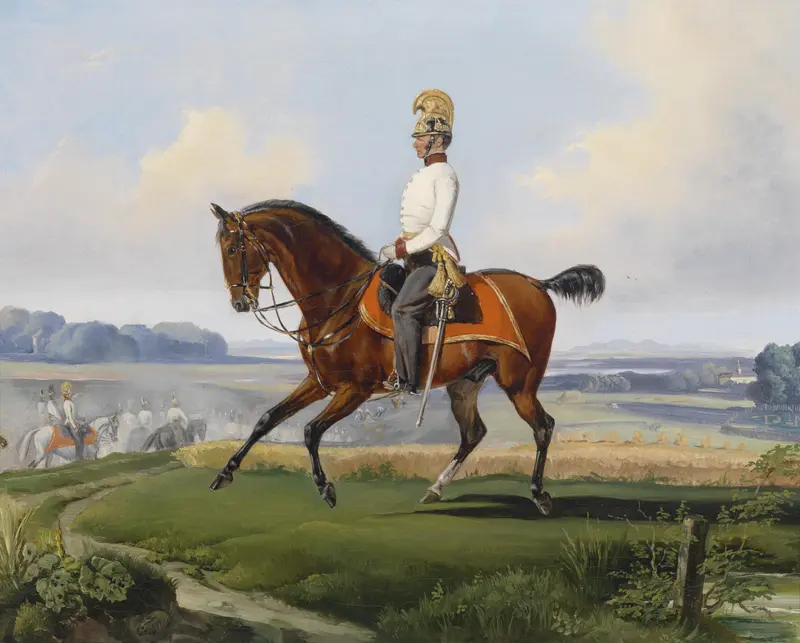
Portrait Oberleutnant Theodor von Klein zu Pferde
Albrecht von Adam
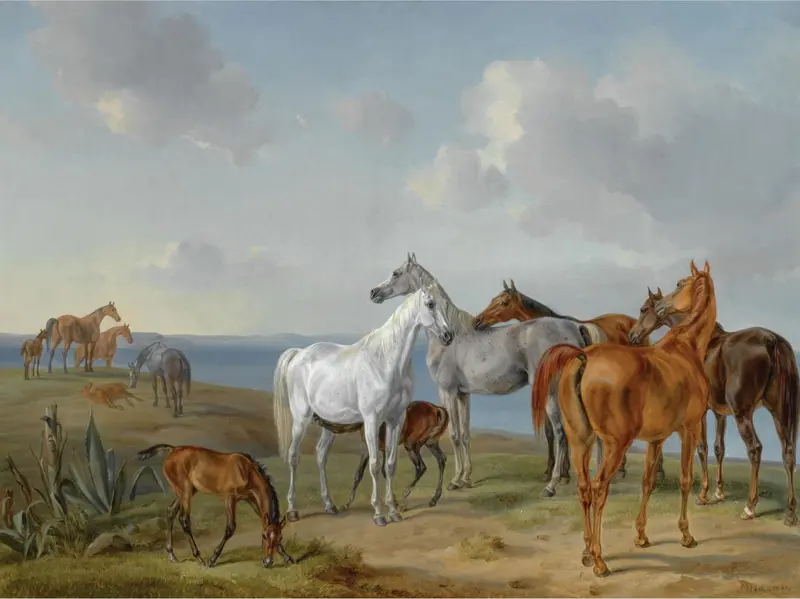
Arabian Horses at Pasture
Albrecht von Adam
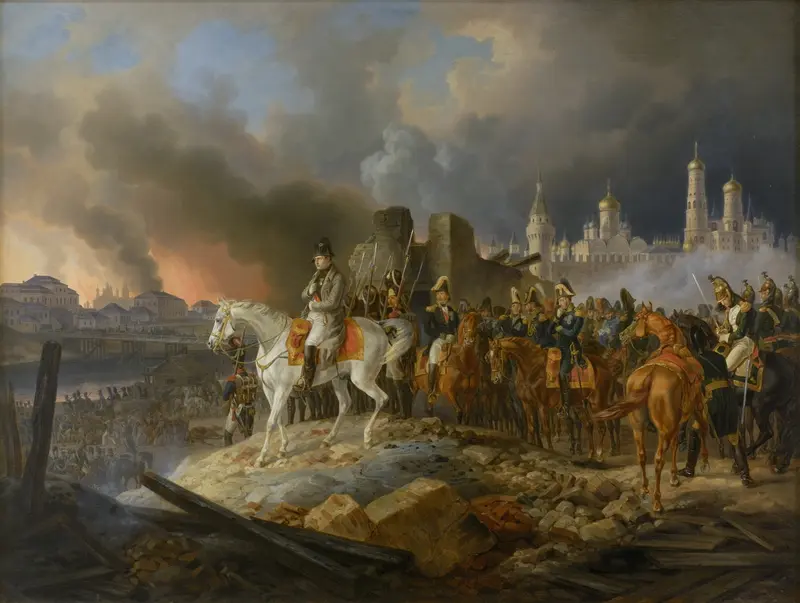
Napoleon in burning Moscow - Adam Albrecht
Albrecht von Adam
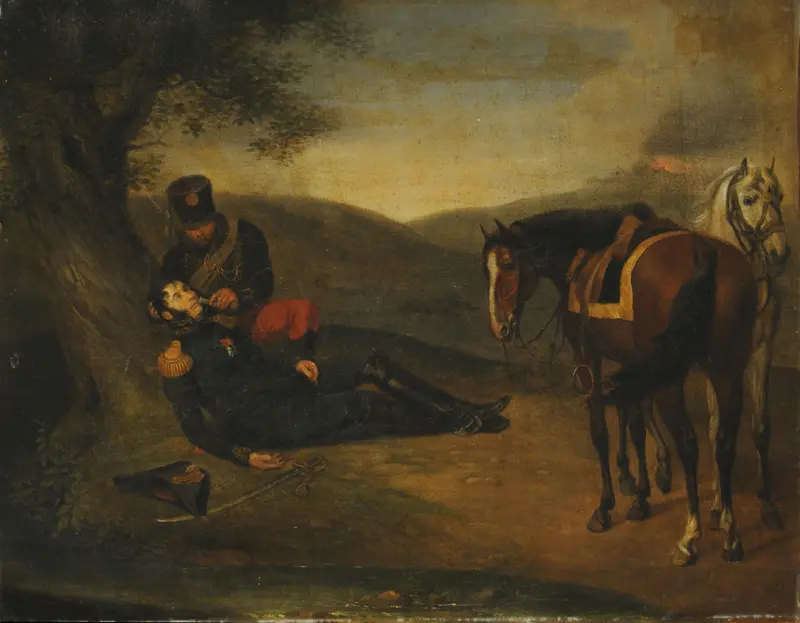
General wounded
Albrecht von Adam
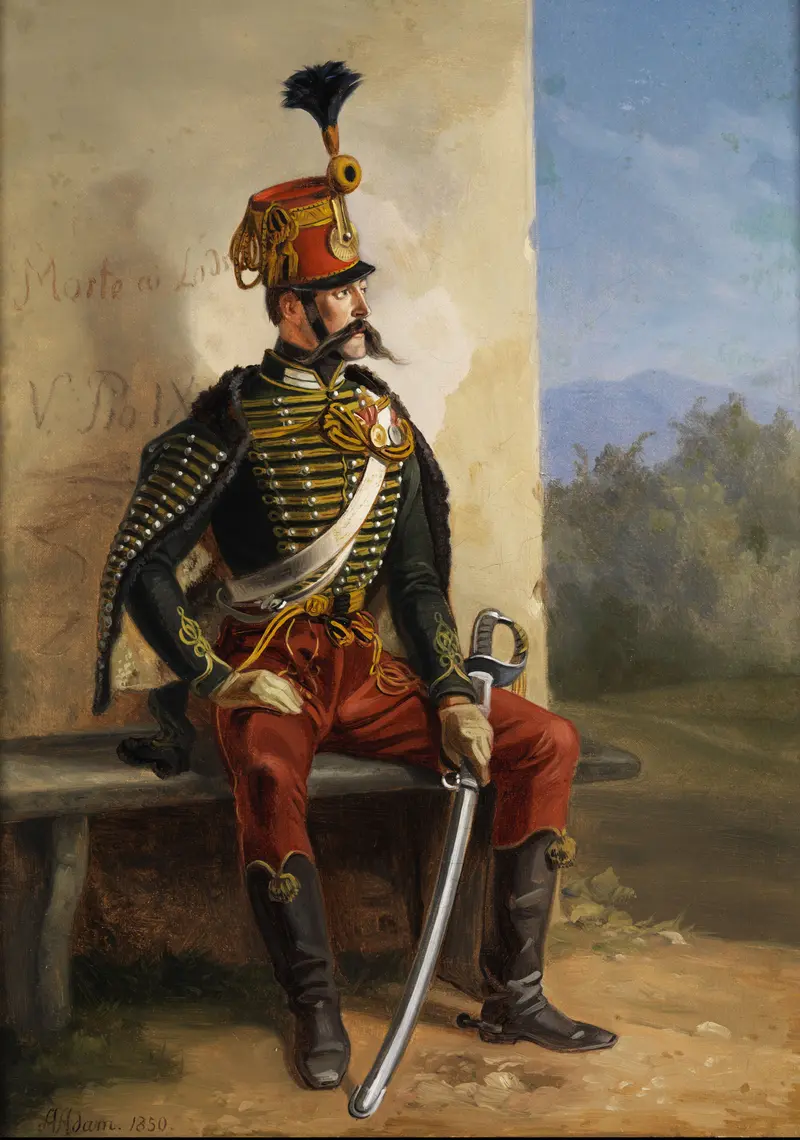
Soldat bei der Rast
Albrecht von Adam
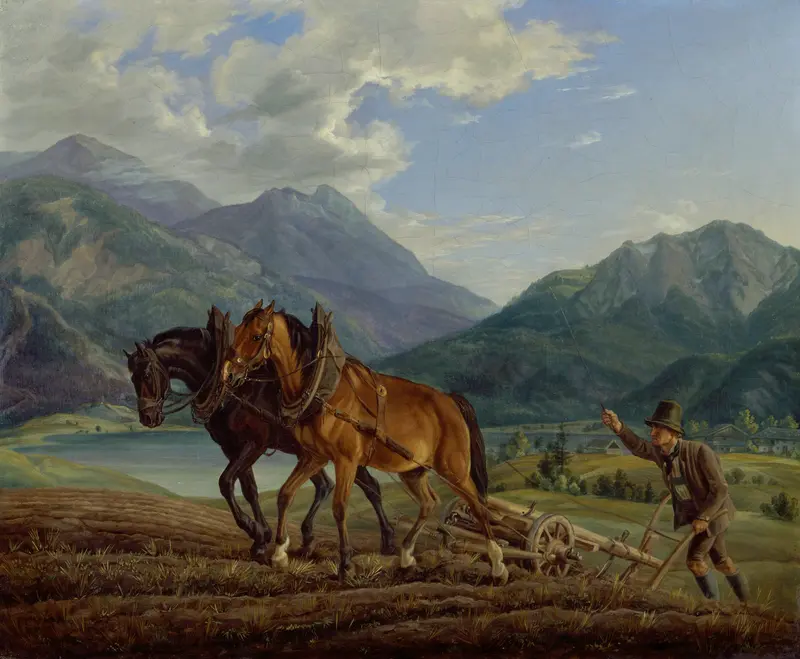
Gebirgslandschaft mit pflügendem Bauern G 303 Lenbachhaus
Albrecht von Adam
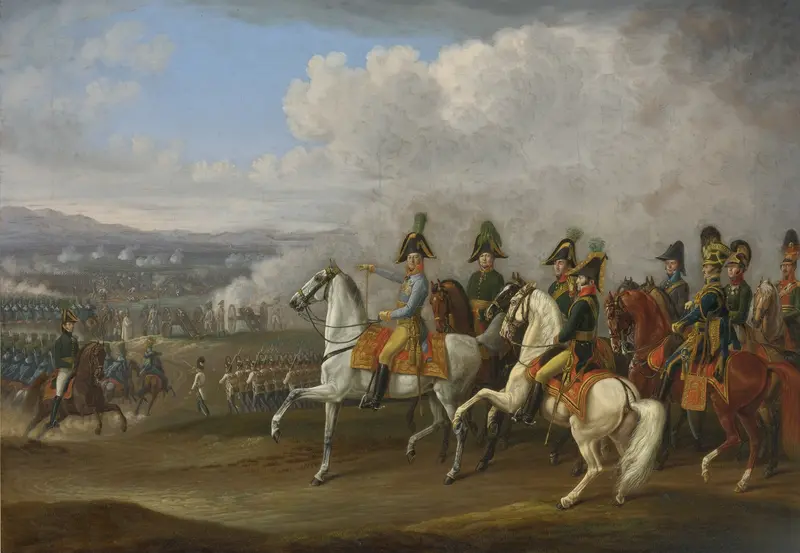
General von Bellegarde and his officers cbserving a battle
Albrecht von Adam
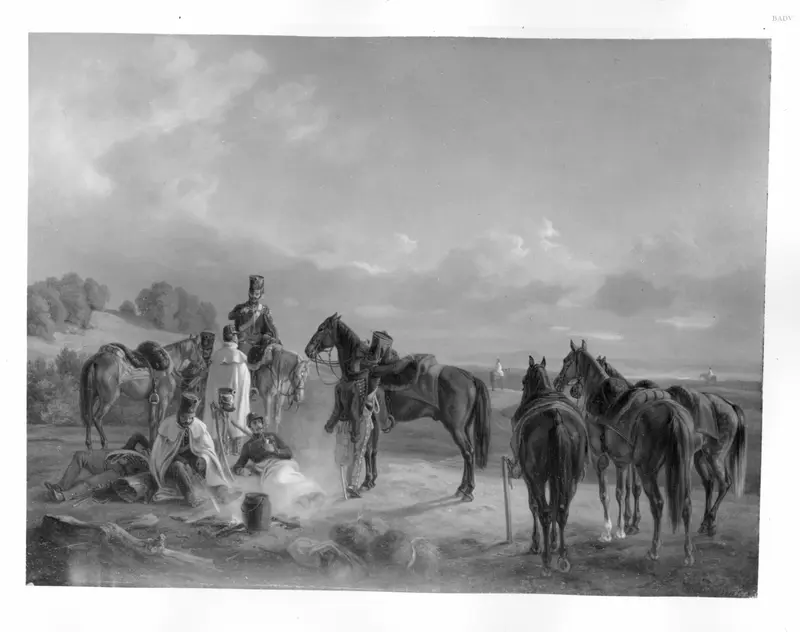
Soldaten und Pferde am Lagerfeuer 0420 Führermuseum
Albrecht von Adam
Interior of a Stable
Albrecht von Adam





