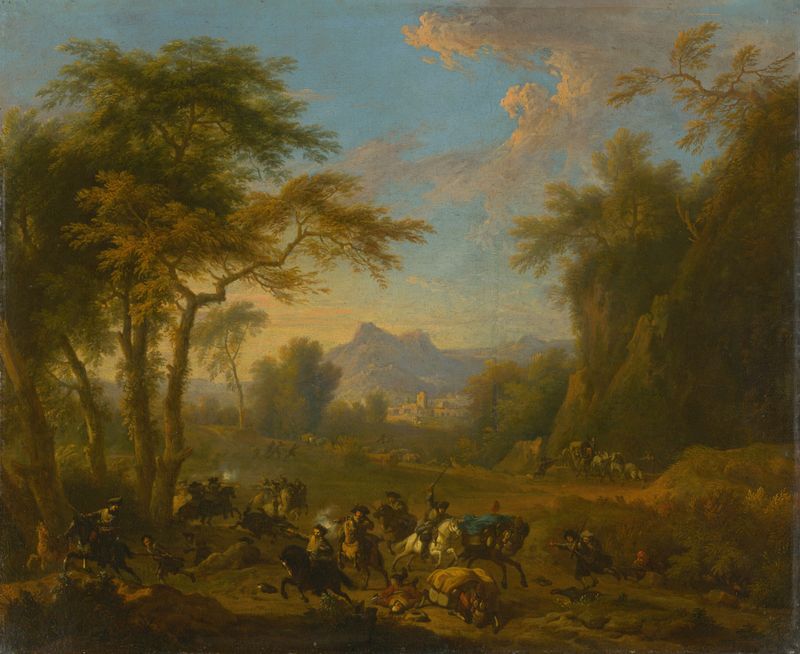
Palace courtyard with a fountains, a carriage and people — History & Facts
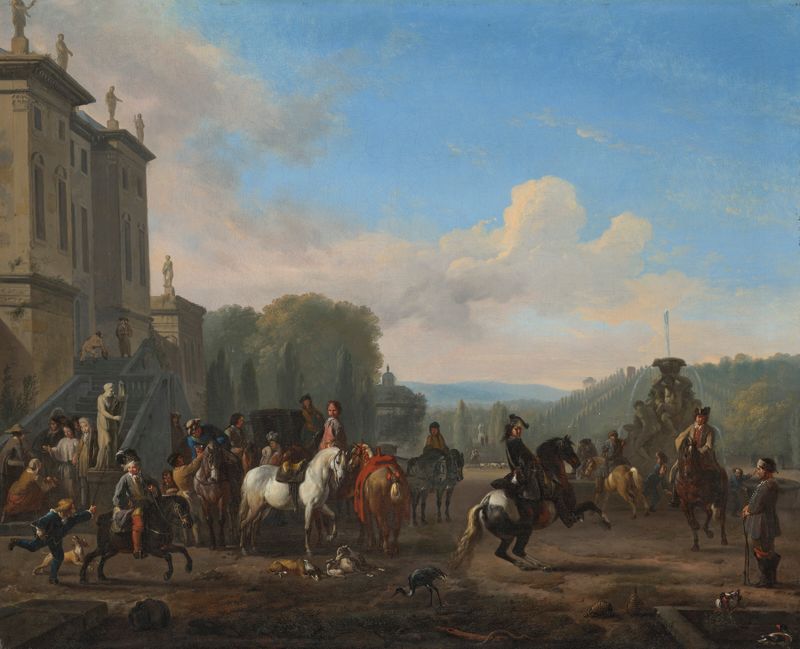
Is this a mirror — or a memory? In Palace courtyard with a fountain, a carriage and people, the viewer finds a moment suspended between past and present, an invitation to reflect on the fleeting nature of life. Look to the center where the fountain stands proudly, its waters dancing in the sunlight. The intricate details of the stonework and the shimmering droplets create a sense of movement, while the lush greenery surrounding it offers a sharp contrast of tranquility. Notice how the figures — a carriage driver, elegantly dressed nobles, and servants — are arranged, each engaged in their own narrative, yet all anchored by the fountain’s gentle allure.
The composition balances chaos and calm, allowing the eye to wander before coming to rest on the vibrant hues of the characters’ attire. Beneath the surface, the artwork resonates with themes of mortality and transience. The fountain, a symbol of life and renewal, stands against the backdrop of human endeavors, suggesting the eternal cycle of joy and sorrow. The carriage, poised to take its passengers away, evokes both adventure and the inevitable passage of time.
Each figure, by their very presence, reflects the fleeting nature of existence, contrasting youth against the enduring architecture. Jan van Huchtenburg painted this scene in a period characterized by opulence and the celebration of courtly life, likely during the late 17th century in the Netherlands. His career flourished amidst the Baroque movement, which emphasized grandeur and detail, mirroring the societal shifts of his time as aristocratic power began to wane. This work captures not just a moment in history but also the timeless dance between life and legacy.