
Raid — History & Facts
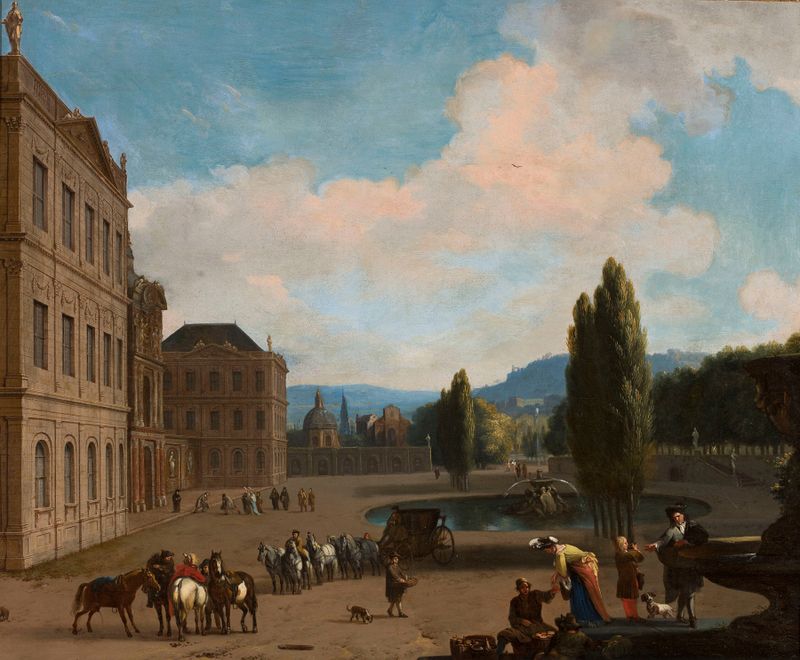
Can paint confess what words never could? In Raid, hues swirl together to convey a moment that transcends mere description, inviting us into an emotional landscape where color holds the power of unspoken truths. Look to the center of the canvas, where the chaos of battle unfolds. The vivid reds of blood and vibrant greens of nature clash, creating an unsettling harmony that captures the brutality of the scene. Notice how the dramatic chiaroscuro highlights the trepidation in soldiers’ faces, while the swirling smoke serves as both a veil and a narrative device, obscuring yet emphasizing the tension.
The verticality of the trees contrasts with the horizontal lines of the horizon, framing the urgency of the conflict. The juxtaposition of light and shadow reveals deeper emotional currents; the soldiers’ expressions oscillate between fear and determination, hinting at the complex motivations behind their actions. The lush, verdant backdrop serves as a reminder of the life being disrupted, while the flickering flames suggest both destruction and the possibility of renewal. In this charged atmosphere, color becomes a conduit for exploring themes of aggression, survival, and the transient nature of life itself. Jan van Huchtenburg created Raid between 1717 and 1718, during a time when the art world was grappling with the transition from the Baroque to the Rococo.
Working in the Netherlands, he was influenced by both the military conflicts of his time and the burgeoning interest in landscapes as a subject. This painting exemplifies his ability to merge dramatic historical events with an emotional depth that captures the viewer’s imagination.
More Artworks by Jan van Huchtenburg
Browse all →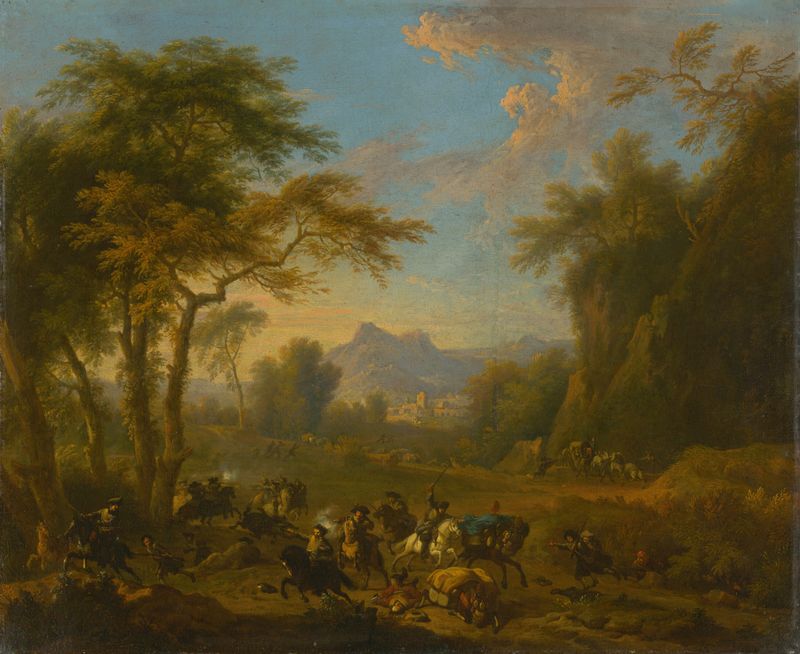
More Historical Art
Browse all →
The Night Watch Militia Company of District II under the Command of Captain Frans Banninck Cocq
Rembrandt van Rijn

Lincoln Memorial
Henry Bacon

The Third of May 1808
Francisco de Goya

Isaac and Rebecca, Known as ‘The Jewish Bride’
Rembrandt van Rijn

The Charge of the Mamelukes (1814)
Francisco de Goya

De vier ruiters van de apocalyps
Albrecht Dürer