
Raid — History & Facts
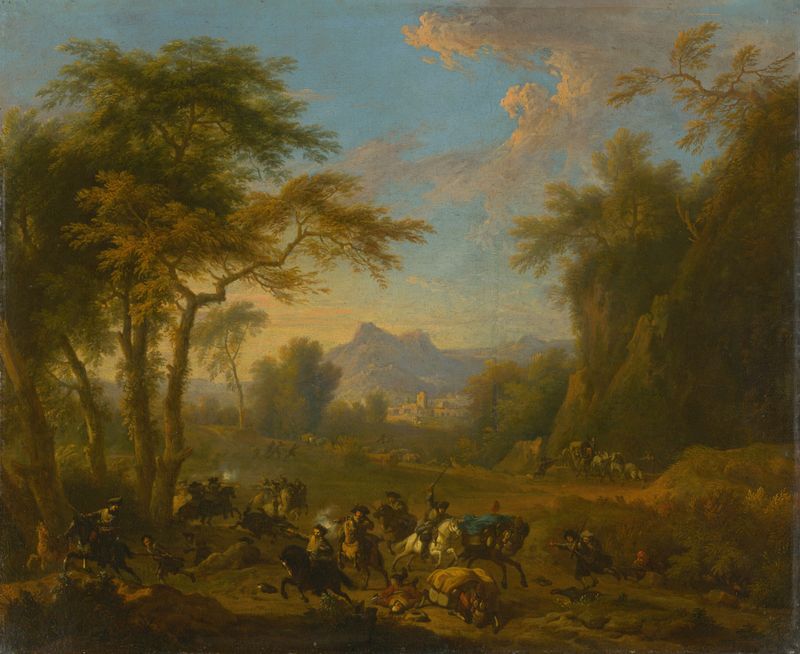
What if beauty was never meant to be finished? In Raid, Jan van Huchtenburg captures a moment of fleeting chaos, where the dance of light and shadow narrates a story unbound by time. Focus first on the radiant interplay of sunlight breaking through the clouds, illuminating the figures in the foreground. The horses, taut with energy, seem to leap right off the canvas, their powerful bodies contrasting with the serene landscape that cradles them. Notice how the vibrant greens of the grass are punctuated by earthy browns, creating a dialogue between tranquility and tumult.
The tightly composed arrangement draws your eye through the chaos, allowing you to feel the tension of a world caught between action and stillness. The emotional weight of the piece lies in the juxtaposition of the vibrant colors against the darker horizon. Each brushstroke conveys urgency; the warriors with their fierce expressions reflect determination, while the distant city beneath a tumultuous sky speaks to the stakes of the impending raid. Hidden details, such as the fluttering banners, hint at the fervor and chaos of battle, yet there’s an underlying beauty in their movement—a reminder that even in turmoil, life unfolds with a mesmerizing grace. Created in 1717, the painting emerged during a period where van Huchtenburg was deeply immersed in depicting military scenes.
Living in the Netherlands, he was influenced by the dynamic landscapes and military histories surrounding him. This work reflects both his personal artistic evolution and the broader European fascination with conflict, heroism, and the sublime beauty found in the midst of chaos.
More Artworks by Jan van Huchtenburg
Browse all →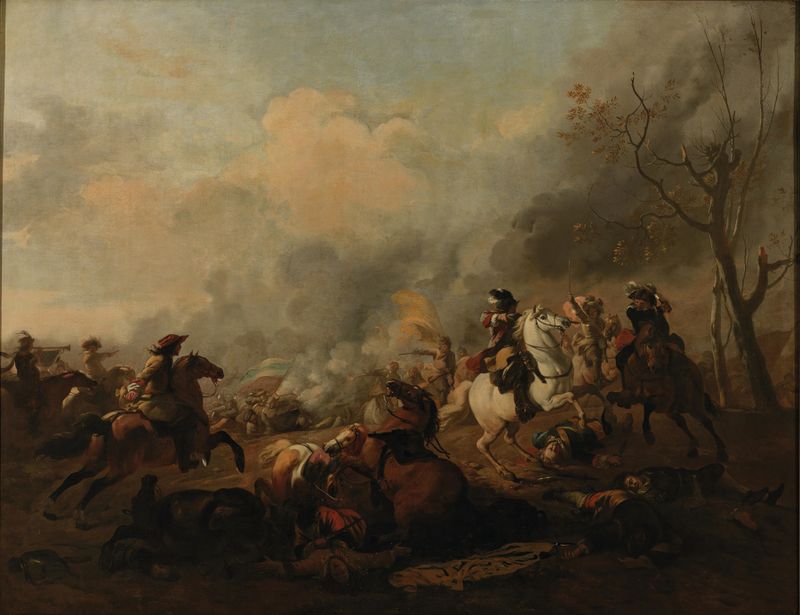
More Historical Art
Browse all →
The Night Watch Militia Company of District II under the Command of Captain Frans Banninck Cocq
Rembrandt van Rijn

Lincoln Memorial
Henry Bacon

The Third of May 1808
Francisco de Goya

Isaac and Rebecca, Known as ‘The Jewish Bride’
Rembrandt van Rijn

The Charge of the Mamelukes (1814)
Francisco de Goya

De vier ruiters van de apocalyps
Albrecht Dürer