Pallud — History & Facts
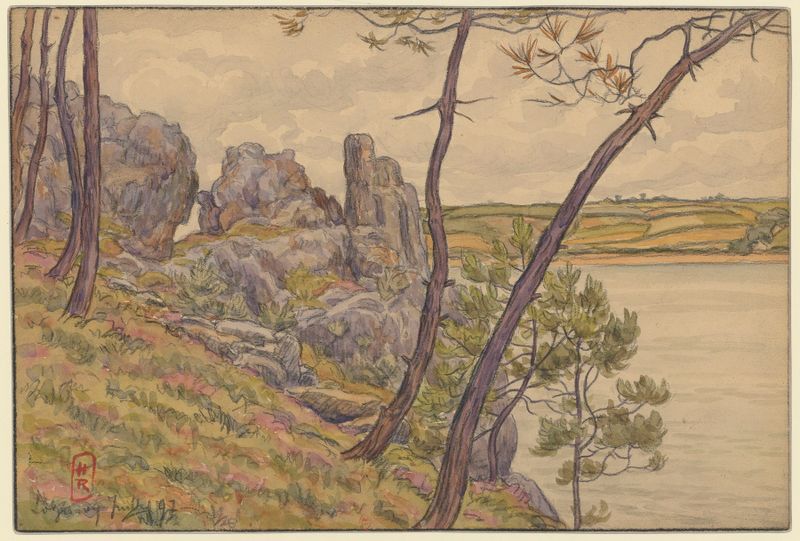
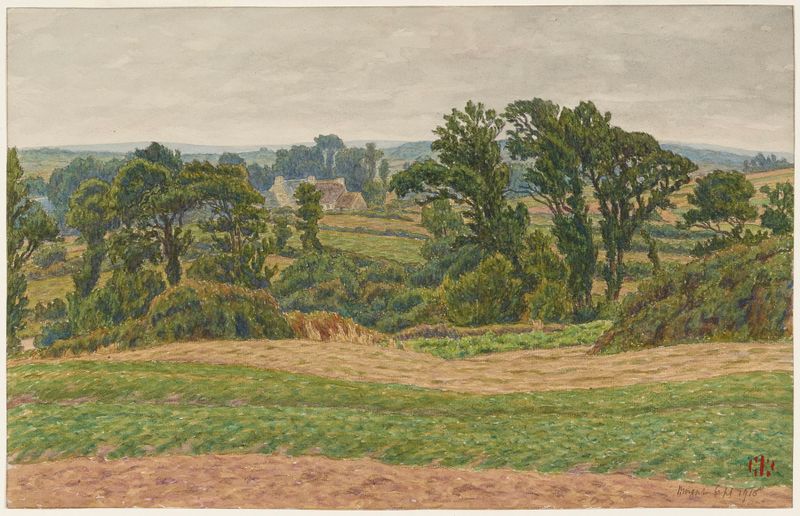
What if silence could speak through light? In Pallud, the stillness of a moment captures a profound dance of movement, echoing the emotions concealed within the shadows and reflections of water. Look to the center of the piece, where a serene body of water stretches outward, inviting your gaze to explore its tranquil surfaces. The artist employs delicate brush strokes to convey ripples that seem to quiver with life, drawing attention to the way light glimmers upon them. Notice how the subtle gradations of blue and green create a soothing palette, contrasted by hints of gold that suggest the warmth of an unseen sun, hinting at both a physical and spiritual awakening. As you delve deeper, consider the interplay between stillness and motion.
The water's surface, though calm, hints at a gentle breeze, a whisper of change lurking just beneath. This tension reflects the artist's inner state during a tumultuous time, where tranquility is overshadowed by the uncertainty of the world. Each brushstroke serves as a reminder that life, though sometimes placid, is always in flux, revealing an essential dance between serenity and potential upheaval. Created in 1918, Rivière painted Pallud against the backdrop of post-World War I France.
This period was marked by reflection and a longing for peace after years of conflict. Amidst the chaos, the artist sought solace in nature, channeling his experiences into works that conveyed both a personal and collective yearning for stability through the language of color and form.