Pan and the Wolf — History & Facts
In the delicate brushstrokes of transformation, we find the essence of existence; the fleeting moments that slip away yet linger vividly in our minds. Look closely at the figure in the foreground, a striking contrast against the soft blending of nature behind him. Notice how the colors shift from vibrant greens to muted browns, echoing the cycle of life and change. The playful yet cautious expression on Pan’s face invites contemplation, whispering secrets of the woods while his gaze flickers between the viewer and the majestic wolf.
The composition draws you into the tension between human instincts and the wild freedom embodied by the creature. Here, the juxtaposition of light and shadow evokes a sense of duality—safety versus danger, civilization versus the untamed. The wolf, both majestic and threatening, stands as a symbol of inner desires and fears that often coexist within us. This silent confrontation prompts reflection on transformation, as the viewer is left to ponder the balance of power and vulnerability in nature and in themselves. Created during a period of personal exploration and artistic evolution, the artist painted this piece in his studio in Connecticut, where the encroachment of modernity contrasted with the pastoral landscapes that inspired him.
At this time, Weir was delving into Impressionism, seeking to capture the essence of a moment and the intricate dance of light and form that defines our changing world.
More Artworks by Julian Alden Weir
Browse all →
My Back Yard no. 1
Julian Alden Weir
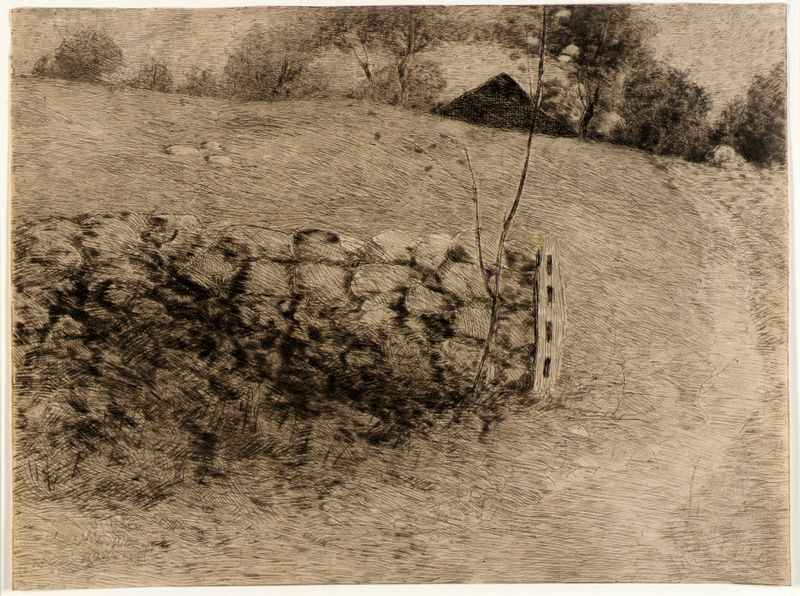
The Barn Lot
Julian Alden Weir

The Webb Farm
Julian Alden Weir
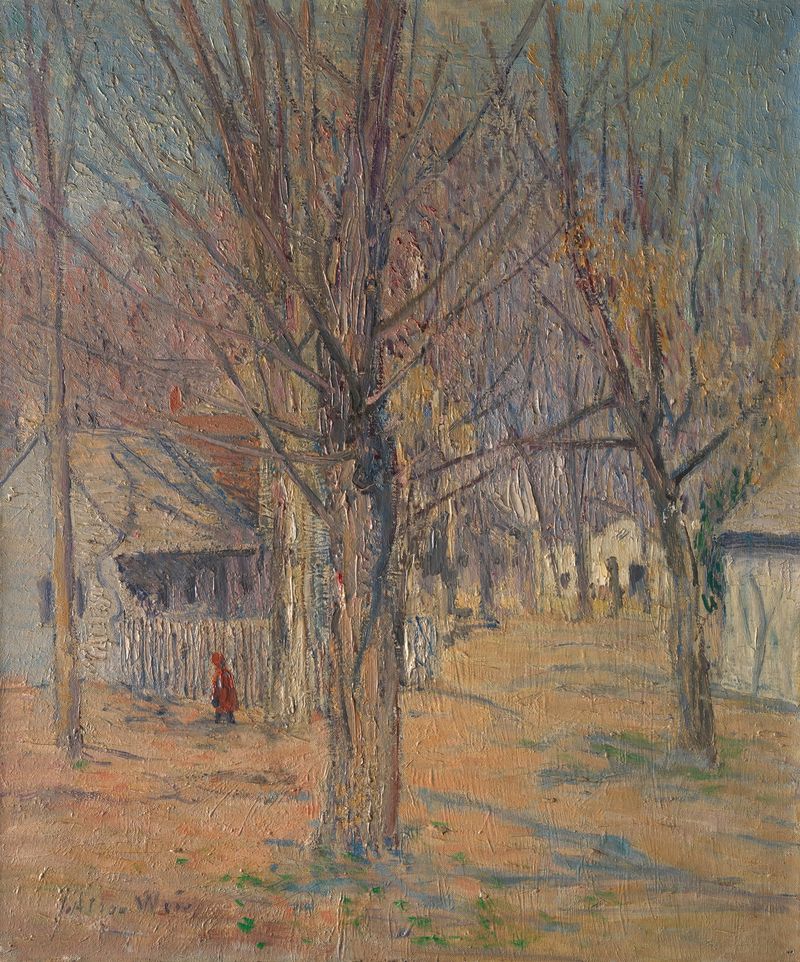
Connecticut Village (Going to School)
Julian Alden Weir

The Stone Bridge
Julian Alden Weir

The Webb Farm 2
Julian Alden Weir
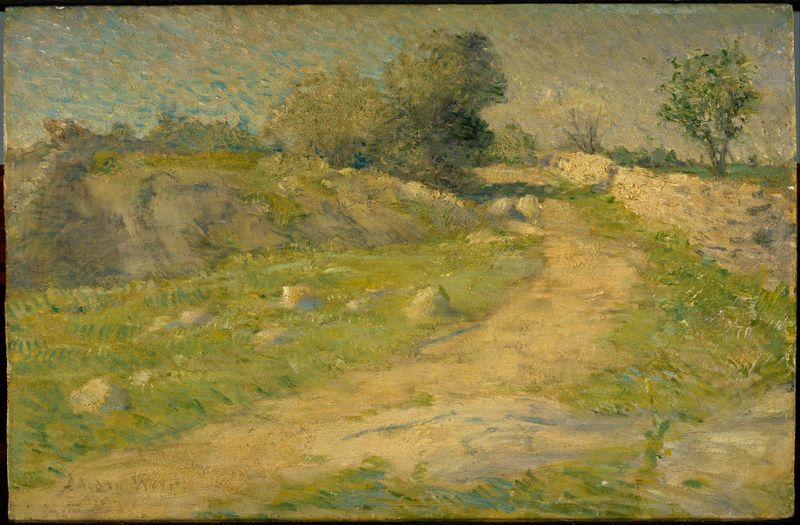
The Lane
Julian Alden Weir
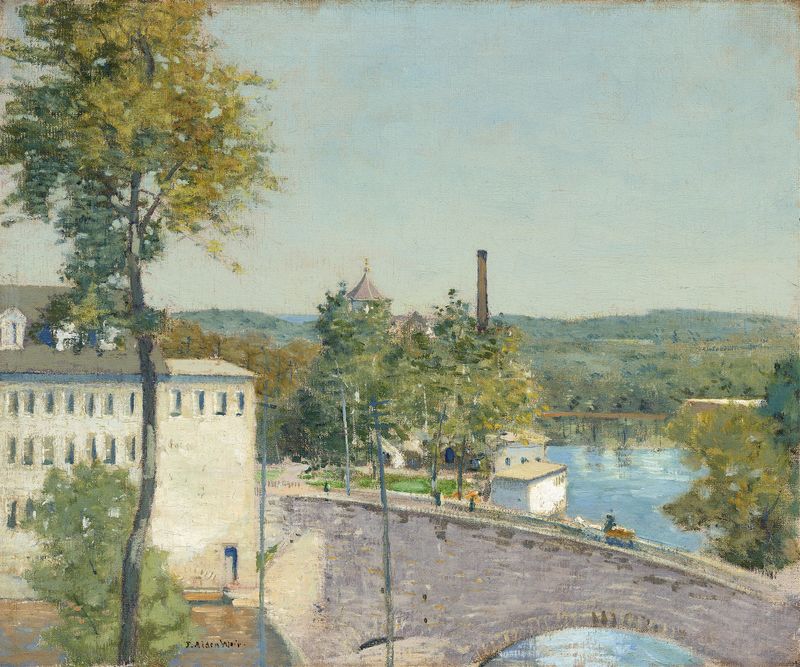
U.S. Thread Company Mills,Willimantic,Connecticut
Julian Alden Weir

Neighboring Farm
Julian Alden Weir

Coon Alley
Julian Alden Weir