
Paris, la rue Saint-Nicaise — History & Facts
When did color learn to lie? In a world steeped in nostalgia, the vibrant hues of a bustling Paris street beckon us, but they conceal the bittersweet echoes of the past. Look to the center of the composition, where figures meander through the lively scene, their silhouettes animated against the vivid backdrop of the street. Notice how the warm yellows and soft oranges blend seamlessly, invoking a golden hour that feels both serene and fleeting. The careful brushwork captures the sparkle of life, while the architecture looms with a quiet weight, suggesting stories untold.
Each building stands as a guardian of memories, casting elongated shadows that hint at the passage of time. Delve deeper into this vibrant tableau, and you’ll find contrasts that pull at the heart. Amid the liveliness, one can discern a sense of longing in the eyes of a solitary figure, perhaps someone who remembers the echoes of laughter now replaced by the monotony of everyday life. The juxtaposition of joyous movement against the stillness of the architecture evokes a tension between the present and the past, revealing the way nostalgia dances just out of reach, like the fleeting light of dusk. In 1827, Giuseppe Canella painted this work during a time when Paris was undergoing profound transformation, both architecturally and socially.
The city was a hub for artists and intellectuals, embracing the Romantic movement that celebrated emotion and individual experience. Canella, influenced by his surroundings, sought to reflect not just the physical beauty of the street, but also the deeper, unspoken stories that dwell within the heart of Paris.
More Artworks by Giuseppe Canella
Browse all →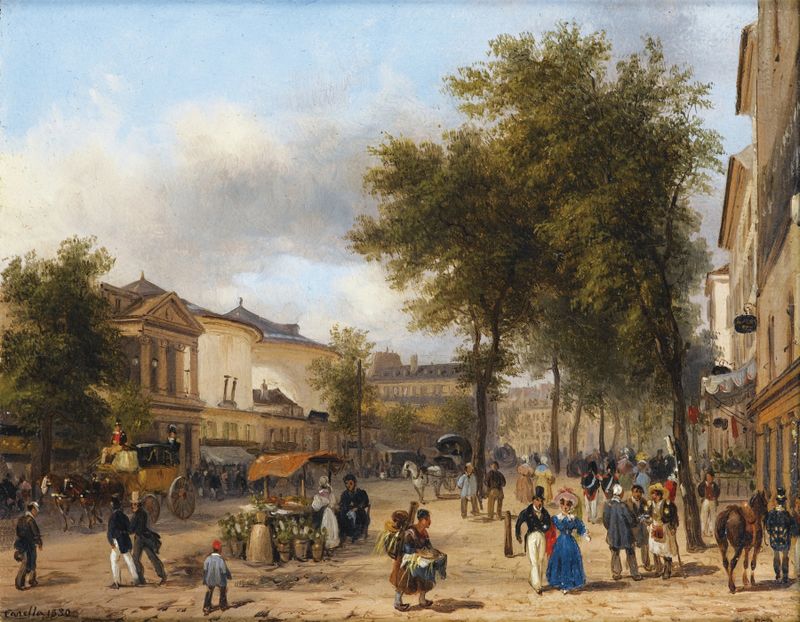
Paris, Vue du Théâtre des Variétés sur le Boulevard Montmartre
Giuseppe Canella

L’Hôtel de Ville et la place de Grève, vus de l’Ile de la Cité
Giuseppe Canella
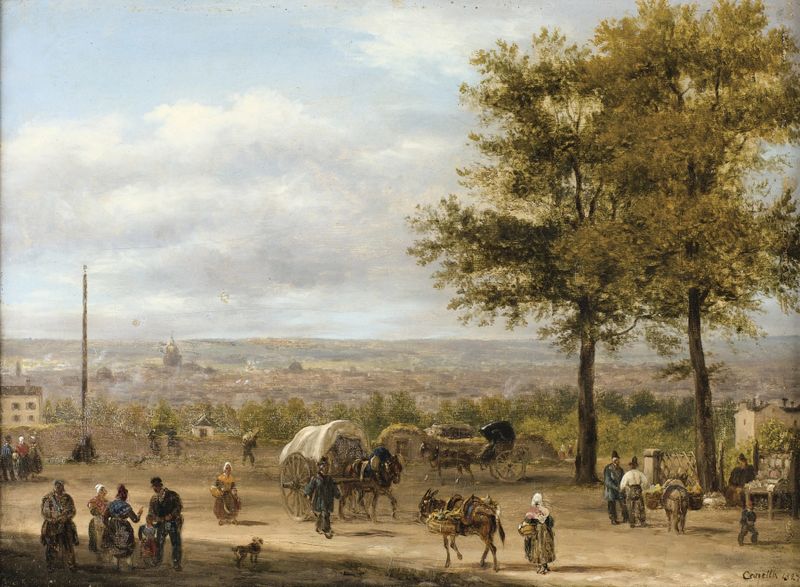
Vue des hauteurs de Paris
Giuseppe Canella
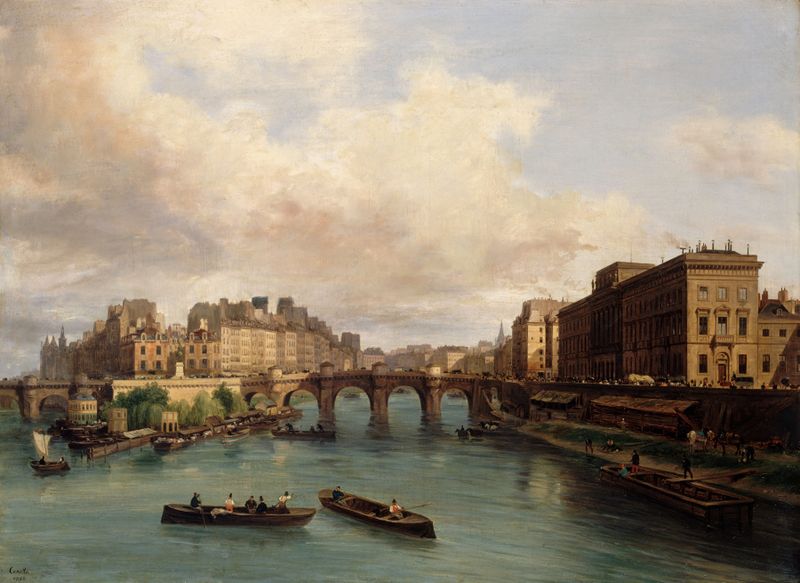
L’Ile de la Cité et le quai Conti, vus de la passerelle des Arts
Giuseppe Canella

Amsterdam, A View of the Royal Palace
Giuseppe Canella

Les Halles et la rue de la Tonnellerie
Giuseppe Canella
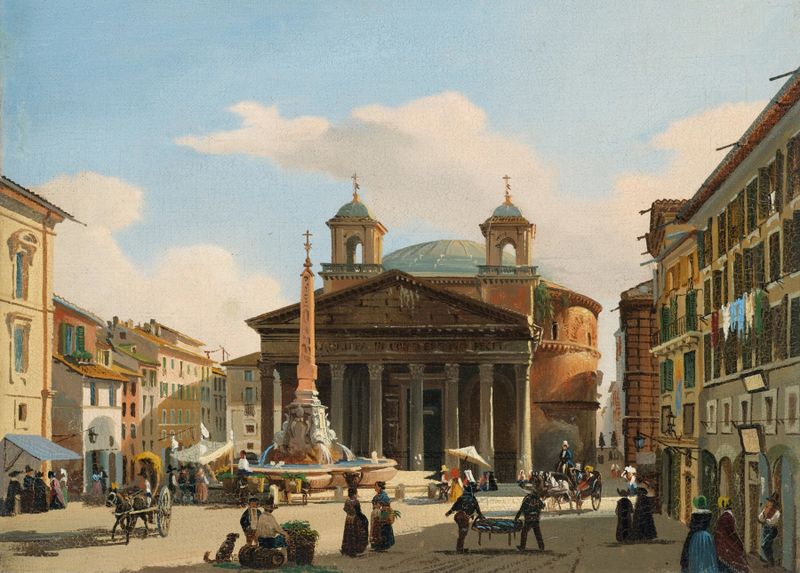
Vue du Panthéon à Rome
Giuseppe Canella
Venice, A View Of Piazza San Marco From Piazzetta Dei Leoncini
Giuseppe Canella
Le marché aux fleurs, la Tour de l’Horloge, le Pont au Change et le Pont-Neuf
Giuseppe Canella

A Venetian scene with a gondola on a lagoon
Giuseppe Canella





