
Paris. Le Louvre et les Tuileries vue prise du Pont Neuf — History & Facts
Can paint confess what words never could? In Paris. Le Louvre et les Tuileries vue prise du Pont Neuf, innocence is captured in both brush and light, inviting the viewer to feel the essence of a city at a delicate crossroads. Look to the left at the crisp outlines of the Louvre, its grand architecture rising majestically against a soft, pastel sky. Focus on the play of light as it dances across the water of the Seine, rippling gently with reflections of both historic and modernity.
The artist masterfully employs a subtle palette of blues and golds, allowing warmth to seep into the scene, while the brushstrokes create a fluidity that breathes life into the composition. The painting contrasts the solid, enduring structures of the Louvre with the ephemeral beauty of nature and fleeting moments that pass along the riverbank. The park's verdant trees, juxtaposed against the stoic stone, whisper of innocence lost yet cherished. This dynamic serves as a reminder of the inevitable passage of time, where innocence is fleeting, yet art preserves its essence for eternity. Charles Rivière painted this piece between 1870 and 1879, amidst a rapidly changing Paris.
The city was undergoing transformation with the modernization and the Haussmann renovations, symbolizing both progress and the bittersweet loss of untouched history. Rivière, part of a growing movement toward Impressionism, sought to capture these nuances, reflecting not just the physical beauty of Paris but the emotional landscape of its people during this vibrant era.
More Artworks by Charles Rivière
Browse all →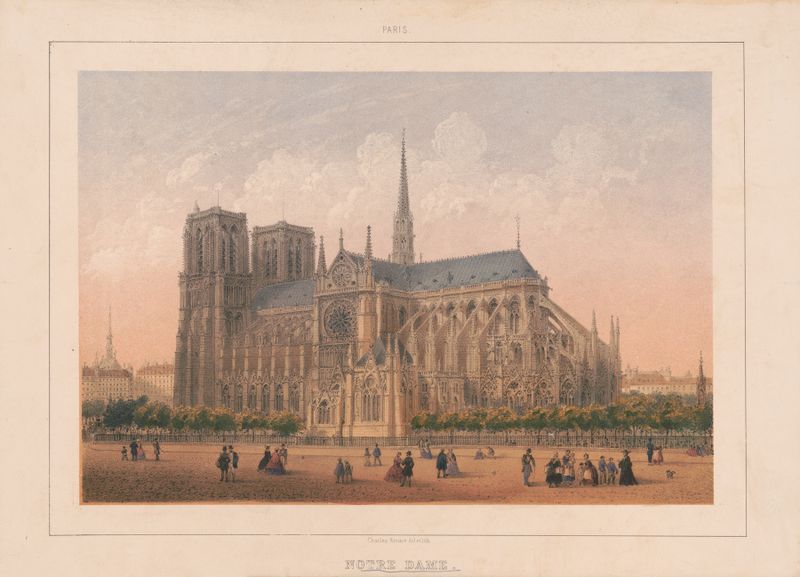
Paris. Notre Dame
Charles Rivière
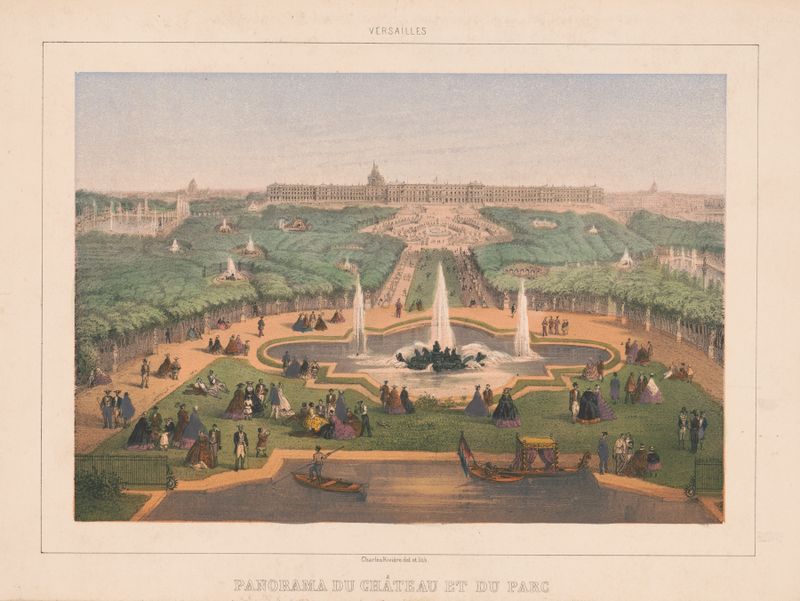
Versailles. Panorama du Château et du parc
Charles Rivière

Paris. Panorama des Tuileries et du Louvre
Charles Rivière
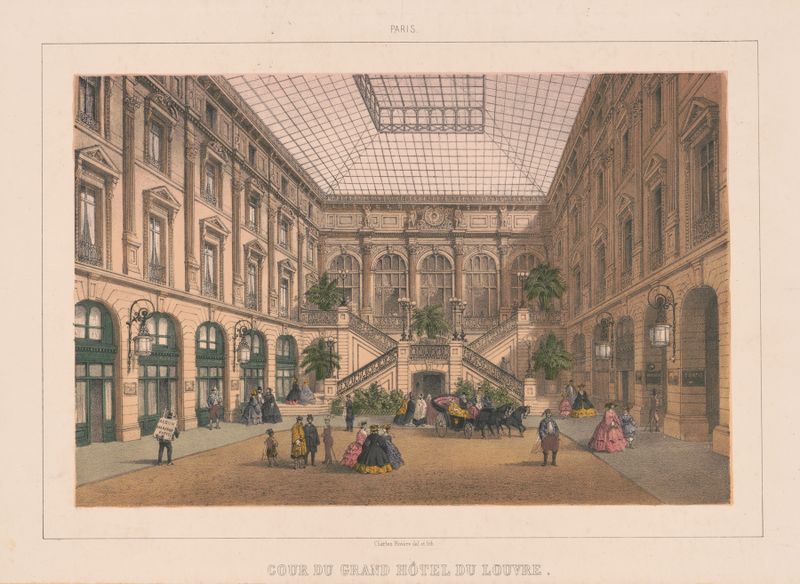
Paris. Cour du Grand Hôtel du Louvre
Charles Rivière
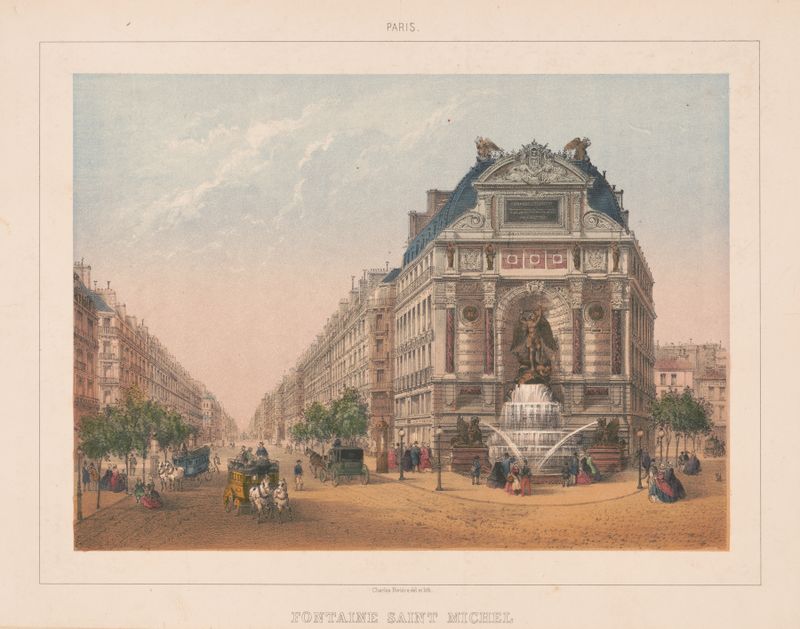
Paris. Fontaine Saint Michel
Charles Rivière
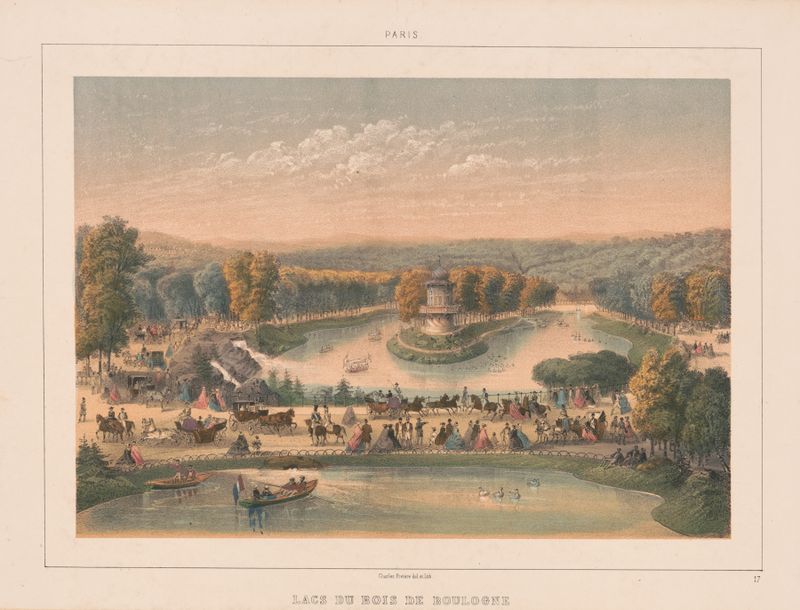
Paris. Lacs du Bois de Boulogne
Charles Rivière
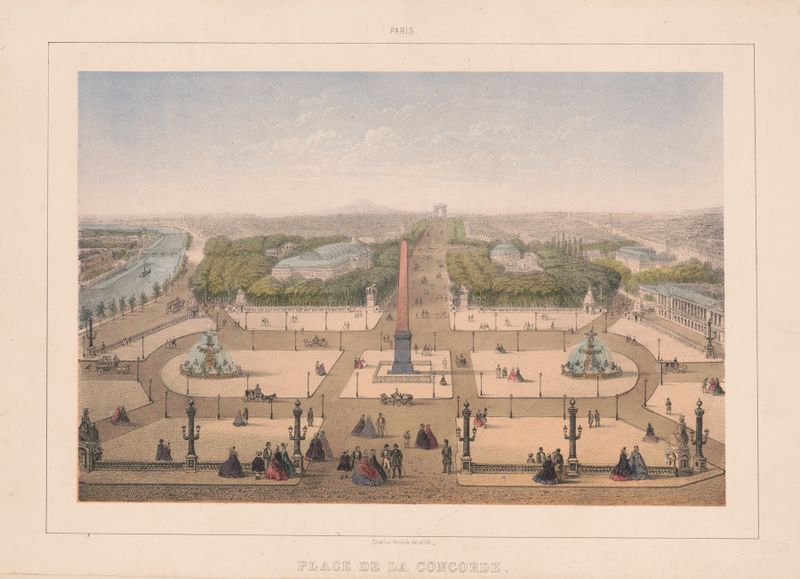
Paris. Place de la Concorde
Charles Rivière
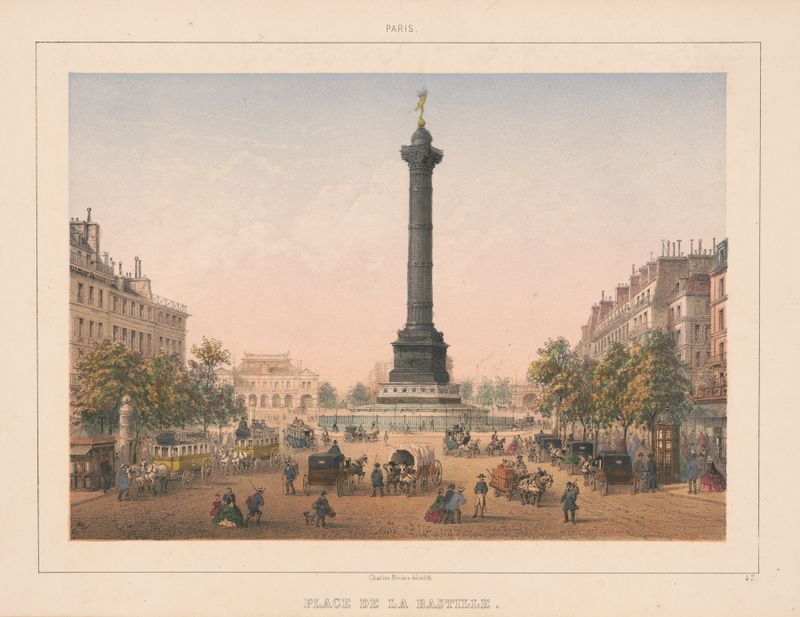
Paris. Place de la Bastille
Charles Rivière
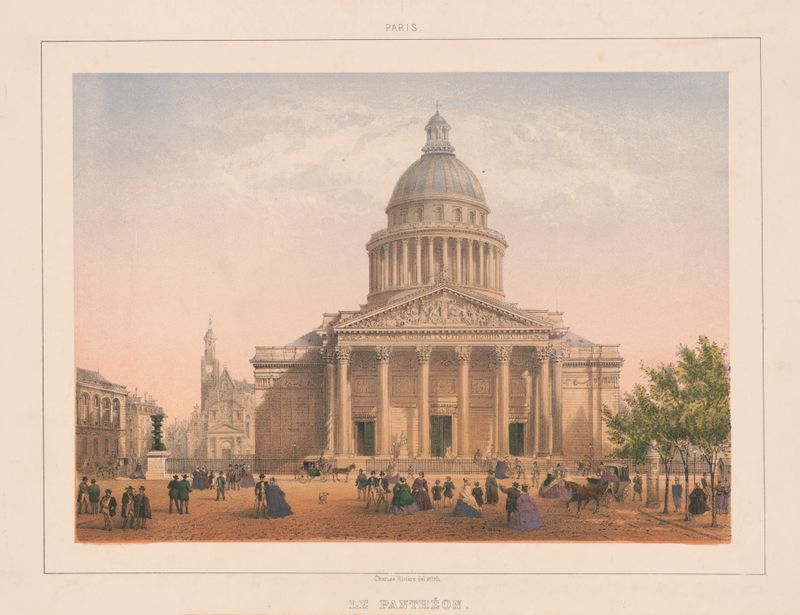
Paris. Le Panthéon
Charles Rivière

Paris. Hôtel de Ville
Charles Rivière
More Architecture Art
Browse all →
The statue of Liberty
Frédéric Auguste Bartholdi

View of Houses in Delft, Known as ‘The Little Street’
Johannes Vermeer

View of Houses in Delft, Known as ‘The Little Street’
Johannes Vermeer

The Cathedral in Rouen. The portal, Grey Weather
Claude Monet

The yellow house
Vincent van Gogh

The Church in Auvers-sur-Oise, View from the Chevet
Vincent van Gogh