
Paris. Palais de Justice et Ste. Chapelle — History & Facts
In the interplay of light and shadow, we find a delicate truth that transcends the surface of aesthetic allure. Look to the left, where the majestic towers of the Palais de Justice rise strikingly against the backdrop of a turbulent sky. The artist employs earthy browns and deep blues to ground the viewer, while gilded highlights shimmer softly along the façade, illustrating the opulence of Parisian architecture. Each brushstroke captures the intricate details of the stonework, inviting you to trace the contours that define both the grandeur and fragility of this monumental structure. Yet, amid this splendor lies a disquieting stillness.
The shadows cast by the buildings evoke a sense of solitude and contemplation, hinting at stories untold. The absence of figures stirs a poignant emptiness, suggesting a city that holds both beauty and sorrow. This juxtaposition of light and shadow speaks to the heart of human experience, where joy and pain often coexist in an intricate dance, revealing the layers beneath the surface. Created between 1870 and 1879, this work emerged during a time of social upheaval in France, marked by political unrest and transformation.
Rivière, inspired by the Romantic movement, sought to capture the essence of his surroundings in this urban landscape. As Paris was evolving, the artist documented not just the physical beauty of its architecture but also the complexity of life within its shadows.
More Artworks by Charles Rivière
Browse all →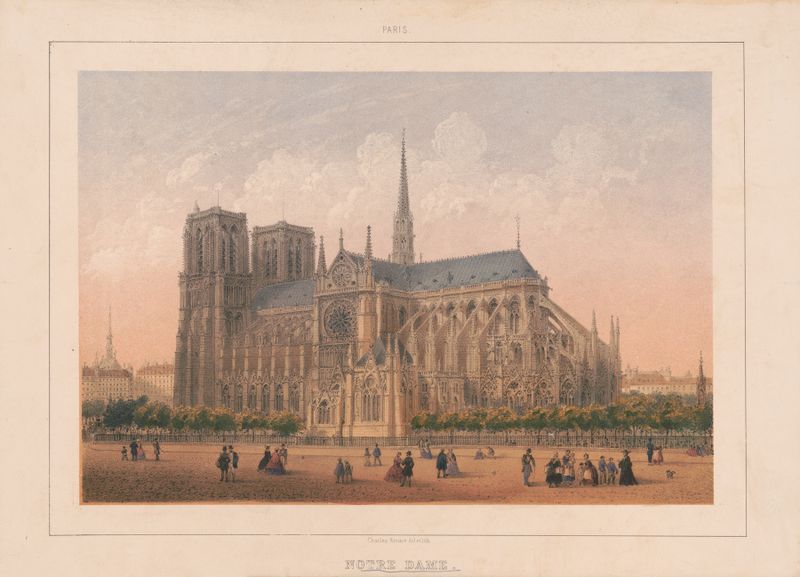
Paris. Notre Dame
Charles Rivière
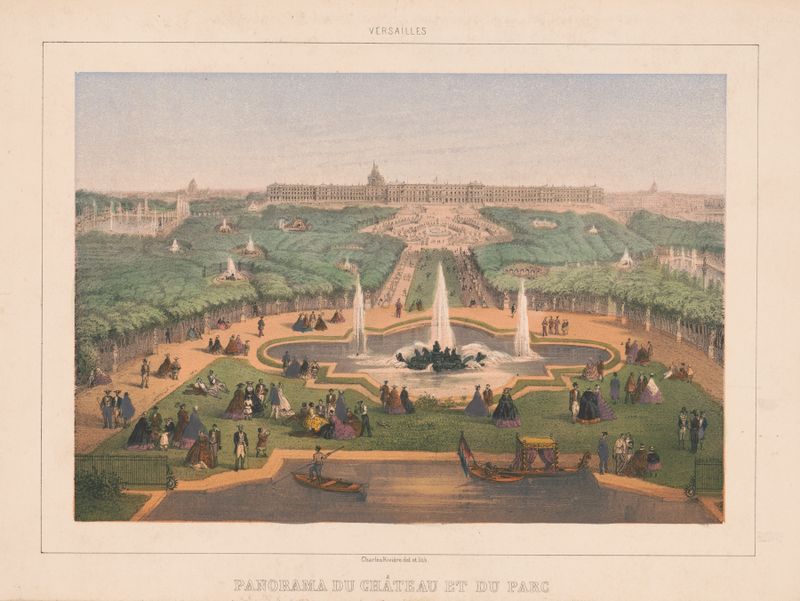
Versailles. Panorama du Château et du parc
Charles Rivière

Paris. Panorama des Tuileries et du Louvre
Charles Rivière
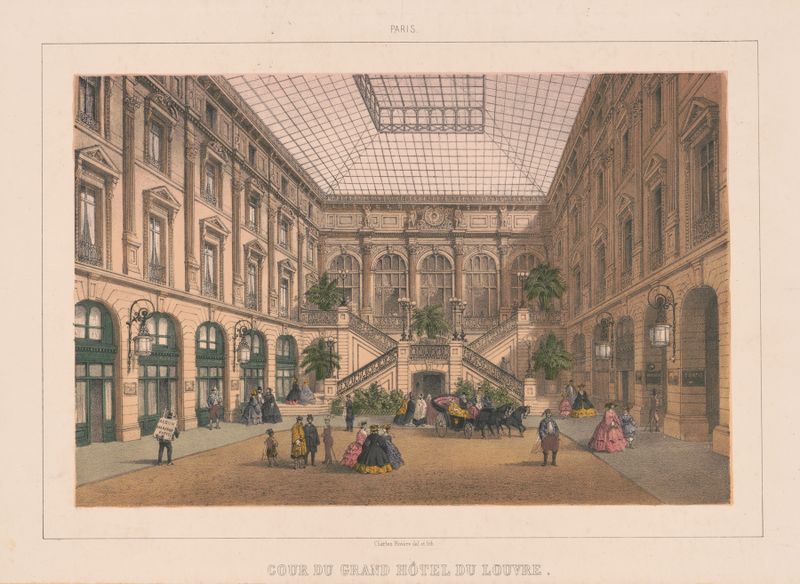
Paris. Cour du Grand Hôtel du Louvre
Charles Rivière
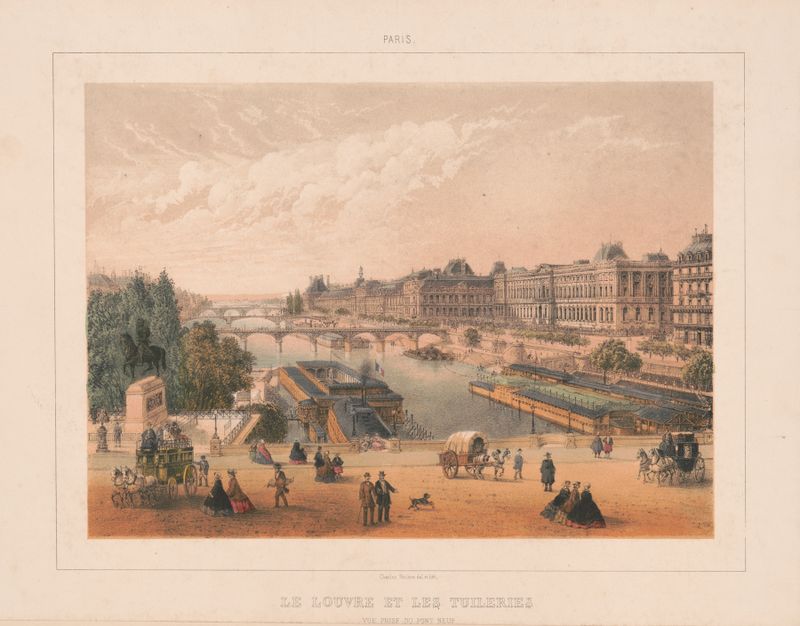
Paris. Le Louvre et les Tuileries vue prise du Pont Neuf
Charles Rivière
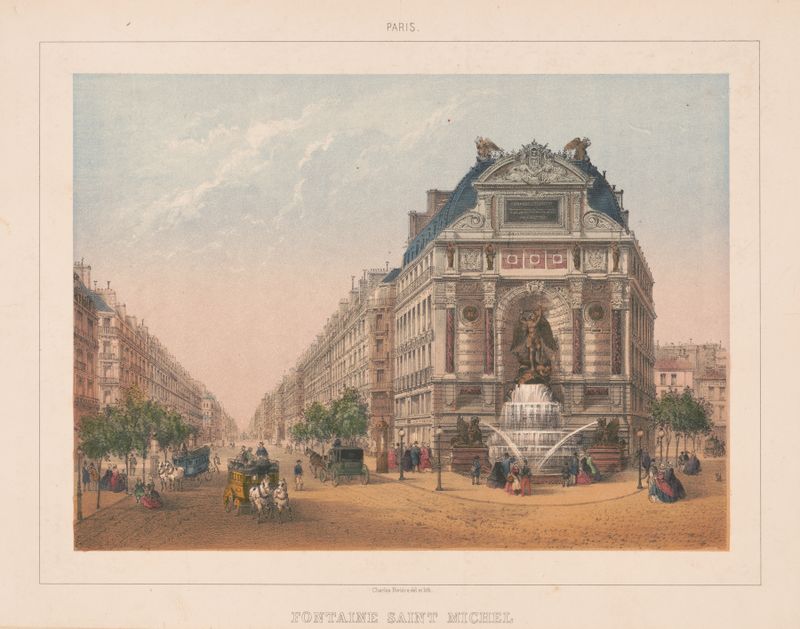
Paris. Fontaine Saint Michel
Charles Rivière
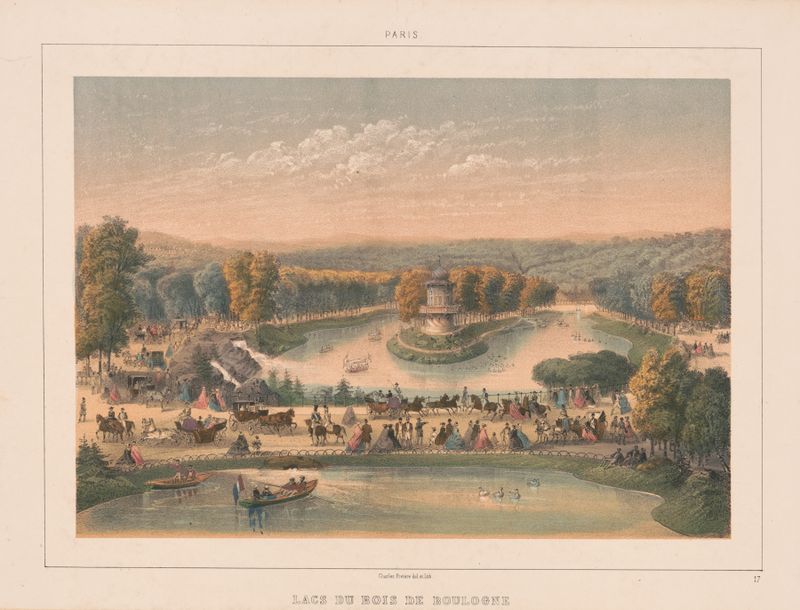
Paris. Lacs du Bois de Boulogne
Charles Rivière
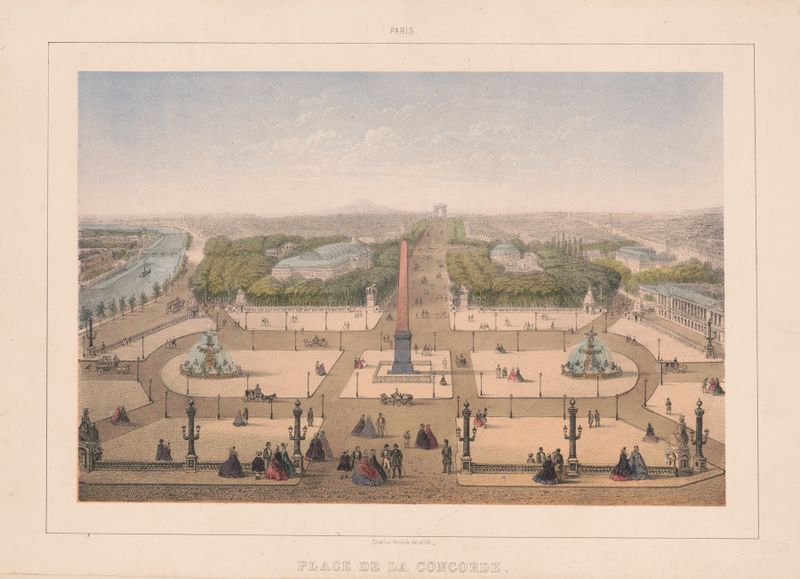
Paris. Place de la Concorde
Charles Rivière
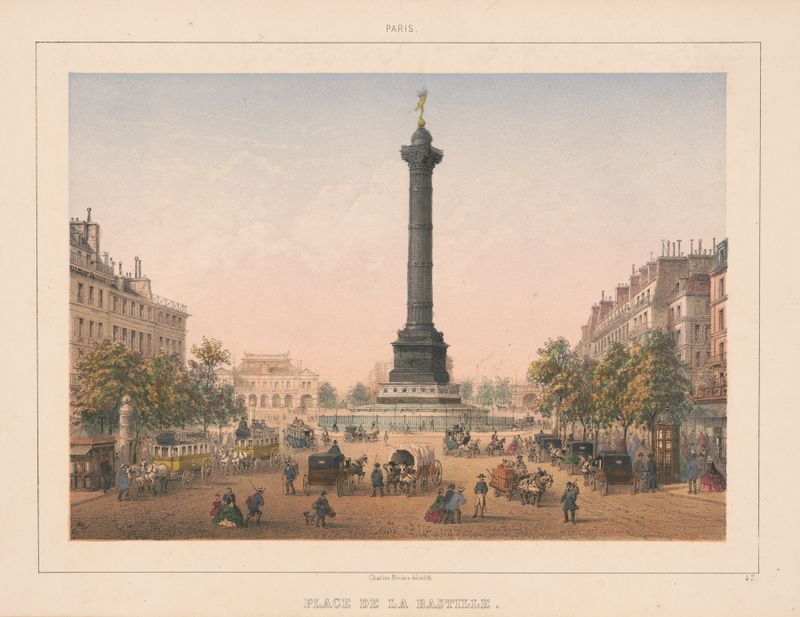
Paris. Place de la Bastille
Charles Rivière
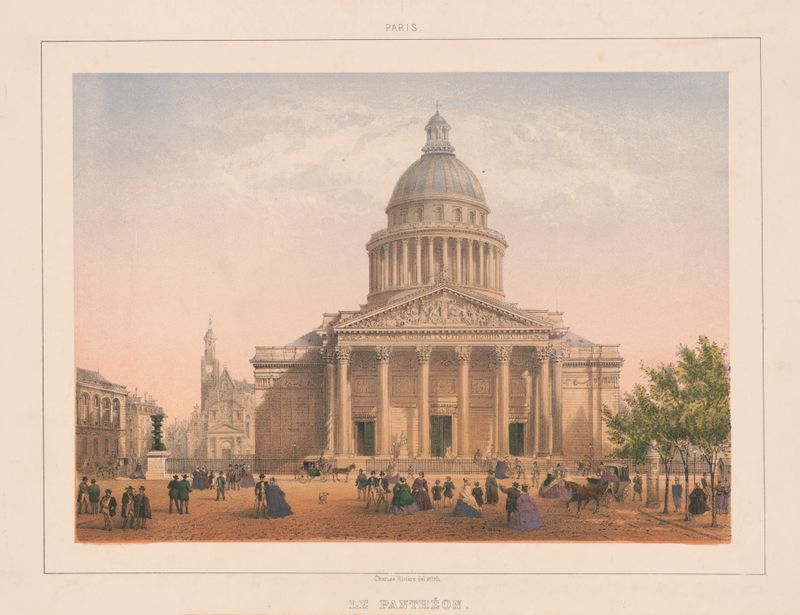
Paris. Le Panthéon
Charles Rivière
More Architecture Art
Browse all →
The statue of Liberty
Frédéric Auguste Bartholdi

View of Houses in Delft, Known as ‘The Little Street’
Johannes Vermeer

View of Houses in Delft, Known as ‘The Little Street’
Johannes Vermeer

The Cathedral in Rouen. The portal, Grey Weather
Claude Monet

The yellow house
Vincent van Gogh

The Church in Auvers-sur-Oise, View from the Chevet
Vincent van Gogh