
Pastoral landscape — History & Facts
In Pastoral Landscape, Claude Lorrain captures a serene view of nature. The painting features lush greenery, rolling hills, and a tranquil sky. Soft, warm colors dominate the scene, creating a peaceful atmosphere.
Figures can be seen in the distance, engaging in pastoral activities, adding life to the landscape. The painting is executed in oil on canvas, a common medium for Lorrain's works. The artist's technique showcases his skill in blending light and shadow, enhancing the three-dimensionality of the landscape. The brushwork is fluid, contributing to the overall harmony of the scene.
Viewers can appreciate the intricate details in the foliage and the gentle play of light. Claude Lorrain was a prominent figure in the Baroque movement, known for his idealized landscapes. This work, created in the 1640s, reflects his mastery of light and composition. Interestingly, Lorrain often painted en plein air, capturing the essence of nature directly from observation.
His landscapes influenced many later artists, establishing a standard for pastoral scenes in Western art.
More Artworks by Claude Lorrain

Seaport with the Embarkation of Saint Ursula
Claude Lorrain

The Embarkation of the Queen of Sheba
Claude Lorrain
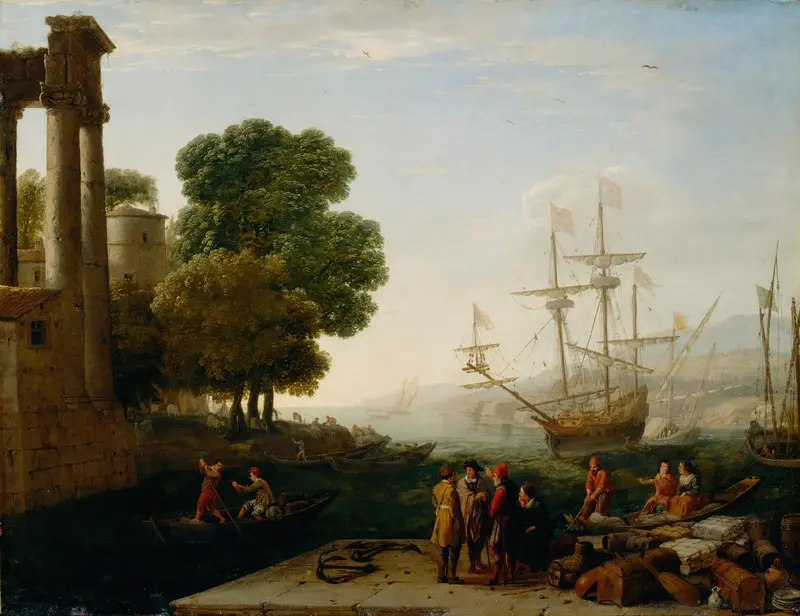
A Seaport at Sunset
Claude Lorrain
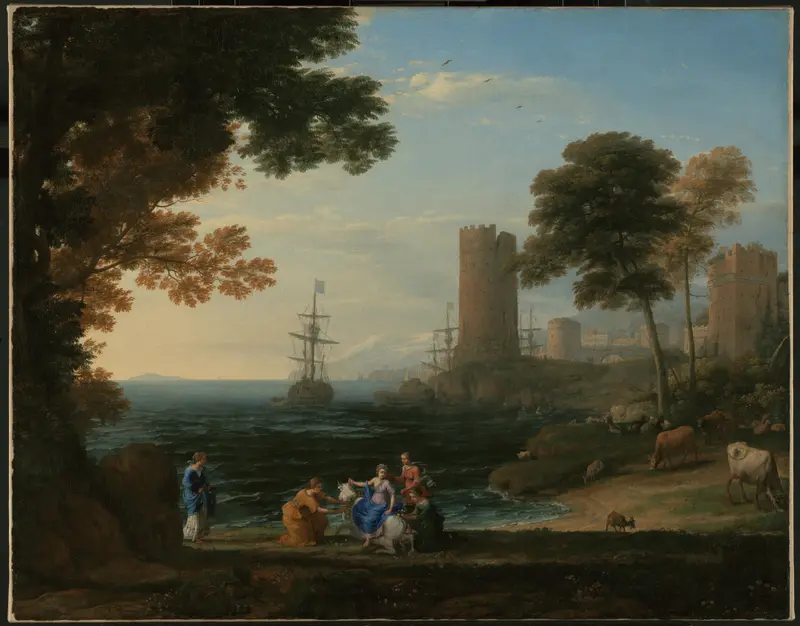
Coast View with the Abduction of Europa
Claude Lorrain
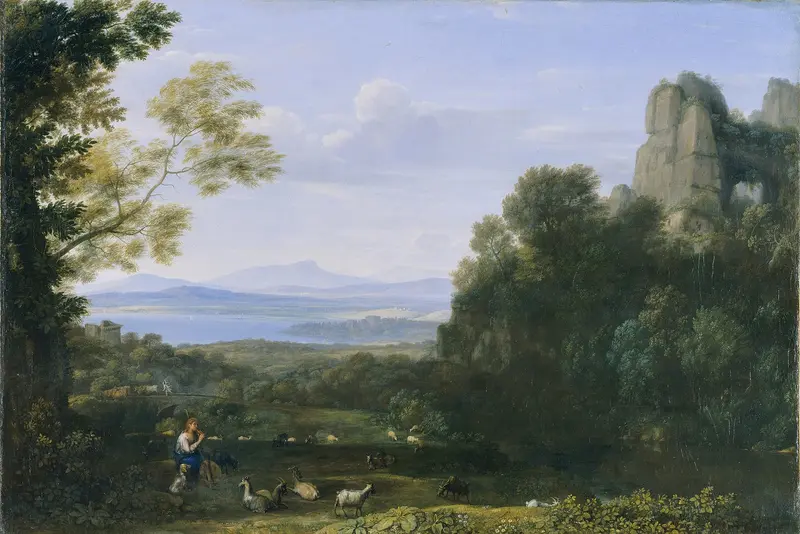
Landscape with Apollo and Mercury
Claude Lorrain

Landscape with the Flight into Egypt
Claude Lorrain

Paysage avec le port de Santa Marinella
Claude Lorrain
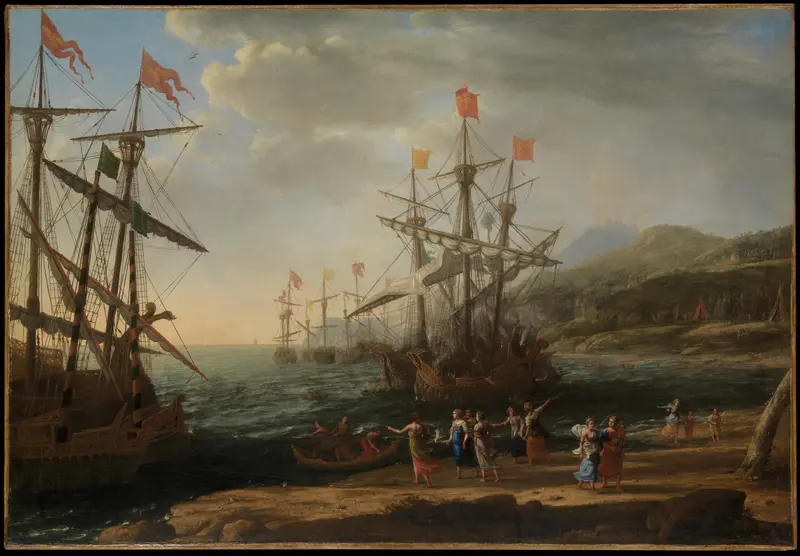
The Trojan Women Setting Fire to Their Fleet
Claude Lorrain
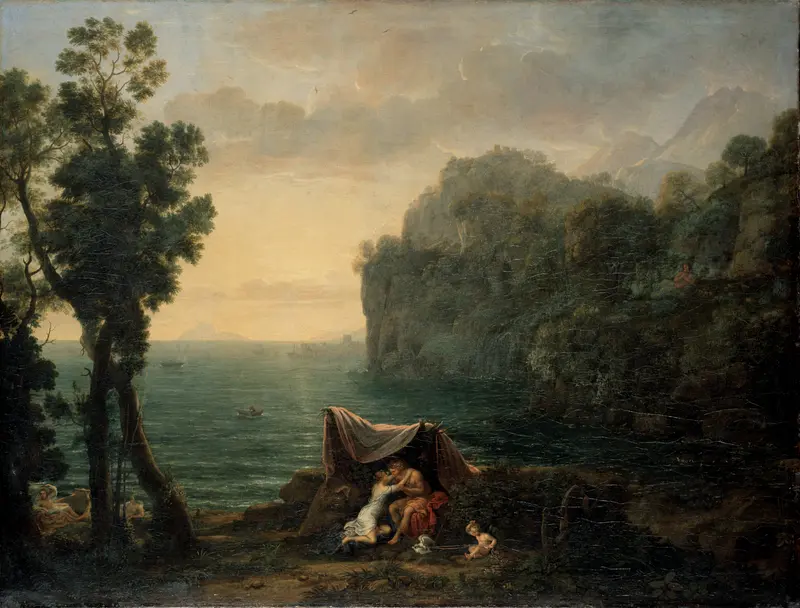
Landscape with Acis and Galatea
Claude Lorrain
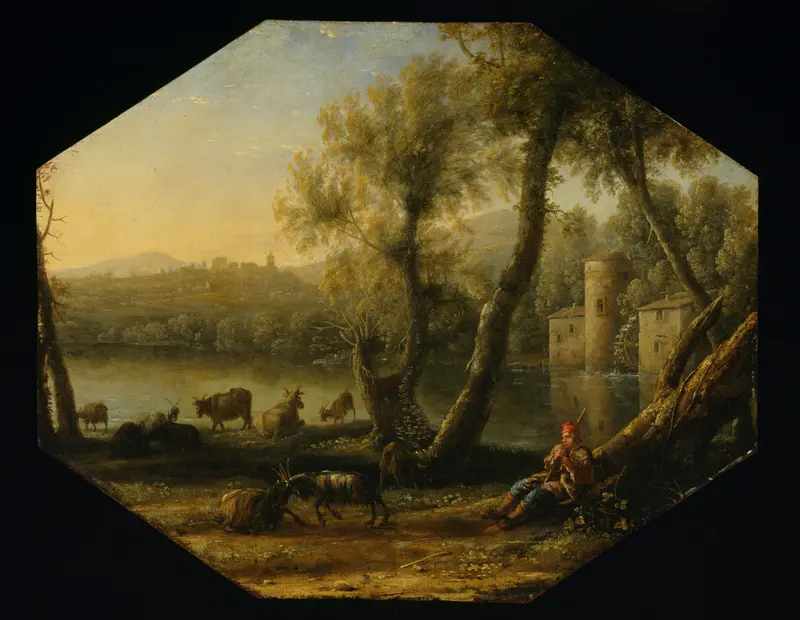
Pastoral landscape
Claude Lorrain
More Landscape Art

Starry Night
Vincent van Gogh

View of Delft
Johannes Vermeer

Water Lilies
Claude Monet

The Grand Canal, Venice, looking north-west from the Ca' Corner to the Ca' Contarini degli Scrigni, with the campanile of Santa Maria della Carità
Canaletto

Windsor Castle
Canaletto

The Grand Canal looking North-East from the Palazzo Dolfin-Manin to the Rialto Bridge
Canaletto