
The Road to Market — History & Facts
Can beauty exist without sorrow? In The Road to Market, Constant Troyon invites us to ponder this profound question through a landscape replete with life and quiet tension. The painting captures not just a moment in time but a rich narrative woven into the fabric of nature and human endeavor. Look to the foreground, where a winding path leads the eye through a lush countryside. The sun spills golden light over the vibrant greens and earthy browns, illuminating the figures of farmers and their livestock.
Notice the brushstrokes: they are both fluid and precise, coaxing depth and texture from the canvas. The interplay of light and shadow evokes a sense of movement, as if the scene breathes with the rhythm of daily life. Yet, despite the pastoral beauty, there is an underlying melancholy, a hint of the struggles that accompany existence. The distant hills, cloaked in a soft haze, suggest challenges unseen, while the weary expressions of the figures hint at the laborious journey they pursue.
The juxtaposition of flourishing nature against the toil of humanity embodies the complex relationship between beauty and hardship. In the late 1850s, Troyon was deeply entrenched in the Barbizon school movement, painting en plein air to capture the authentic essence of rural life. During this time, he was exploring themes of agrarian beauty and the contrasts inherent in nature's cycles. The Road to Market reflects not only his technical prowess but also the socio-economic realities of a changing Europe, where the simplicity of rural life was increasingly overshadowed by industrialization.
More Artworks by Constant Troyon
Browse all →
Landscape with Painter at Easel
Constant Troyon

The Marsh
Constant Troyon
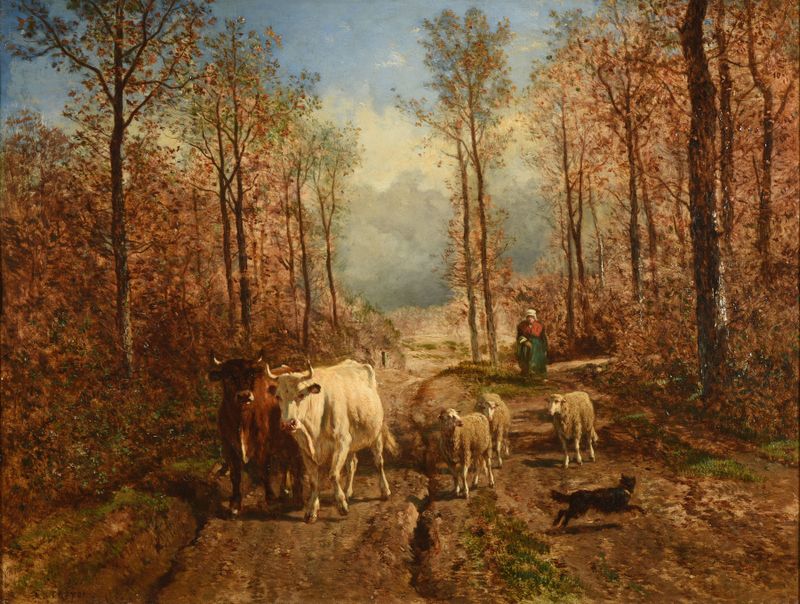
Rentrée de troupeau
Constant Troyon

Vaches sous bois
Constant Troyon

La gardeuse d’oies
Constant Troyon

Mill Stream with Fishermen
Constant Troyon
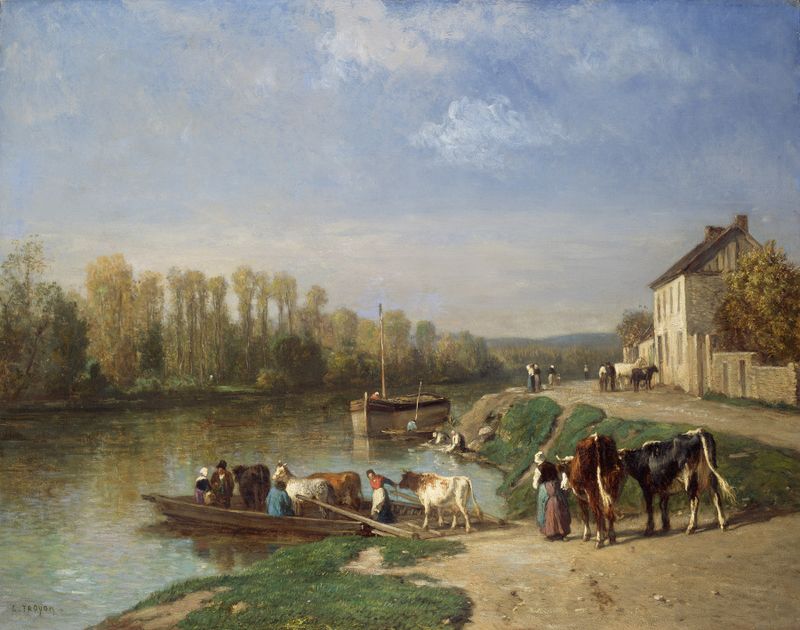
The Ferry Crossing
Constant Troyon

Landscape
Constant Troyon

Pasture in Normandy
Constant Troyon

Paysage
Constant Troyon





