
Pavillon habité par Balzac en 1843 rue Berton 24, a Passy — History & Facts
When did color learn to lie? In a world brimming with chaos, serenity becomes an oasis, inviting contemplation and stillness. Look to the left, where muted greens and soft blues cradle the peaceful pavilion, a structure that seems both alive and timeless. Notice how the light caresses the warm terracotta roof, casting gentle shadows that dance across the surrounding garden. Each brushstroke speaks of harmony; the artist’s palette reveals a deliberate choice to evoke tranquility amidst a tumultuous era. As you delve deeper, the interplay between light and shade reveals a narrative of solitude and introspection.
The pavilion, a sanctuary for Balzac, stands resilient yet vulnerable, embodying the tension between artistic aspiration and the ravages of reality. The surrounding flora, lush yet restrained, echoes a longing for connection, contrasting the silence of the building with the vibrancy of nature encroaching upon it. Created between 1915 and 1945, this painting emerged during a period marked by global conflict and artistic exploration. Fédor Hoffbauer, influenced by the tumult of the world and a deep appreciation for literary giants like Balzac, sought to capture moments of serenity that defied the chaos surrounding him.
This work invites the viewer to pause and reflect, a rare glimpse of calm amid the storm of history.
More Artworks by Fédor Hoffbauer
Browse all →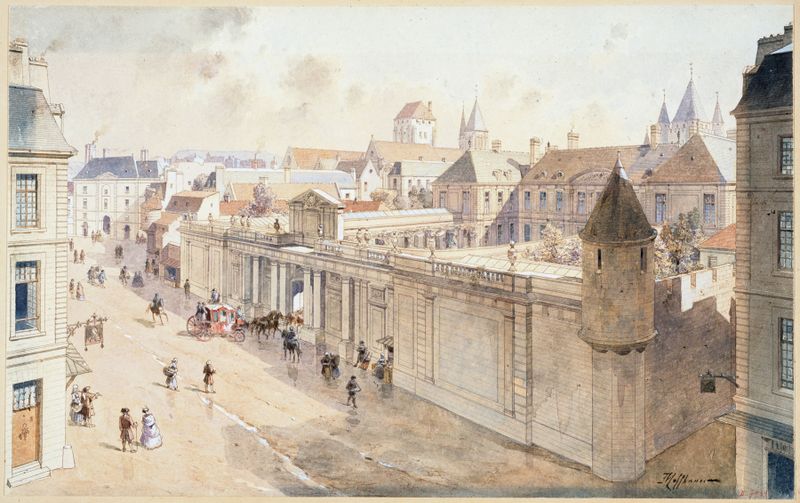
Le palais du Grand Prieur au Temple, en 1770
Fédor Hoffbauer
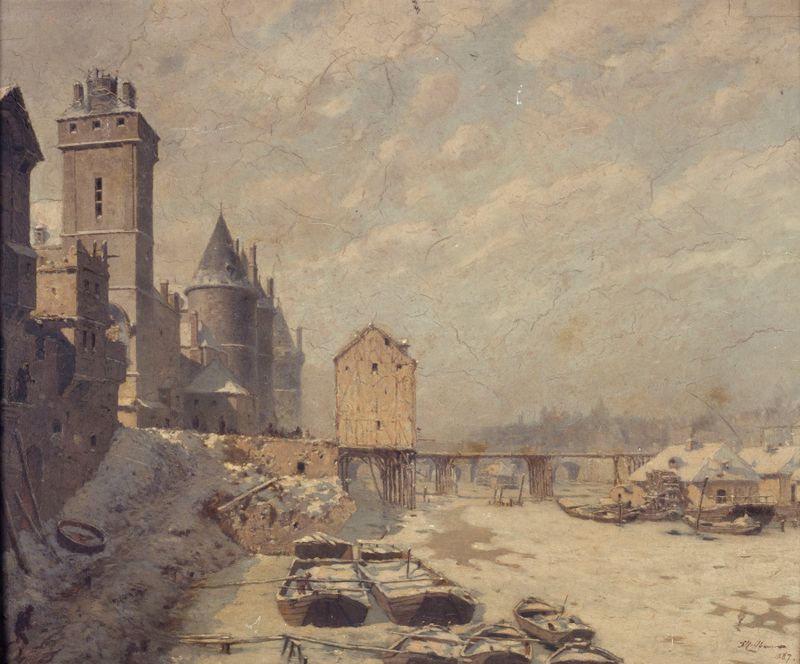
La tour de l’Horloge, la Conciergerie et le pont au Change, en 1621
Fédor Hoffbauer

Banquet des officiers de la marine Russe, dans la salle des fêtes à l’Hôtel de Ville. Fêtes Franco-Russes à Paris
Fédor Hoffbauer

Le Grand Châtelet et le pont de Bois, 1621-1645
Fédor Hoffbauer
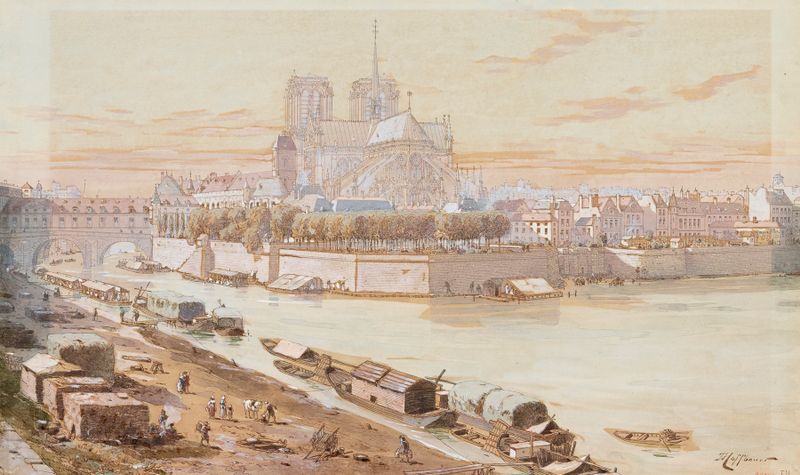
Notre-Dame et l’Evêché en 1750
Fédor Hoffbauer

Vue panoramique de Paris en 1588, depuis les toits du Louvre, avec le Pont-Neuf en construction
Fédor Hoffbauer
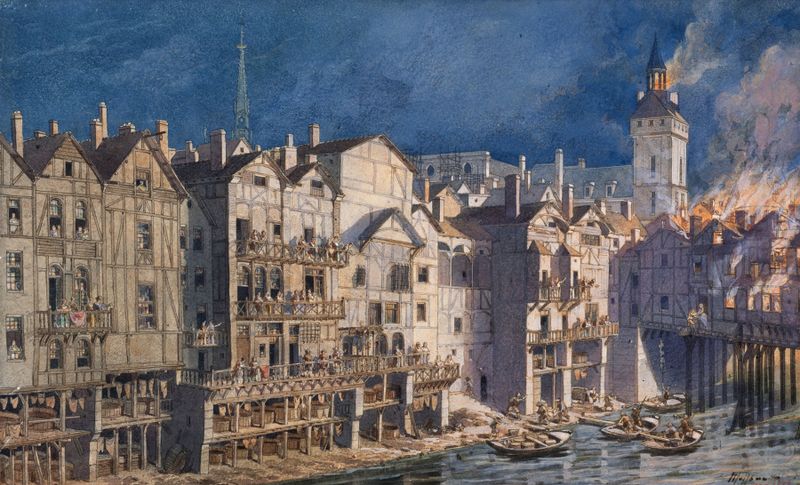
La Cité entre le pont Notre Dame et le pont au Change en 1621
Fédor Hoffbauer

L’Hôtel de Ville et le pont d’Arcole en 1842
Fédor Hoffbauer

Le Cimetière des Innocents en 1750
Fédor Hoffbauer
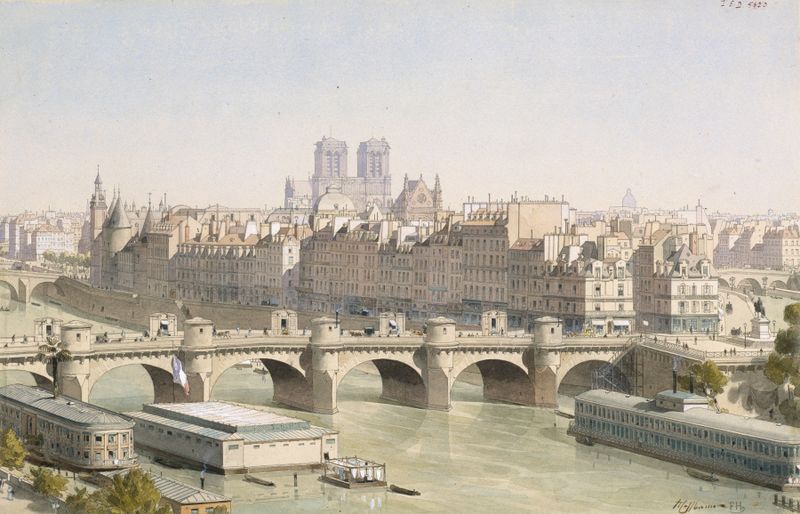
Vue de l’île de la Cité et le pont-Neuf avec ses boutique, vers 1840
Fédor Hoffbauer
More Architecture Art
Browse all →
The statue of Liberty
Frédéric Auguste Bartholdi

View of Houses in Delft, Known as ‘The Little Street’
Johannes Vermeer

View of Houses in Delft, Known as ‘The Little Street’
Johannes Vermeer

The Cathedral in Rouen. The portal, Grey Weather
Claude Monet

The yellow house
Vincent van Gogh

The Church in Auvers-sur-Oise, View from the Chevet
Vincent van Gogh