Paysage au bord du Lez (Landscape by the Lez River) — History & Facts
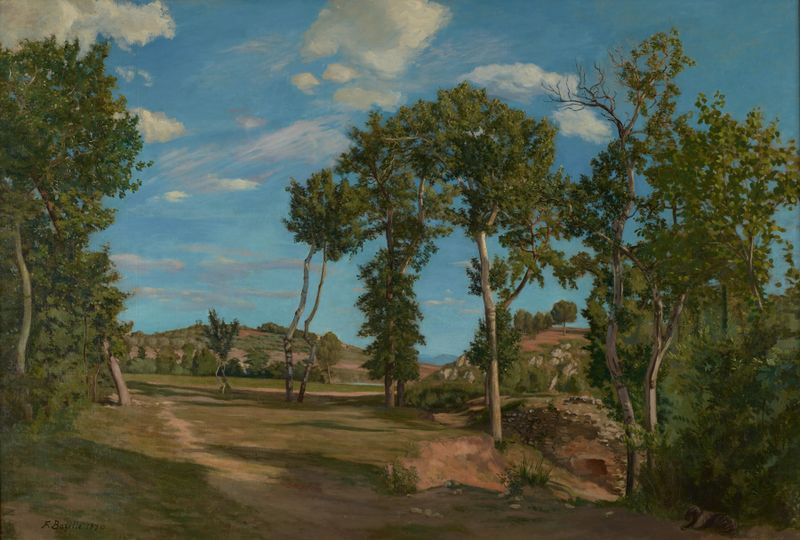
When did color learn to lie? In a world where desire intertwines with the essence of nature, a landscape beckons us closer, whispering secrets through its vibrant hues. First, look to the vibrant greens and soft blues that dominate the canvas, inviting your gaze to trace the meandering flows of the Lez River. Notice the delicate brushstrokes that capture the movement of the water, reflecting the dappled sunlight filtering through the branches overhead. The scene breathes with life, as if the foliage and river conspire to share their intimate stories with the viewer, urging you to step into their tranquil embrace. As you explore further, observe the juxtaposition between the lush greenery and the serene water, symbolizing both peace and the fleeting nature of desire.
The careful placement of light and shadow plays upon the landscape, suggesting an underlying tension—between reality and the ideal, between longing and fulfillment. Bazille's use of color evokes not just the beauty of the scene but also an awareness of the yearnings that lie beneath the surface, awakening an emotional resonance within you. In 1870, Frédéric Bazille painted this piece in the south of France, a time when he was deeply engaged with the burgeoning Impressionist movement. Encountering personal struggles and the complexities of artistic expression, he sought to capture the essence of nature while grappling with his own desires and aspirations.
His work during this period reflects a pivotal moment in art history, blending realism with the new explorations of light and color that challenged traditional conventions.