Porte de la Reine at Aigues-Mortes — History & Facts
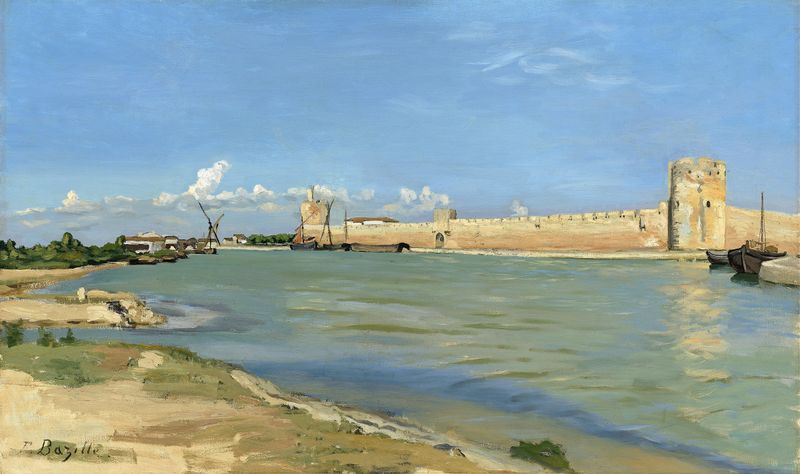
What if silence could speak through light? In Porte de la Reine at Aigues-Mortes, the interplay of stillness and luminosity evokes a fragile serenity that transcends the canvas. Look to the center, where the imposing medieval gate arches gracefully against a backdrop of softened blues and ochres. The light, gentle yet purposeful, cascades down from above, illuminating the weathered stones and casting delicate shadows that invite contemplation. The composition’s balance is striking; serene clouds drift lazily overhead, harmonizing with the tranquil scene below, creating a sense of unity between nature and the architecture. Delve deeper into the painting’s rich layers, where contrasts emerge—between the solidity of stone and the ephemeral quality of the light, the man-made structure and the natural world surrounding it.
The gentle ripples of the water reflect the sky’s hues, suggesting a fragile connection between earth and air. This dichotomy hints at the transient nature of beauty and existence, capturing a moment that feels both eternal and fleeting. In 1867, Frédéric Bazille was immersed in the evolving art scene of Paris, seeking his voice amidst the Impressionists. At this time, he was exploring themes of light and color, influenced by his contemporaries while developing his own distinctive approach.
Painting Porte de la Reine at Aigues-Mortes marked a significant point in his artistic journey, as he ventured out of the city into the serene landscapes of southern France, capturing fleeting moments with precision and emotional depth.