The Western Ramparts at Aigues-Mortes — History & Facts
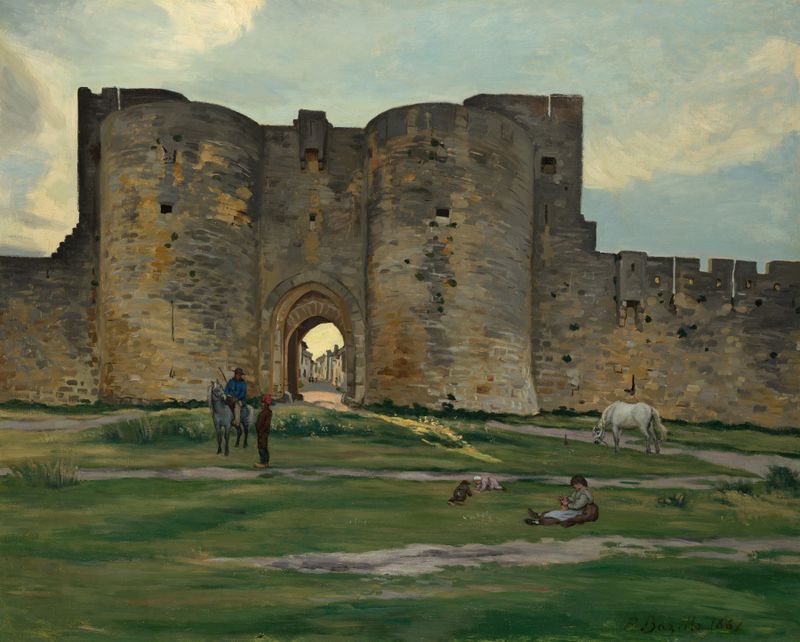
This quiet revelation resonates through the brushstrokes of a poignant masterpiece, reflecting the tumult of a world on the brink of change. As the canvas unfolds, layers of meaning emerge—a revolution brewing not just in society, but within the artist's heart. Focus first on the vibrant hues that form the western ramparts, rising majestically against a bright sky. The interplay of shadow and light gives depth to the fortress, suggesting strength yet also vulnerability.
Notice how the delicate strokes of greenery at the base speak of nature’s resilience, contrasting the sturdy stone walls. This engaging composition invites the viewer to explore the dialogue between the manmade and the organic, each color choice meticulously revealing an underlying tension. Delve deeper, and observe the precise placement of figures along the ramparts. Their presence is almost ghostly, blending into the landscape while hinting at a past that echoes with struggle.
The painting captures a fleeting moment of stillness, yet the tension in the air suggests an imminent change—each brushstroke becomes a whisper of what was and what could be. The contrast between the stability of the architecture and the restless energy of the individuals speaks to a society on the cusp of transformation. In 1867, during a time of social upheaval, the artist captured this scene while living in France—a nation grappling with the aftermath of revolution. Bazille was part of the emerging Impressionist movement, where traditional conventions were being challenged, and this work reflects his innovative spirit.
Merging the grand with the intimate, he eloquently encapsulated not just a location, but the very essence of a society in flux.