Landscape at Chailly — History & Facts
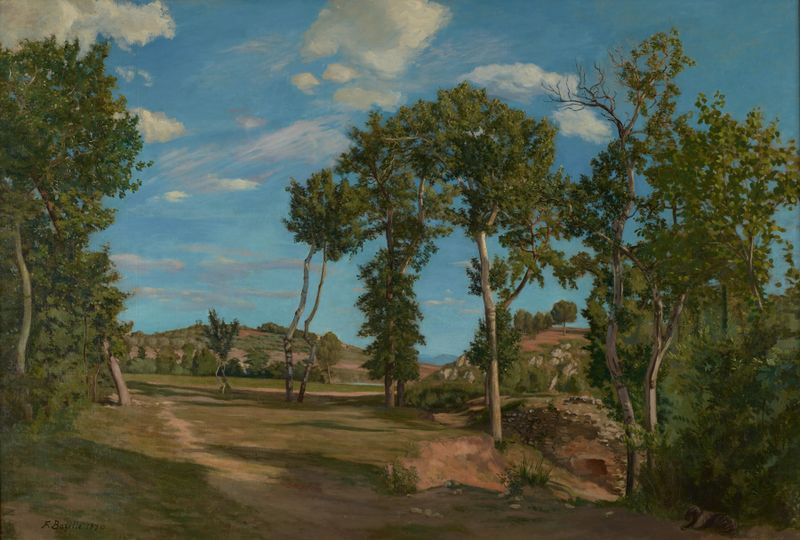
In the quiet of nature's embrace, a landscape can conceal storms beneath its tranquil surface, hinting at violence just beneath the calm. Look to the left at the lush green forefront, where the delicate brushstrokes of vibrant foliage intertwine with the earthy tones of the path. Notice how the dappled light filters through the trees, casting a mosaic of shadows and highlights that dance across the canvas. The composition invites the viewer to wander deeper into the woodland, where the vibrant colors pulse with energy, creating a dialogue between harmony and underlying chaos. Within this serene setting, contrasts emerge — the gentle harmony of nature is juxtaposed with the potential violence of the unseen.
The serenity of the trees and rolling hills belies a deeper truth, as the rich brushwork evokes a restless energy. This tension between beauty and turmoil reflects the artist's internal struggles as he navigated his own emotions, mirroring the complexities of life itself. Created in 1865, the artist painted this piece during a transformative time in his life. Immersed in the burgeoning Impressionist movement in Paris, he sought to capture the ephemeral quality of light in nature while grappling with the expectations of traditional art.
The landscape is not merely a depiction of place; it is a reflection of the artist's quest for identity amid a changing world, where the whispers of violence linger beneath the surface of beauty.