
Paysage aux meules de foin — History & Facts
Can beauty exist without sorrow? In Gustave Cariot's Paysage aux meules de foin, the pastoral scene unfolds with an undercurrent of melancholy, inviting quiet contemplation of nature's fleeting charm. Look to the left, where tall, golden haystacks rise against a sky bruised by the promise of rain. The brushstrokes blend earthy tones with whispers of vibrant greens, illuminated by soft light that dapples the landscape, revealing the artist’s mastery of capturing atmosphere. Cariot’s technique embodies both impressionistic and realistic qualities, allowing the viewer to feel the weight of the moment, as if time itself is suspended in this idyllic yet poignant tableau. As you absorb the scene, consider the juxtaposition of the vibrant harvest against the looming clouds.
The haystacks stand proud yet solitary, embodying labor's harvest and hinting at the inevitable cycle of decay. This duality resonates, revealing a bittersweet relationship with nature—beauty tinged with transience, joy shadowed by the inevitable passage of time. Each element harmonizes to evoke a sense of longing, as if the landscape itself mourns what has been lost. In 1928, Cariot painted this evocative work during a time when the art world was grappling with the aftermath of World War I.
The shift towards modernism and abstraction influenced many artists, yet Cariot chose to reflect a serene, almost nostalgic view of rural life. This painting emerges not only as a celebration of the countryside but also as a silent elegy for the world that was, steeped in the quiet sorrow that accompanies beauty.
More Artworks by Gustave Cariot
Browse all →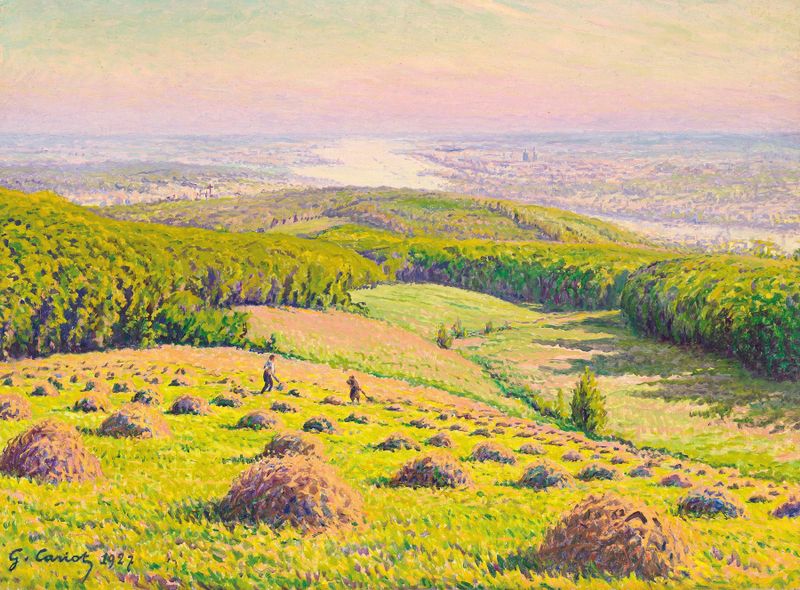
La vallée
Gustave Cariot

Le Jardin
Gustave Cariot

Les meules
Gustave Cariot
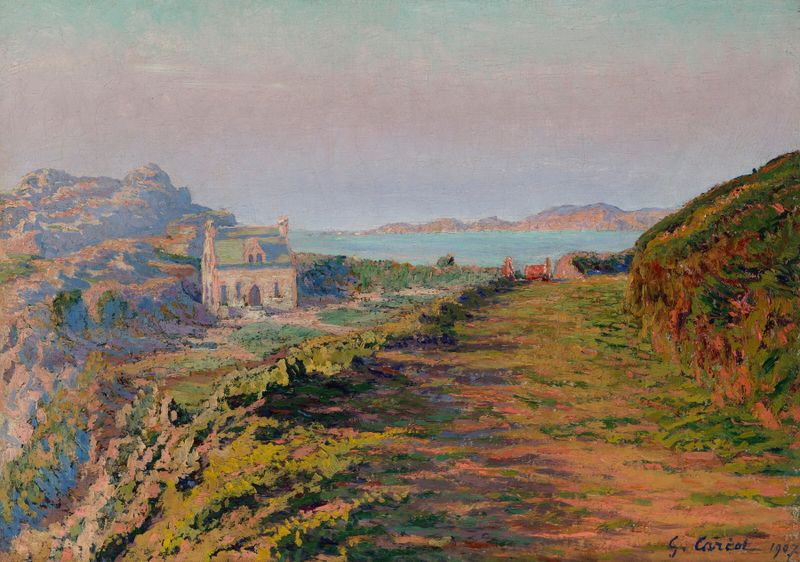
Maison Pen ar C’hastel à la pointe du Château, Perros-Guirrec
Gustave Cariot
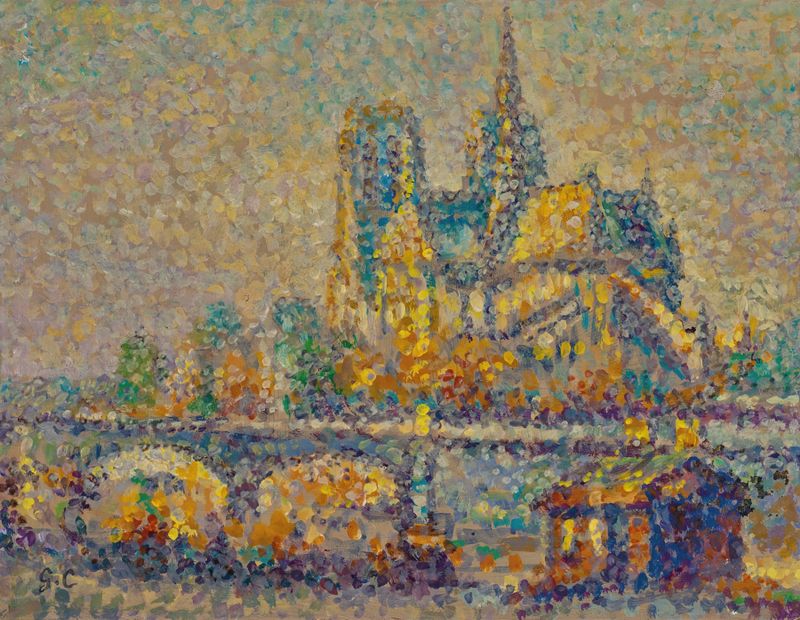
Notre-Dame de Paris
Gustave Cariot
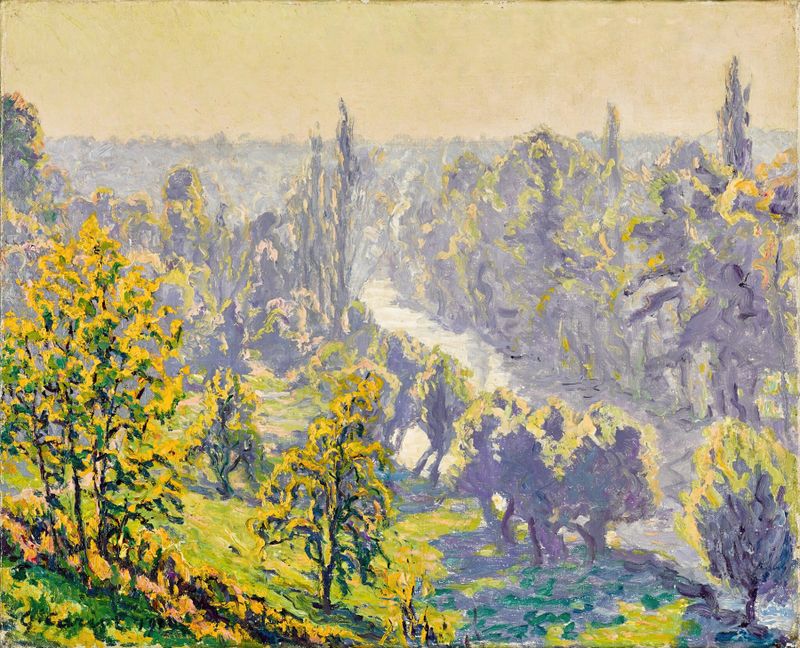
Périgny, automne, matinée sur l’Yerres
Gustave Cariot
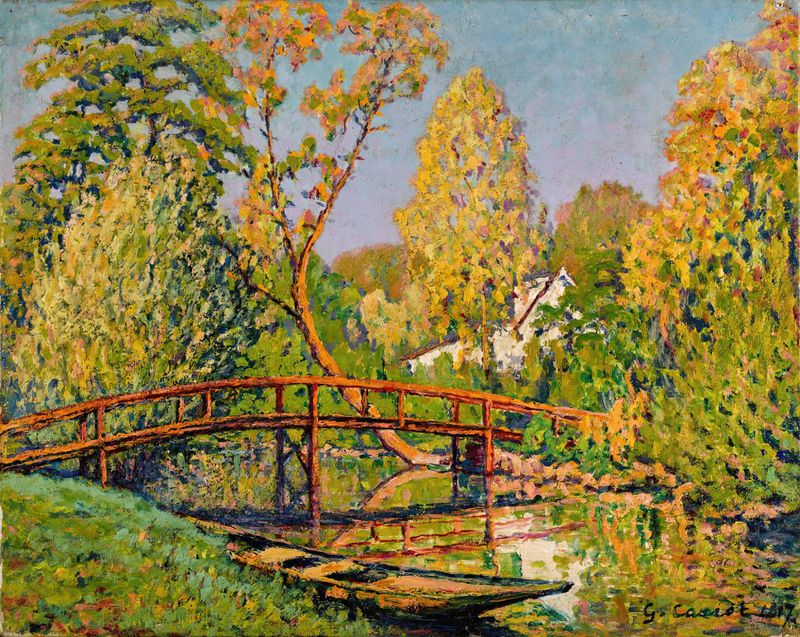
Périgny, pont sur l’Yerres
Gustave Cariot
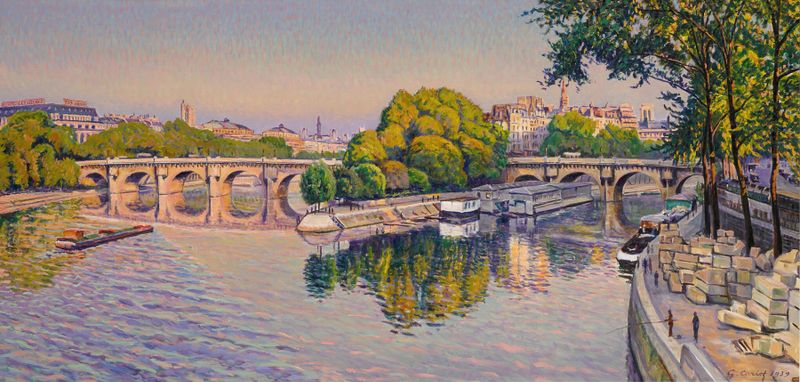
Le Pont-Neuf, eté, 20 heures
Gustave Cariot

Moulin de Périgny
Gustave Cariot

Le chemin à Mandres
Gustave Cariot





