
Paysage avec des lavandières — History & Facts
In Paysage avec des lavandières, the stillness of a rural scene invites introspection and reflection, capturing a moment where life unfolds in serene harmony. To truly appreciate this artwork, look to the left at the gentle curves of the landscape, where the soft greens and earthy browns create a sense of tranquility. Notice how the figures of the washerwomen, immersed in their labor, are bathed in warm sunlight, which cleverly contrasts with the cool hues of the water. The composition expertly draws your eye along the winding river, guiding you through the serene labor of daily life, where every detail beckons for attention. In this piece, the tension between labor and leisure emerges quietly; the washerwomen are at work, yet their surroundings evoke calmness.
The flowing water reflects not only their efforts but also a deeper meditation on the passage of time and the cycles of life. The balance of activity and repose in this landscape hints at the unspoken narratives of the women—each stroke of the fabric against the water a whisper of their existence, their stories intertwined with nature. In 1763, Vernet painted this scene while residing in Rome, where he was deeply influenced by the classical landscape tradition. This period was marked by a growing appreciation for nature in art, as artists sought to depict not just the visible, but the emotional resonance of their surroundings.
Vernet’s work reflects this shift, capturing the essence of daily life against a grand yet intimate backdrop, positioning him as a pivotal figure in the narrative of 18th-century landscape painting.
More Artworks by Claude-Joseph Vernet
Browse all →
An Italian Harbour in Stormy Weather
Claude-Joseph Vernet
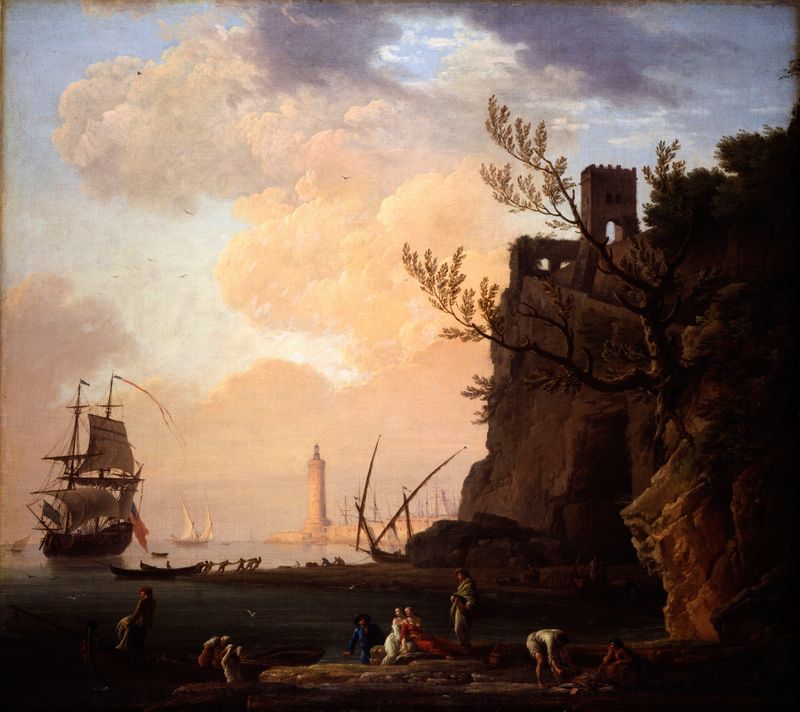
An Italianate Harbour Scene
Claude-Joseph Vernet
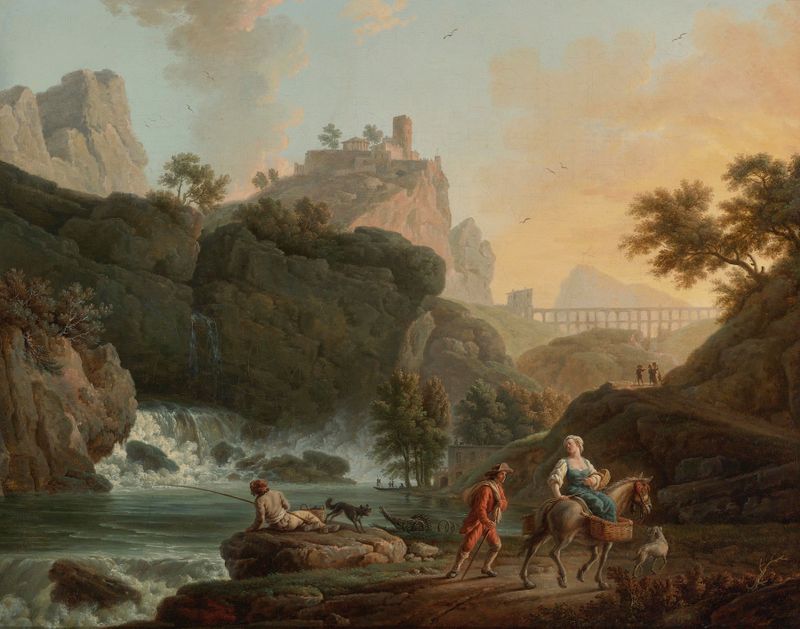
A Rocky Landscape With A fisherman And Travellers By A River With A Waterfall, An Aqueduct In The Distance
Claude-Joseph Vernet
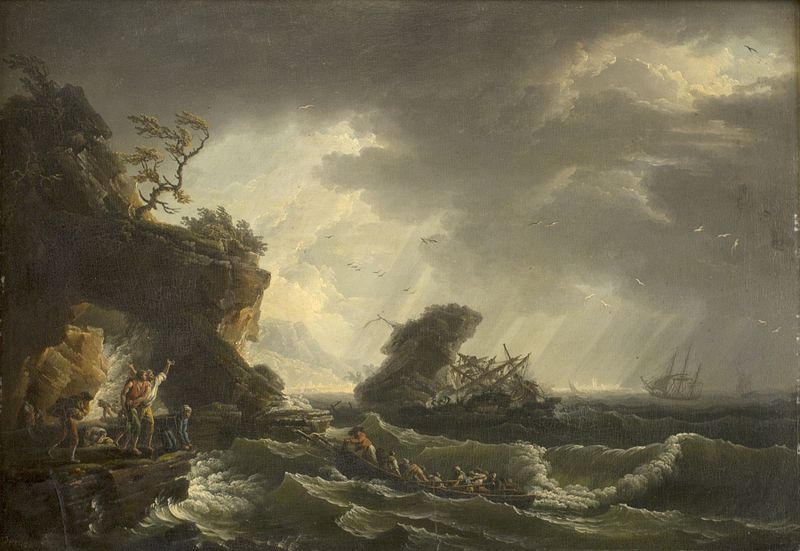
A Shipwreck
Claude-Joseph Vernet

A Mediterranean Harbor At Sunset With Fisherfolk At The Water’s Edge, A Lighthouse And A Man Of War At Anchor In The Bay
Claude-Joseph Vernet
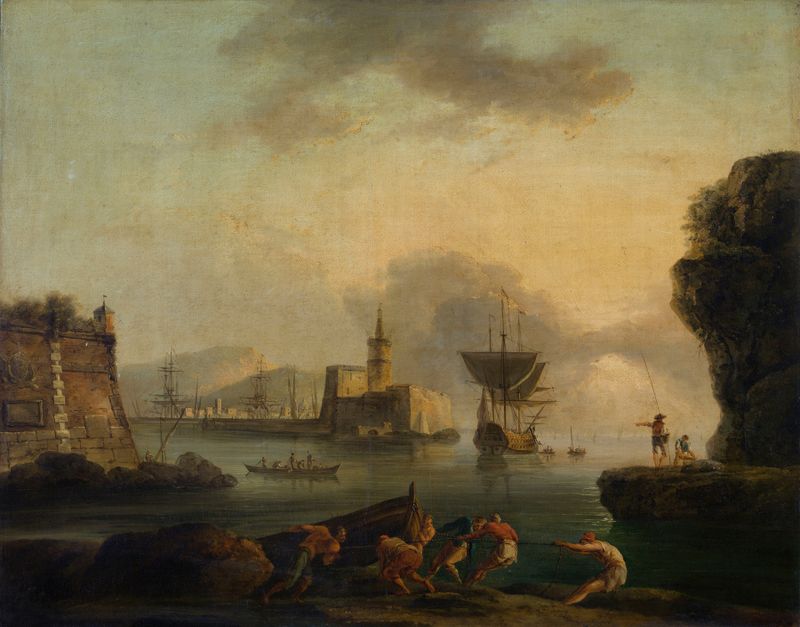
Naples
Claude-Joseph Vernet
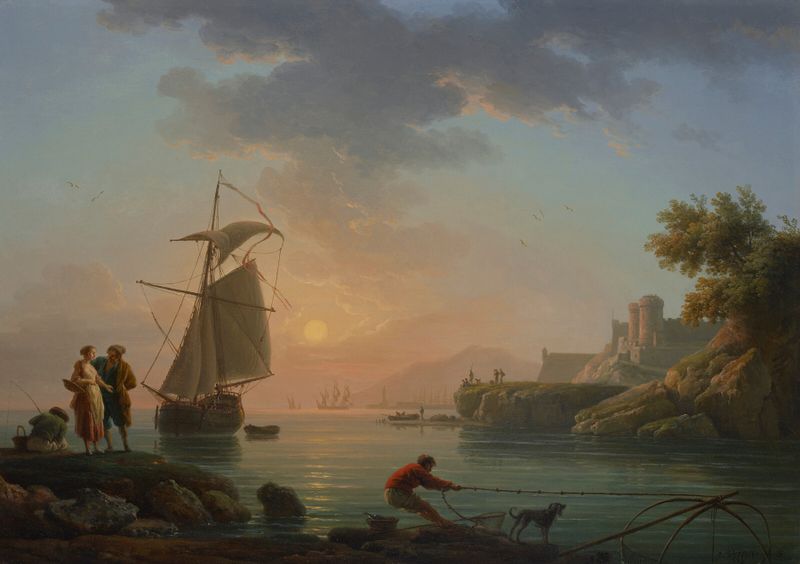
Mediterranean port at sunset, with a fisherman in the foreground
Claude-Joseph Vernet
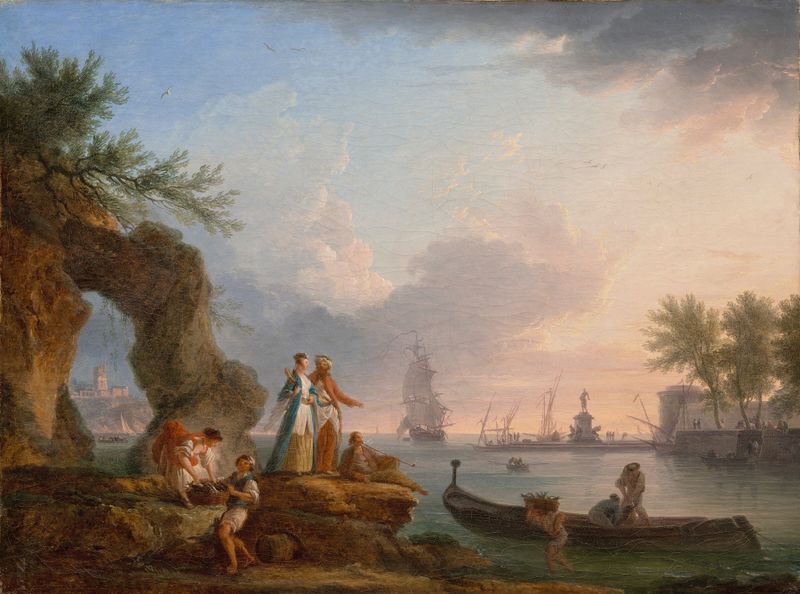
View of a port at sunset with fishermen and a couple in oriental dress
Claude-Joseph Vernet

A Calm at a Mediterranean Port
Claude-Joseph Vernet

A Grand View Of The Sea Shore Enriched With Buildings, Shipping And Figures
Claude-Joseph Vernet





