
Paysage avec lavandières — History & Facts
What if beauty was never meant to be finished? In the delicate balance of nature and labor, Paysage avec lavandières invites us to consider the transient nature of both art and existence, hinting at the betrayals of time that unravel even the most idyllic moments. Look to the left at the gentle curve of the river, shimmering under a caressing sunlight that dances upon its surface. The scene is alive with movement; women diligently work by the water’s edge, their garments bright against the lush greenery, while the sky, washed in soft blues and whites, looms overhead. Every brushstroke conveys not just detail but emotion, with the textured foliage creating a vibrant backdrop that enhances the serene yet industrious atmosphere of the composition. Yet beneath the surface beauty lies an unraveling tension.
Each figure, engrossed in their daily toil, suggests a silent struggle against nature’s impermanence. The harmony of the scene is undercut by the knowledge that this idyllic moment is fleeting, just as the water continuously flows, eroding the banks even as it nourishes them. The juxtaposition of labor and leisure subtly echoes the betrayals of daily life—where beauty often comes at the cost of relentless work and time slips away unnoticed. When Claude-Joseph Vernet painted this work in 1789, he was residing in Paris, an era marked by societal upheaval and a burgeoning awareness of the Enlightenment ideals.
The painting reflects not only his mastery of landscape and light but also the broader transition within the art world, as artists began to explore the interplay between human endeavor and the natural world. Amidst the political and personal turbulence of his time, this canvas captures a poignant, yet transient, moment of beauty.
More Artworks by Claude-Joseph Vernet
Browse all →
An Italian Harbour in Stormy Weather
Claude-Joseph Vernet
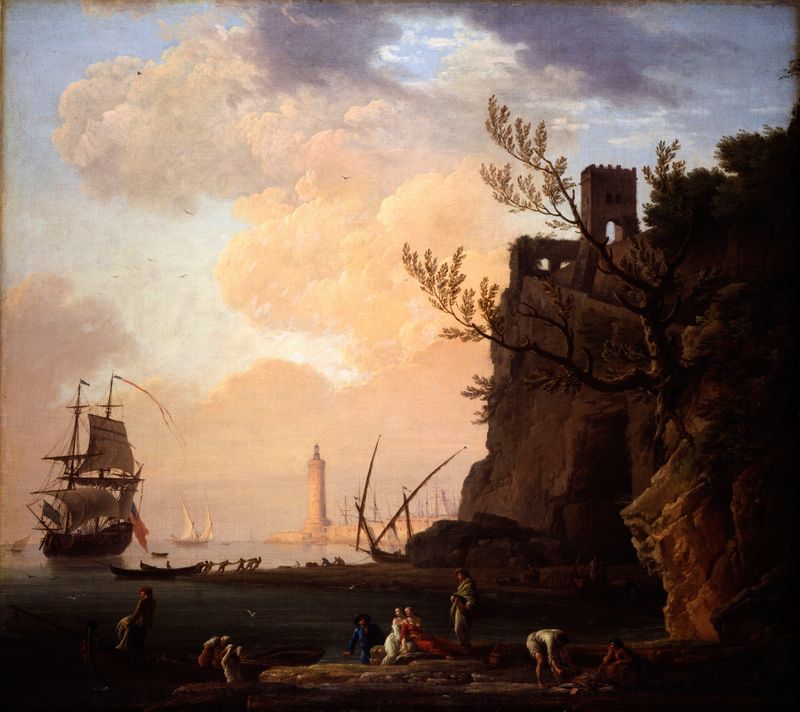
An Italianate Harbour Scene
Claude-Joseph Vernet
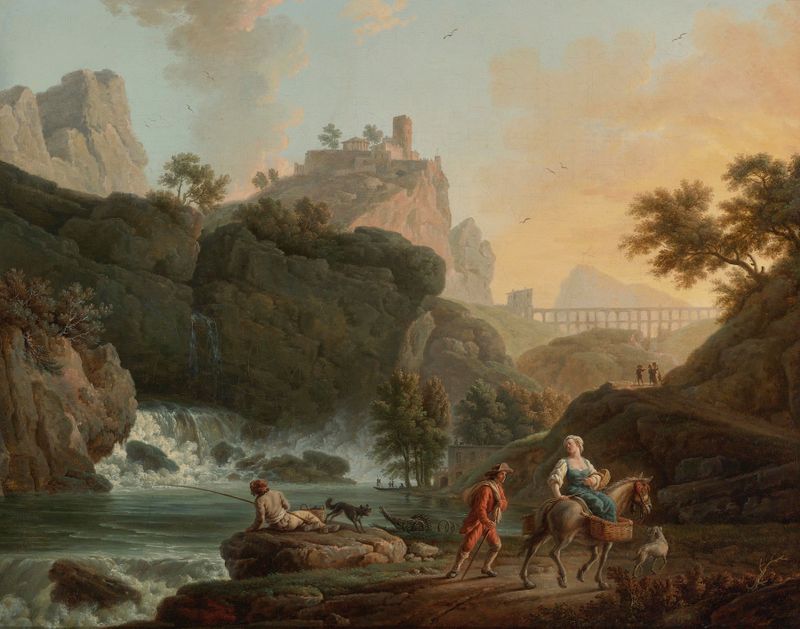
A Rocky Landscape With A fisherman And Travellers By A River With A Waterfall, An Aqueduct In The Distance
Claude-Joseph Vernet
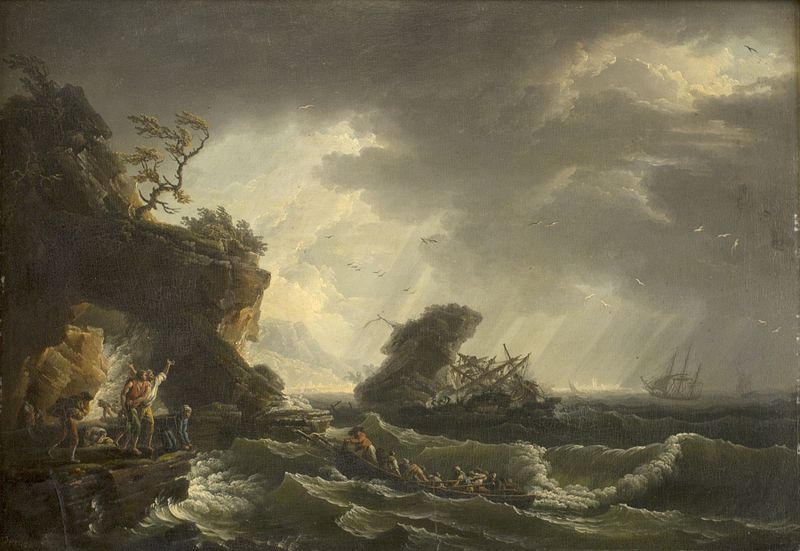
A Shipwreck
Claude-Joseph Vernet

A Mediterranean Harbor At Sunset With Fisherfolk At The Water’s Edge, A Lighthouse And A Man Of War At Anchor In The Bay
Claude-Joseph Vernet
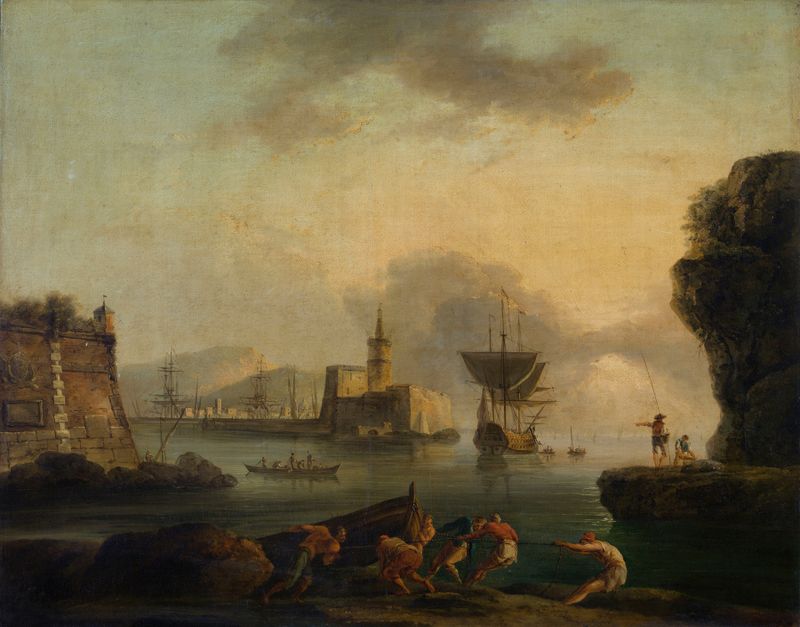
Naples
Claude-Joseph Vernet
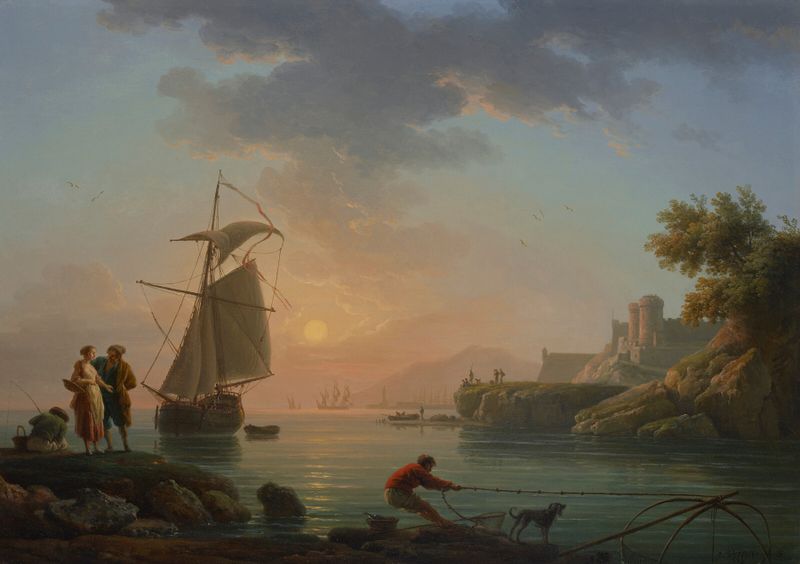
Mediterranean port at sunset, with a fisherman in the foreground
Claude-Joseph Vernet
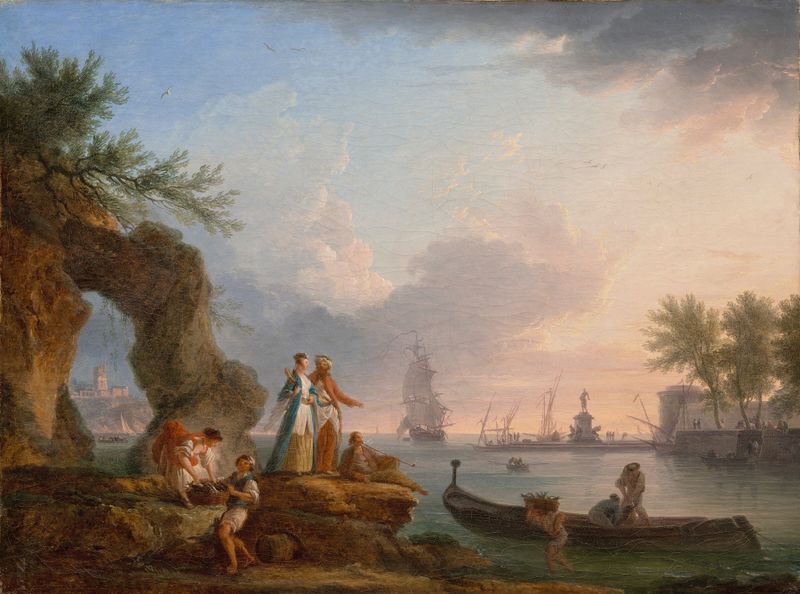
View of a port at sunset with fishermen and a couple in oriental dress
Claude-Joseph Vernet

A Calm at a Mediterranean Port
Claude-Joseph Vernet

A Grand View Of The Sea Shore Enriched With Buildings, Shipping And Figures
Claude-Joseph Vernet





