
Paysage de Bretagne — History & Facts
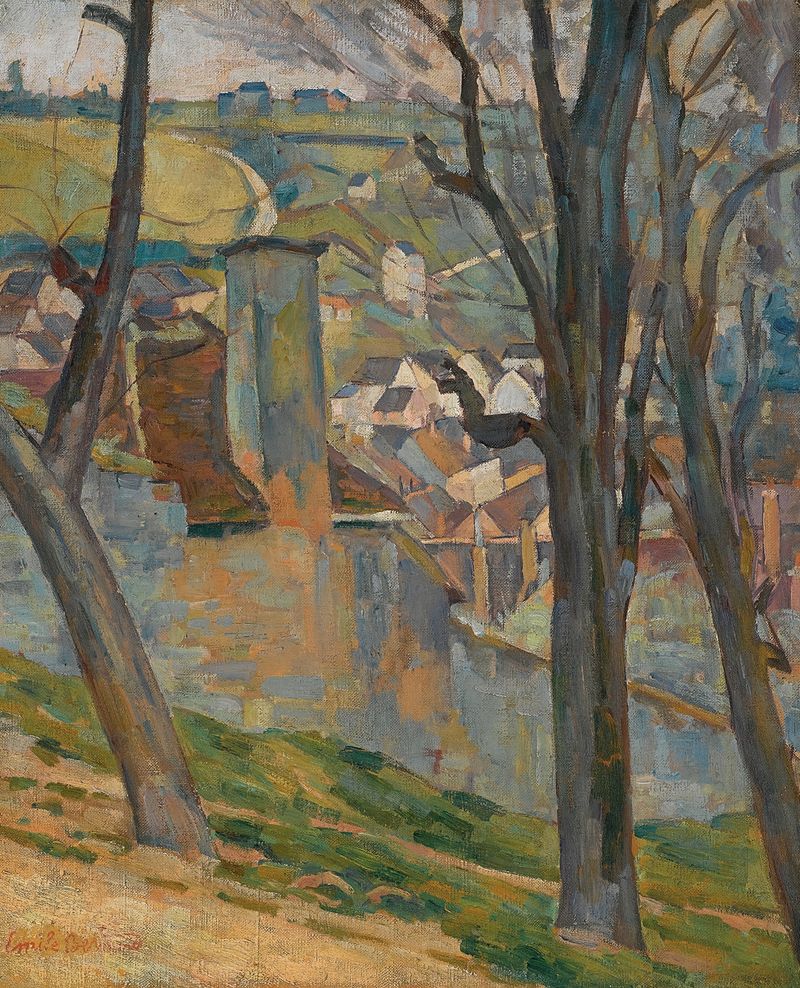
In Paysage de Bretagne, the canvas whispers the longing of a landscape untouched, harboring secrets in its tranquil folds. The muted palette invites contemplation, echoing a desire for connection with nature's quiet splendor. Focus on the horizon where the muted blues and greens converge, drawing your eye to the gentle undulations of the earth. The brushwork, a combination of broad strokes and fine details, creates a textured surface that feels alive, with every blade of grass and ripple of water seemingly infused with breath.
Notice how the light dances across the scene, creating a delicate interplay of shadow and illumination that evokes an emotional tension within the serenity. Beneath the surface, a deep yearning for both belonging and solitude resonates. The distant figures appear almost ghostlike, suggesting a narrative of longing; they are both part of the landscape and apart from it, reinforcing the contrast of presence and absence. The low-hanging clouds loom like guardians of untold stories, hinting at the complexities of desire—both for connection and the peace found in solitude. Created in Brittany between 1888 and 1889, the artist was part of the Post-Impressionist movement that sought to transcend mere representation.
During this period, he was exploring innovative techniques to express emotional depth, influenced by the vibrant artistic community around him. This work reflects not just a personal journey but also the broader artistic push toward capturing the essence of experience rather than its surface.
More Artworks by Emile Bernard
Browse all →
House among trees; Pont-Aven
Emile Bernard

Harvest by the Sea
Emile Bernard
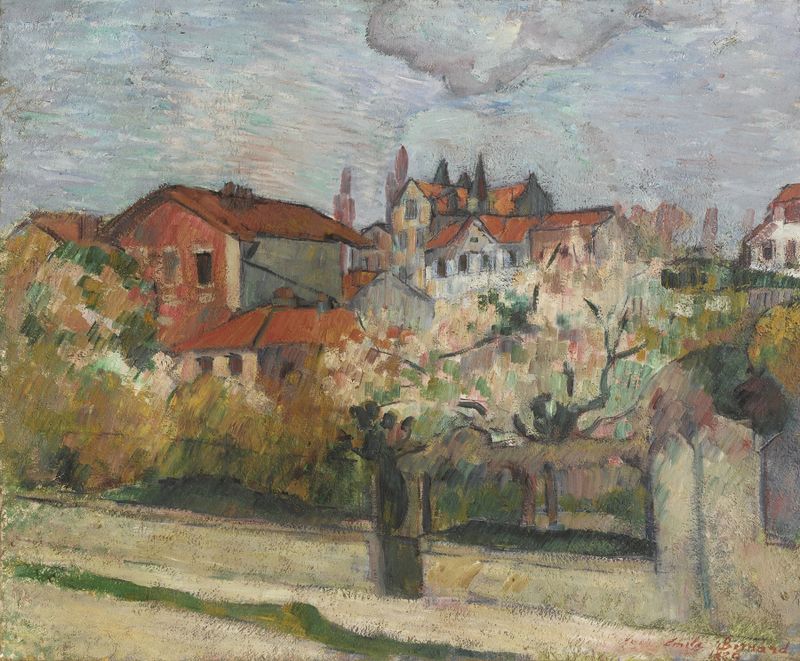
Jardin en fleur à Asinères
Emile Bernard
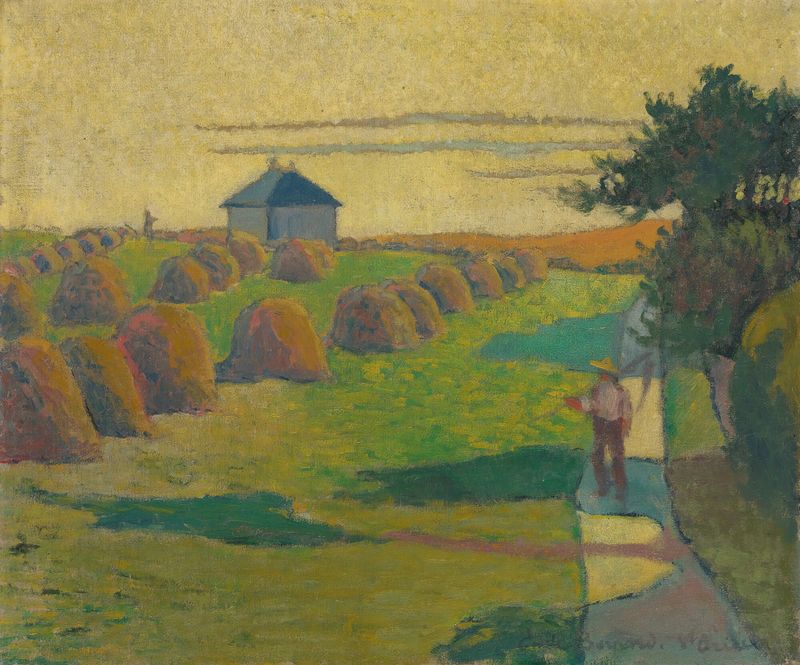
Saint-Briac
Emile Bernard
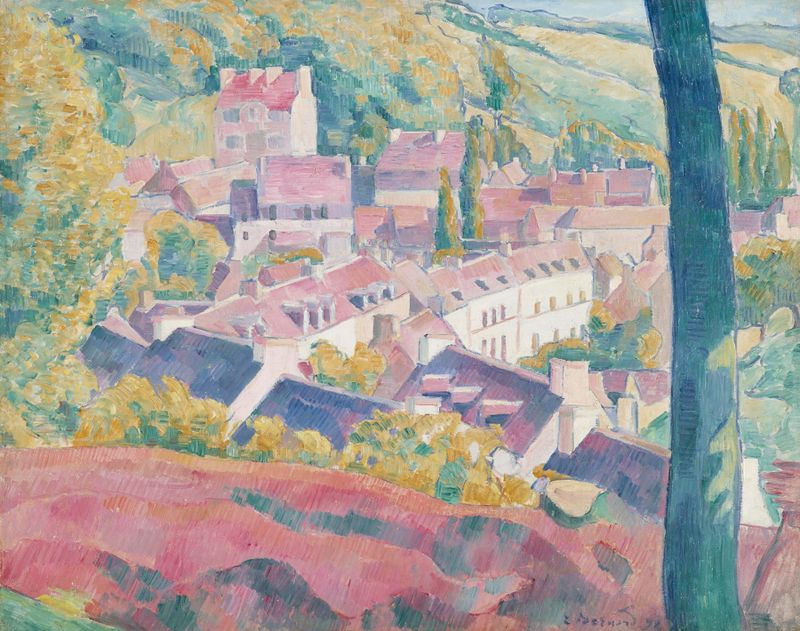
Pont-Aven Seen from the Bois d’Amour
Emile Bernard
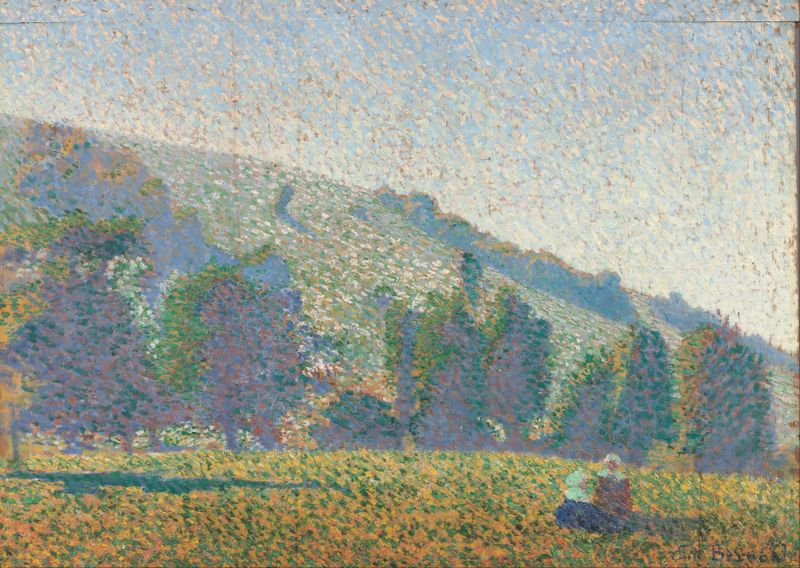
Two Breton women in a meadow
Emile Bernard

Un Coin Du Bois D’amour A Pont Aven
Emile Bernard

Vue des toits
Emile Bernard

Landscape at Pont-Aven
Emile Bernard
Paysage Près De Tonnerre
Emile Bernard





