
Vue des toits — History & Facts
In a world where moments slip into oblivion, Vue des toits captures the essence of existence—an awe-inspiring reminder of nature’s beauty intertwined with the simplicity of human life. Look closely at the rooftops; the warm ochres and cool blues create a harmony that envelops the canvas. The delicate brushwork invites the eye to dance across the scene, tracing the contours of each building, while the sky unfolds above in a symphony of soft whites and deep blues. The composition is both structured and free, with rooftops intersecting like a mosaic, drawing the viewer into a meditative state as they navigate the urban landscape below. Beneath the surface, there is a poignant contrast between the rigid man-made structures and the ethereal quality of the sky above.
The buildings seem to stand as sentinels of time, while the clouds float effortlessly, hinting at the constant change that life brings. This juxtaposition serves as a quiet reflection on permanence versus transience, inviting viewers to ponder their own place within the continuum of existence. Emile Bernard painted Vue des toits in 1890 while living in Paris, during a time when the city was experiencing a vibrant transformation. The Impressionist movement was in full swing, with artists exploring new perspectives and techniques.
As Bernard navigated his own style, he embraced a unique approach, melding the influences of both Impressionism and Post-Impressionism, which marked a pivotal moment in his artistic journey.
More Artworks by Emile Bernard
Browse all →
House among trees; Pont-Aven
Emile Bernard
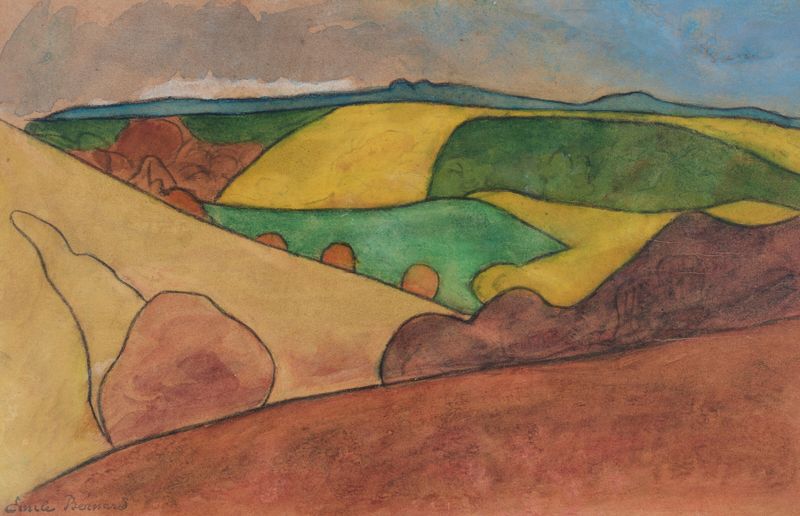
Paysage de Bretagne
Emile Bernard

Harvest by the Sea
Emile Bernard
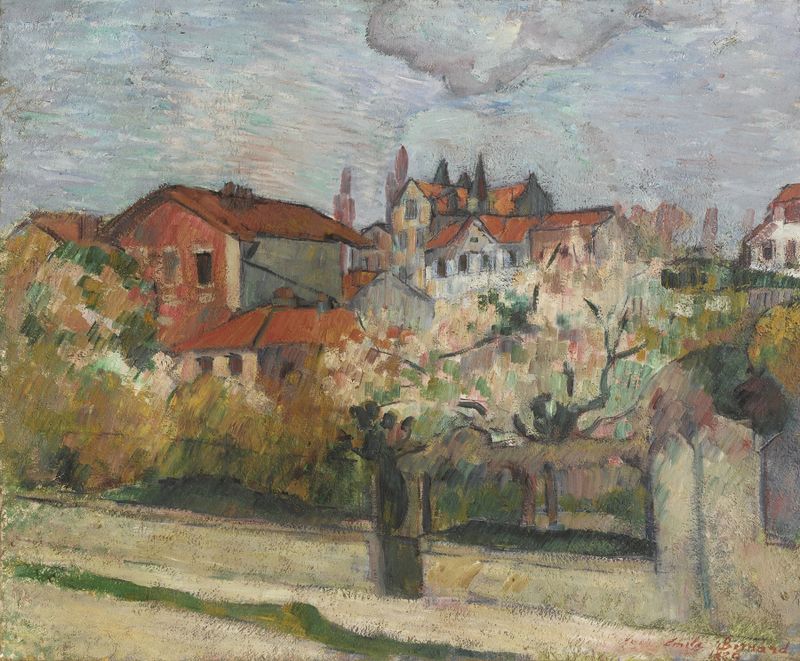
Jardin en fleur à Asinères
Emile Bernard
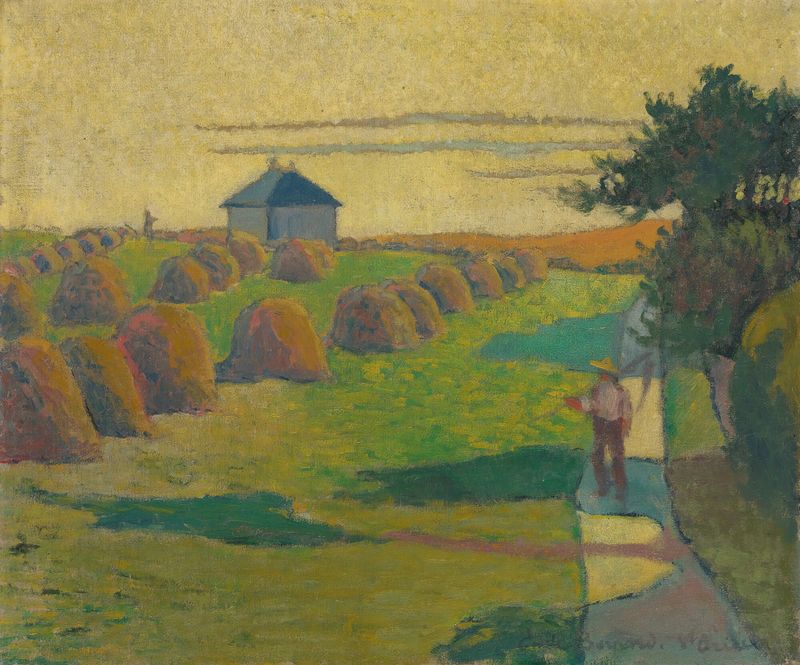
Saint-Briac
Emile Bernard
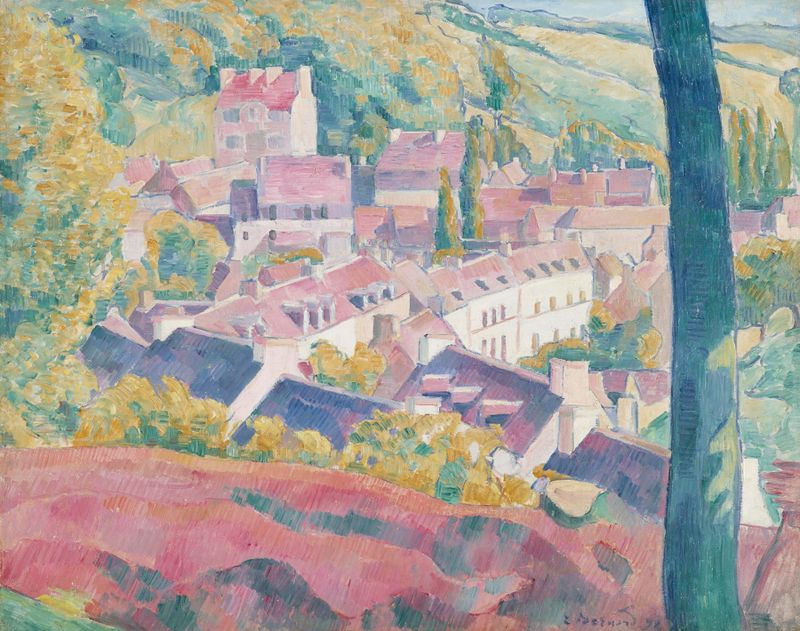
Pont-Aven Seen from the Bois d’Amour
Emile Bernard
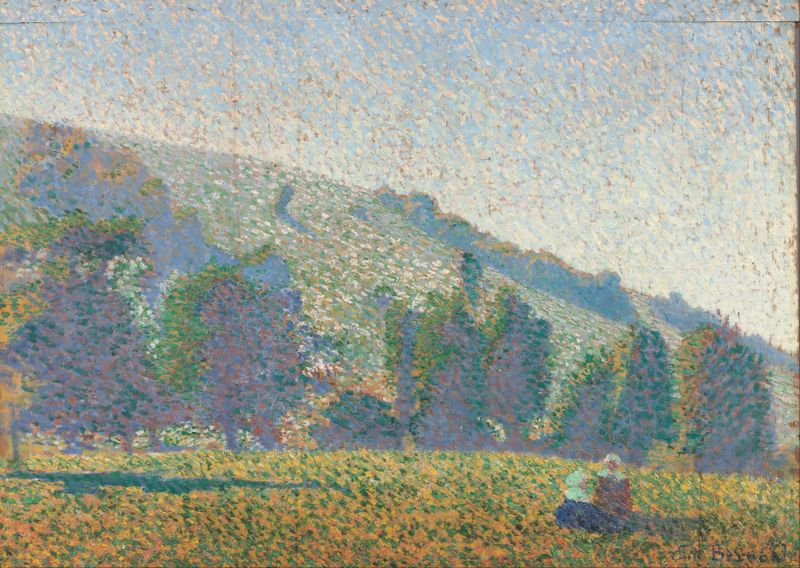
Two Breton women in a meadow
Emile Bernard

Un Coin Du Bois D’amour A Pont Aven
Emile Bernard

Landscape at Pont-Aven
Emile Bernard
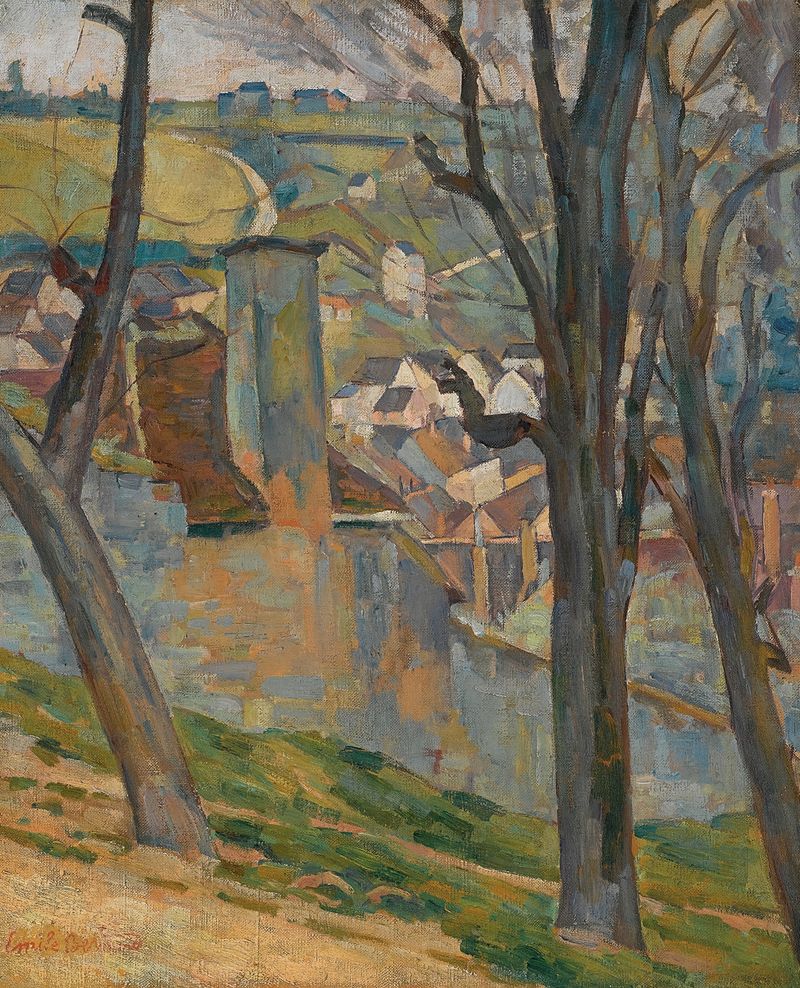
Paysage Près De Tonnerre
Emile Bernard
More Architecture Art
Browse all →
The statue of Liberty
Frédéric Auguste Bartholdi

View of Houses in Delft, Known as ‘The Little Street’
Johannes Vermeer

View of Houses in Delft, Known as ‘The Little Street’
Johannes Vermeer

The Cathedral in Rouen. The portal, Grey Weather
Claude Monet

The yellow house
Vincent van Gogh

The Church in Auvers-sur-Oise, View from the Chevet
Vincent van Gogh