
Paysage Près De Tonnerre — History & Facts
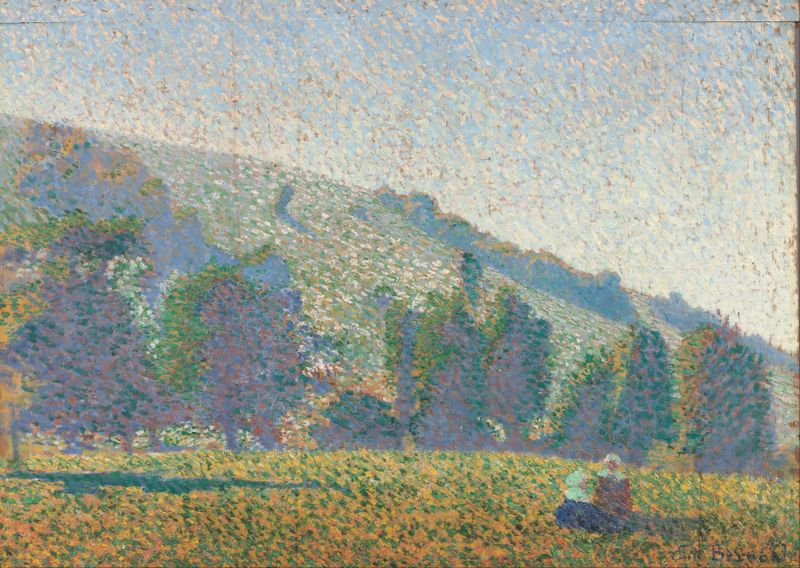
In Paysage Près De Tonnerre, the landscape morphs into a realm where the unseen forces of nature evoke an underlying fear, as turbulent skies threaten a fragile peace. Focus first on the horizon, where dark clouds loom ominously, their weight pressing down on the vibrant greens and browns of the earth below. The brushstrokes are both deliberate and frantic, conveying a sense of urgency that pulsates through the canvas. Notice how the swirling patterns of the sky seem to pull your gaze inward, suggesting a storm brewing not just in the atmosphere but within the very soul of the landscape. As you explore further, the juxtaposition between light and shadow reveals deeper emotional tensions.
The verdant fields, though lush, feel suffocated under the oppressive sky, embodying a struggle between vitality and impending doom. The chaotic blending of colors—striking yellows against deep blues—mirrors the inner turmoil of nature and invites contemplation on the coexistence of beauty and fear. In 1905, Emile Bernard was living in France, a time marked by significant artistic evolution and personal exploration. He was engaging with the Post-Impressionist movement, seeking to depict not just what was seen but what was felt.
Amidst this period of radical change, Paysage Près De Tonnerre serves as a reflection of his journey, capturing the palpable anxiety of a world on the brink of transformation.
More Artworks by Emile Bernard
Browse all →
House among trees; Pont-Aven
Emile Bernard
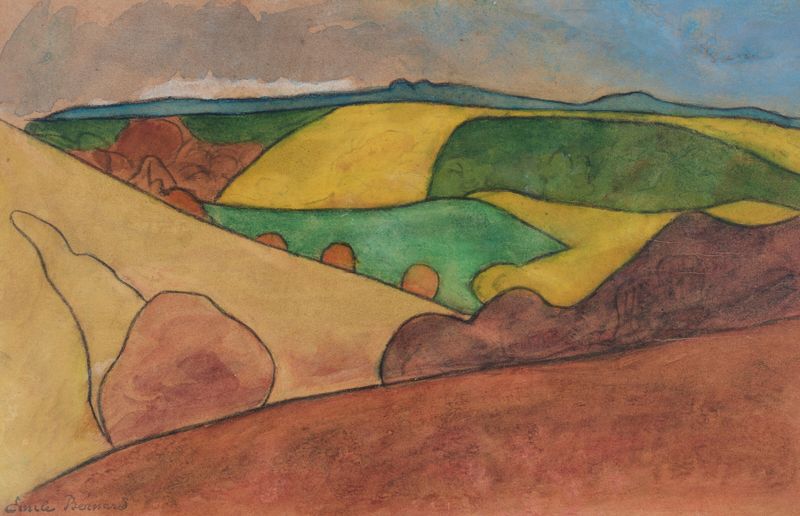
Paysage de Bretagne
Emile Bernard

Harvest by the Sea
Emile Bernard
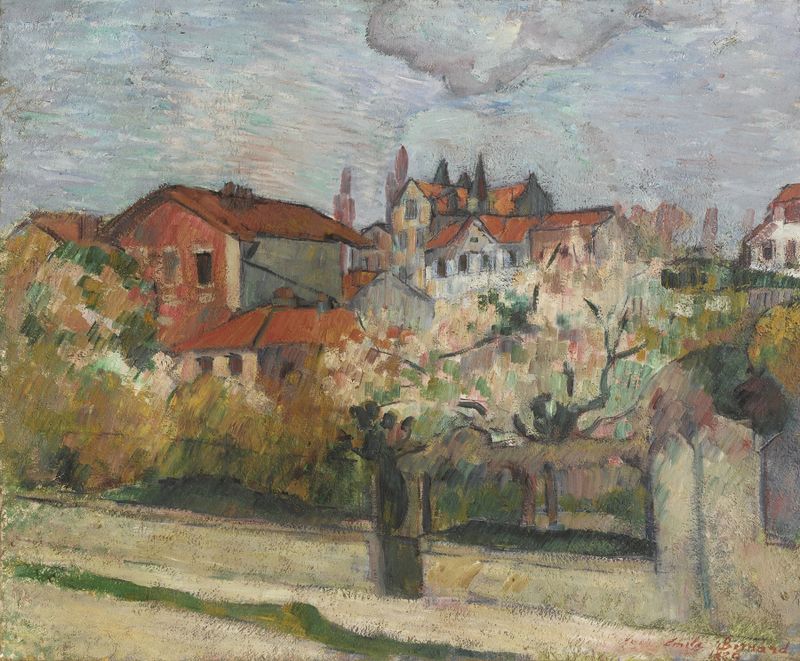
Jardin en fleur à Asinères
Emile Bernard
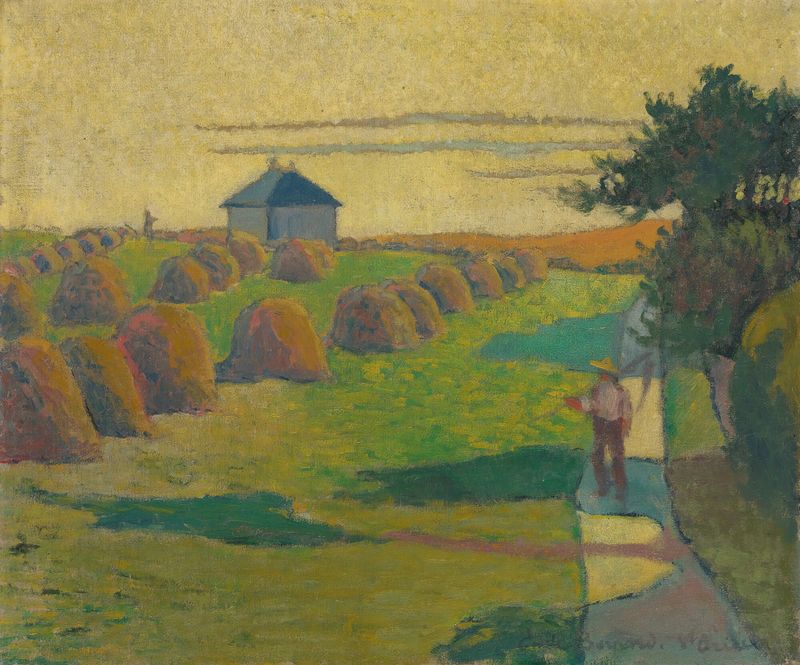
Saint-Briac
Emile Bernard
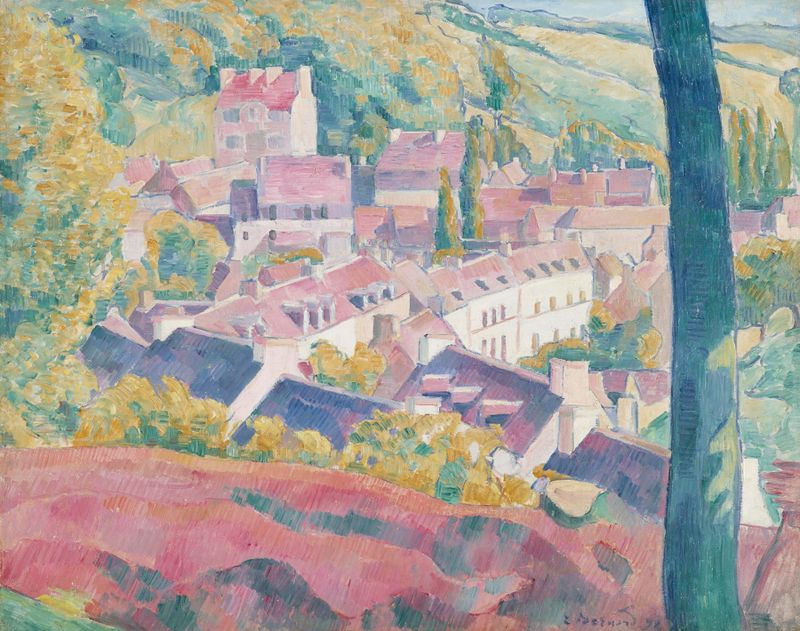
Pont-Aven Seen from the Bois d’Amour
Emile Bernard
Two Breton women in a meadow
Emile Bernard

Un Coin Du Bois D’amour A Pont Aven
Emile Bernard

Vue des toits
Emile Bernard

Landscape at Pont-Aven
Emile Bernard





