
Penzing nach dem Krieg — History & Facts
In the stillness of the aftermath, echoes of a world in turmoil give way to the profound potential of awakening. A canvas that speaks softly yet powerfully, Penzing nach dem Krieg invites viewers to explore the raw emotions and delicate nuances of a post-war landscape, urging reflection on resilience and rebirth. Look to the center of the composition where a solitary figure stands amidst a desolate expanse. The muted palette of greys and earth tones creates an atmosphere of somber contemplation, while soft daylight spills across the scene, illuminating fragments of life struggling to emerge from the rubble.
The brushwork conveys a sense of movement, as the figure's posture hints at both weariness and determination, drawing the eye toward the horizon—where the promise of a new beginning lingers. Hidden beneath the surface are echoes of despair and hope intertwined. The stark contrast between the figure and the desolate surroundings embodies the struggle of the human spirit in the face of adversity. Each detail, from the jagged remnants of brick and stone to the subtle play of light, serves as a reminder that even in destruction, there lies the seed of regeneration.
The artist captures not only the aftermath but also the flickers of awakening, hinting at the potential for renewal that lingers within the ruins. Created in Vienna in 1945, this work reflects Oskar Laske’s experiences as a war survivor and artist rebounding from turmoil. The immediate post-war period was marked by a profound sense of dislocation and the search for identity in a shattered world. As he navigated the complexities of rebuilding both personal and communal spaces through art, this piece serves as a poignant testament to his journey and a universal commentary on resilience in the face of overwhelming loss.
More Artworks by Oskar Laske
Browse all →
Faschingsumzug am Stock im Eisen Platz
Oskar Laske

Schönbrunn (Winter)
Oskar Laske
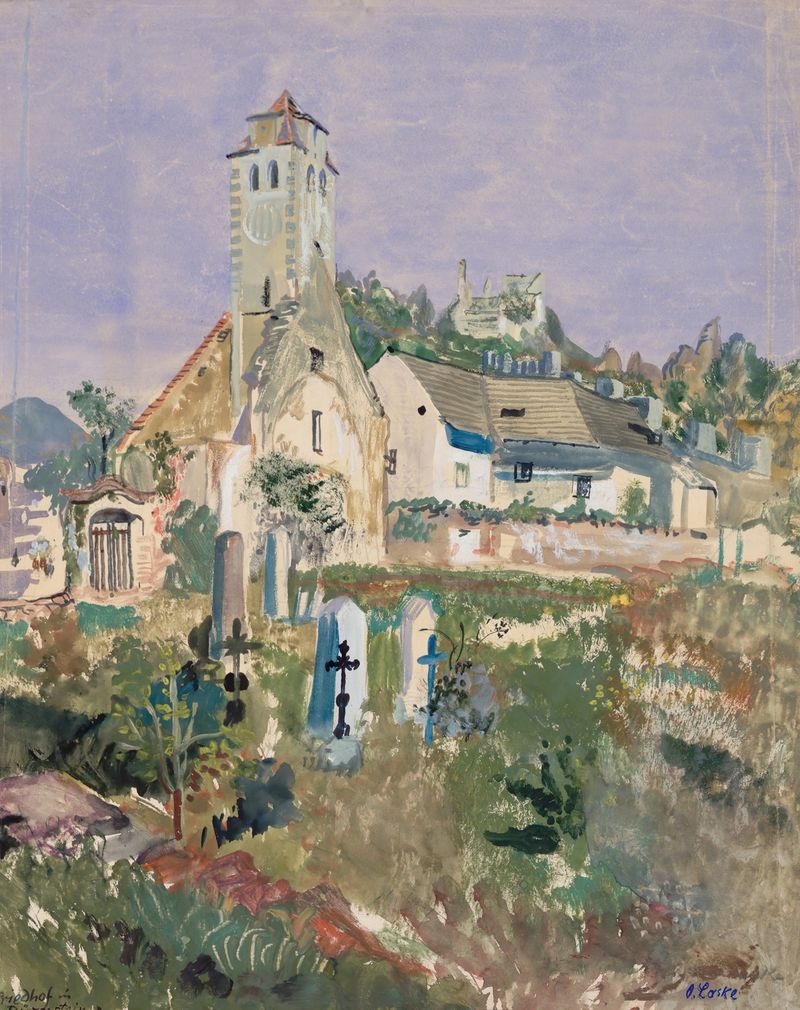
Friedhof in Dürnstein
Oskar Laske

Pratermotiv an der alten Donau
Oskar Laske

Frühjahrsnebel in Niederösterreich
Oskar Laske

Begräbnis des Wiener Bürgermeisters Dr. Karl Lueger
Oskar Laske

Maria Theresien-Denkmal mit Blick gegen das Burgtor
Oskar Laske
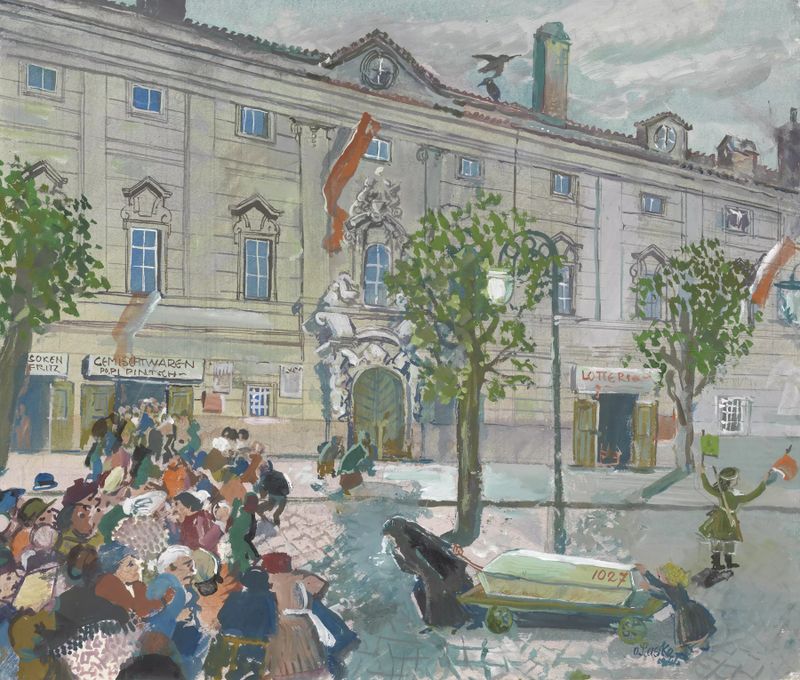
Wiener Straßenbild vom Mai 1945
Oskar Laske

Winterlandschaft in Pressbaum
Oskar Laske

Ansicht von Positano
Oskar Laske





