
Pepilla the Gypsy and Her Daughter — History & Facts
A woman sits on a wooden chair, her body turned slightly to the right, with her left arm wrapped protectively around a young girl who leans into her side. The woman gazes directly outward, her face framed by dark, wavy hair and adorned with a yellow flower tucked behind her left ear. She wears a cream-colored shawl draped over her shoulders and a voluminous skirt decorated with bold black polka dots, the fabric rendered in loose, energetic brushstrokes.
Beneath the shawl, her blouse is patterned with vivid red floral motifs, adding a burst of color to the otherwise muted palette. The girl's dark eyes meet the viewer's gaze, her expression both solemn and intent, while her long hair is parted in the center and falls in gentle waves. She is dressed in a blue scarf over a pale garment, her small hands resting quietly in her lap.
Behind them, a wall painted in soft, neutral tones is broken by a vertical shaft of light, which casts subtle shadows and highlights the contours of the figures. To the left, a cluster of red and white flowers or ribbons hangs from the wall, their forms loosely defined by swift, impressionistic strokes. The floor is suggested by broad sweeps of brown and ochre, anchoring the figures in a simple, intimate interior. Joaquín Sorolla created Pepilla the Gypsy and Her Daughter in 1910, capturing a moment of quiet connection between two sitters.
The composition is carefully balanced, with the figures occupying the left half of the canvas and the right side left largely empty, emphasizing their presence and the intimacy of their pose. Sorolla’s brushwork is visible throughout, from the delicate modeling of faces to the rapid, almost abstract rendering of clothing and background. The palette is dominated by warm creams, browns, and reds, with accents of blue and green providing subtle contrast.
Sources: J. Paul Getty Museum, record 78.PA.75 · Wikidata Q20180328
More Artworks by Joaquín Sorolla

Sad Inheritance
Joaquín Sorolla
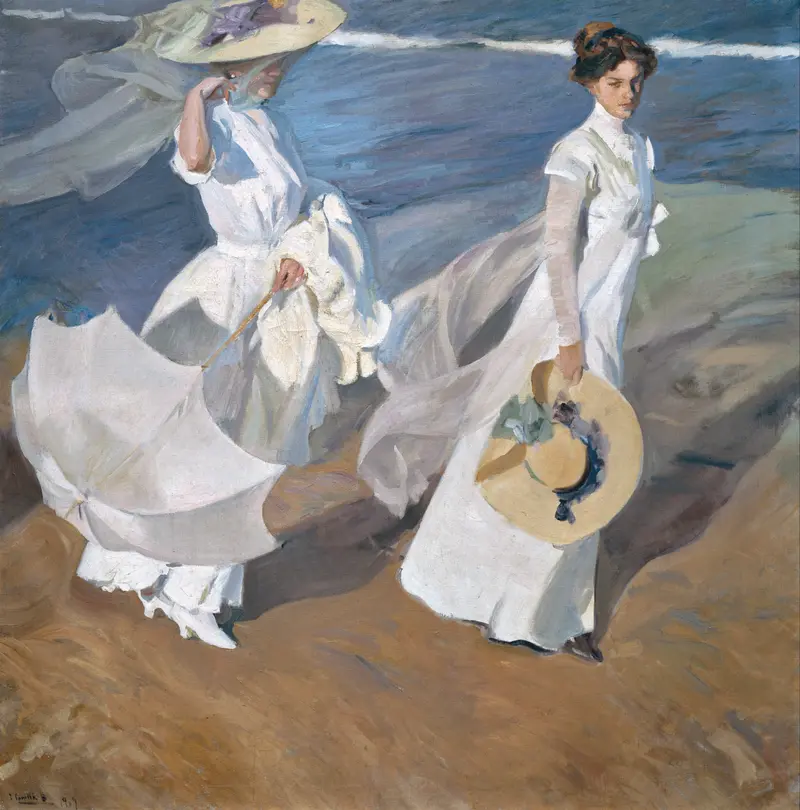
Walk on the Beach
Joaquín Sorolla

Mother
Joaquín Sorolla
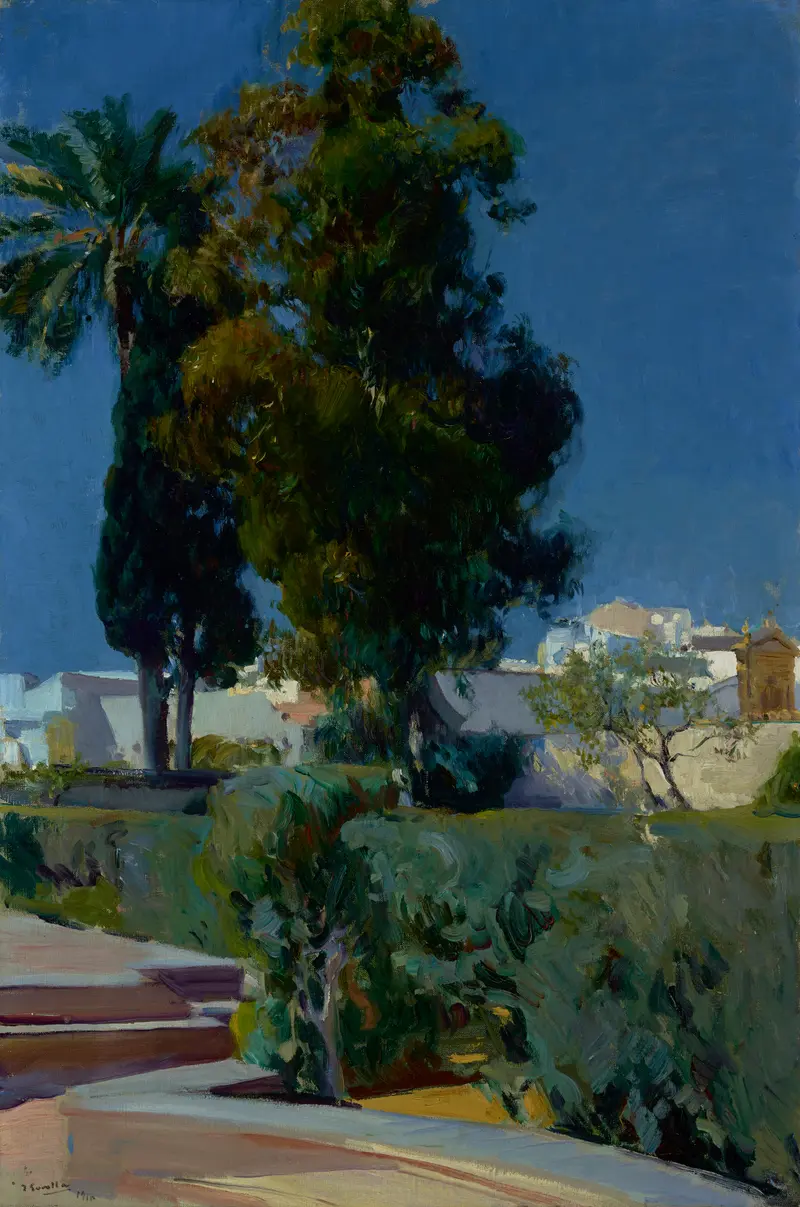
Corner of the Garden, Alcazar, Sevilla
Joaquín Sorolla

Fishing Boats On The Beach, Valencia
Joaquín Sorolla
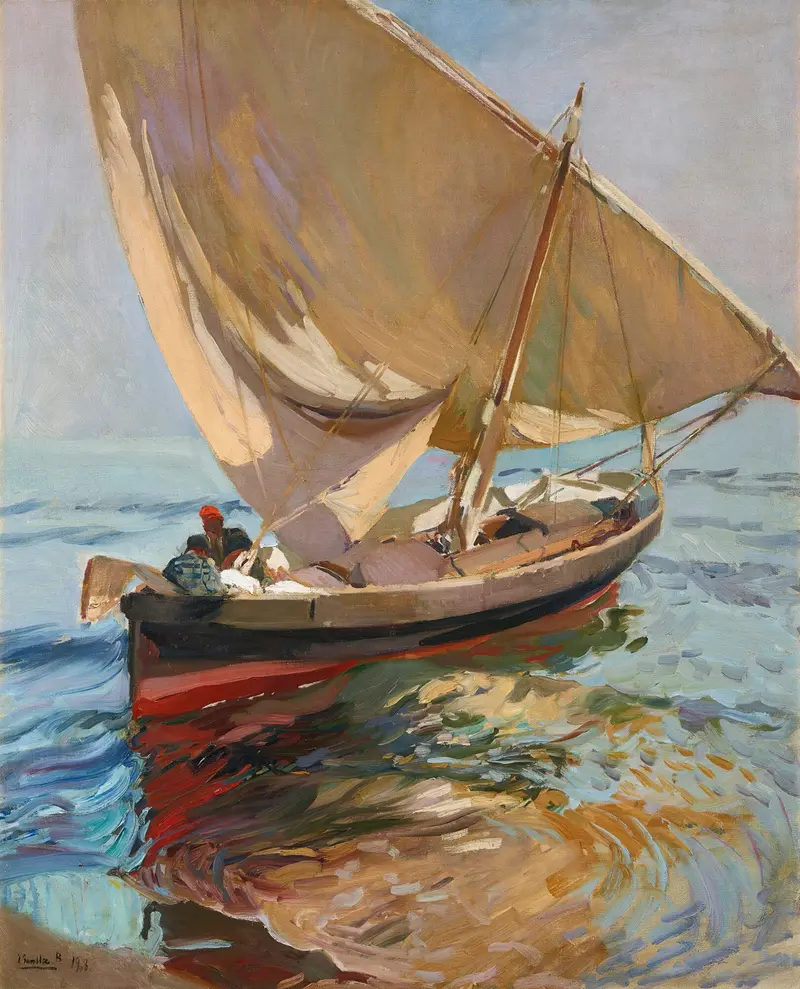
Camino De La Pesca. Valencia (Setting Out To Sea. Valencia)
Joaquín Sorolla
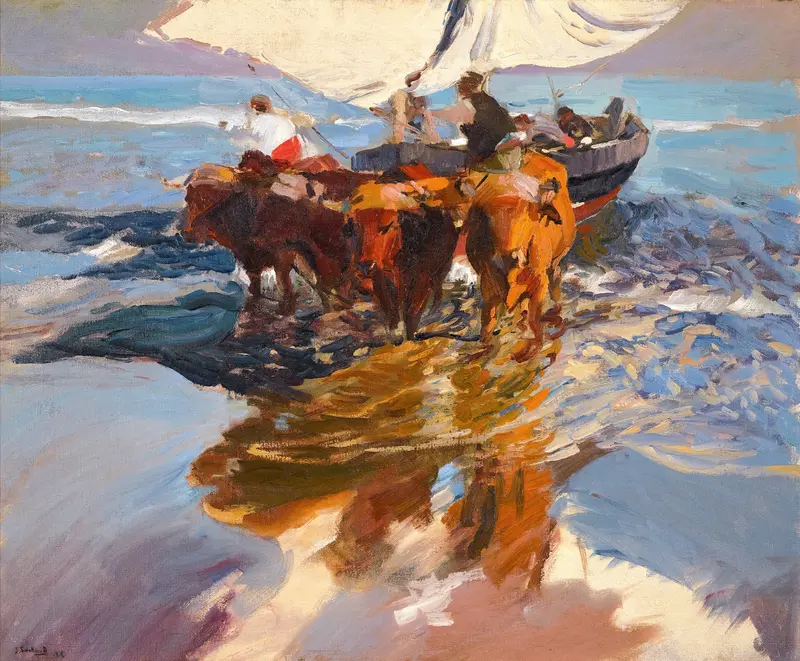
Vuelta De La Pesca. Playa De Valencia (The Return From Fishing, Valencia Beach)
Joaquín Sorolla
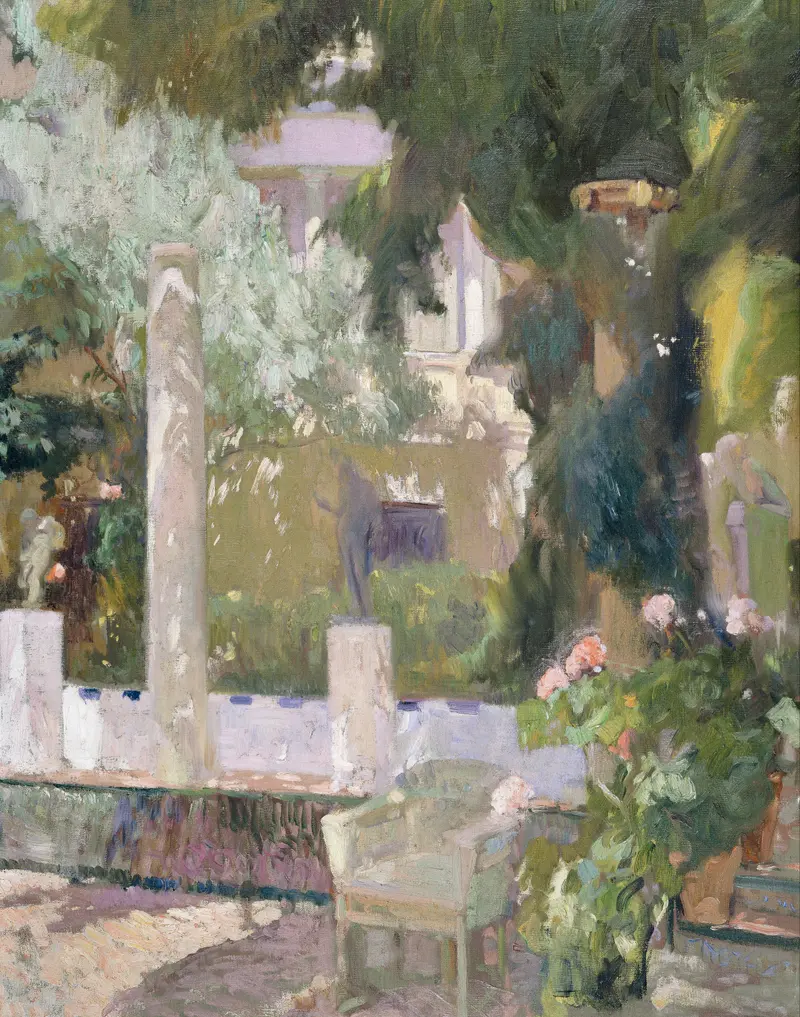
The Gardens at the Sorolla Family House
Joaquín Sorolla
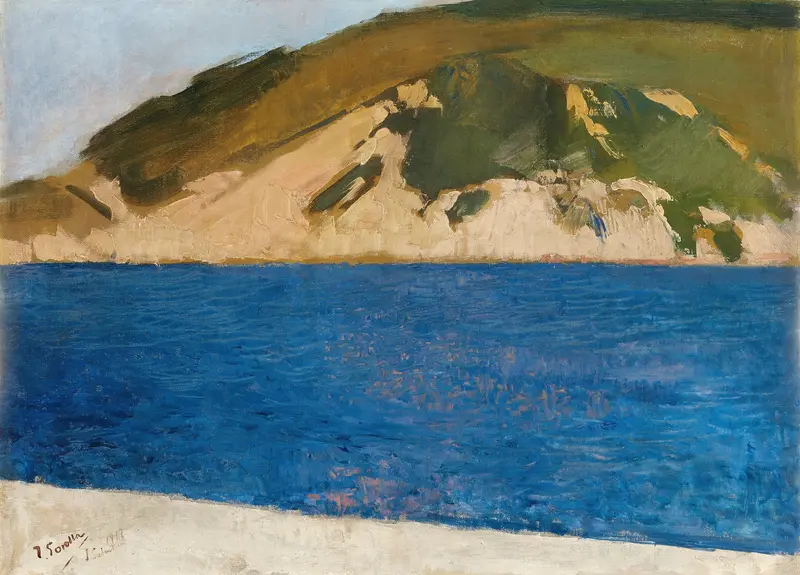
Monte Ulía, San Sebastián
Joaquín Sorolla

Barcas En La Playa
Joaquín Sorolla
More Genre Scene Art

Banquet of the Officers of the St George Civic Guard
Frans Hals

Rembrandt and Saskia in the Scene of the Prodigal Son
Rembrandt van Rijn

Bal du moulin de la Galette
Pierre-Auguste Renoir

Quadrille at the Moulin Rouge
Henri de Toulouse-Lautrec

A Burial at Ornans
Gustave Courbet

When Will You Marry?
Paul Gauguin