Perla di Modena — History & Facts
No other work by Raphael has sparked as much scholarly debate in recent years as the Perla di Modena. Discovered in the Galleria Estense in Modena and only attributed to Raphael in the 21st century, the painting’s authorship and even its subject have been the subject of intense scrutiny. The title, “La Perla,” harks back to a famous Raphael Madonna in the Prado, but this Modena version was unknown to art historians for centuries.
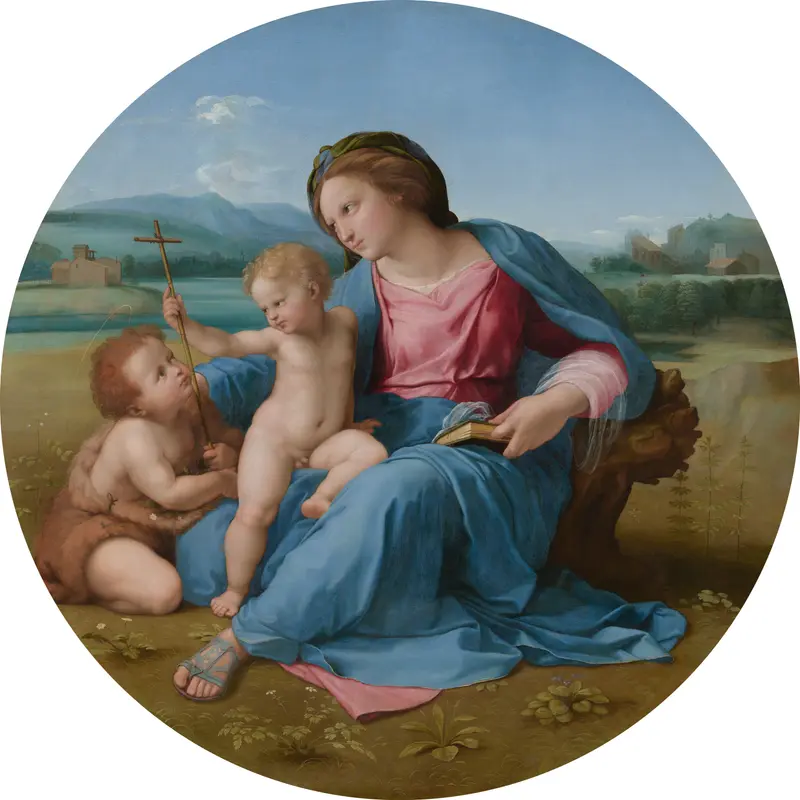
Its sudden emergence raised questions: is this a lost original, a studio work, or a later copy? The mystery of its origin and purpose continues to fascinate experts and visitors alike. At the heart of Perla di Modena is a serene Madonna and Child, caught in a moment of intimate connection. The Virgin’s gentle gaze and the Christ Child’s playful gesture—reaching for his mother’s veil—evoke both maternal tenderness and the foreshadowing of sacrifice. The composition is dense with symbolic detail: the delicate veil hints at purity, while the landscape glimpsed beyond the figures suggests the world into which Christ will enter.
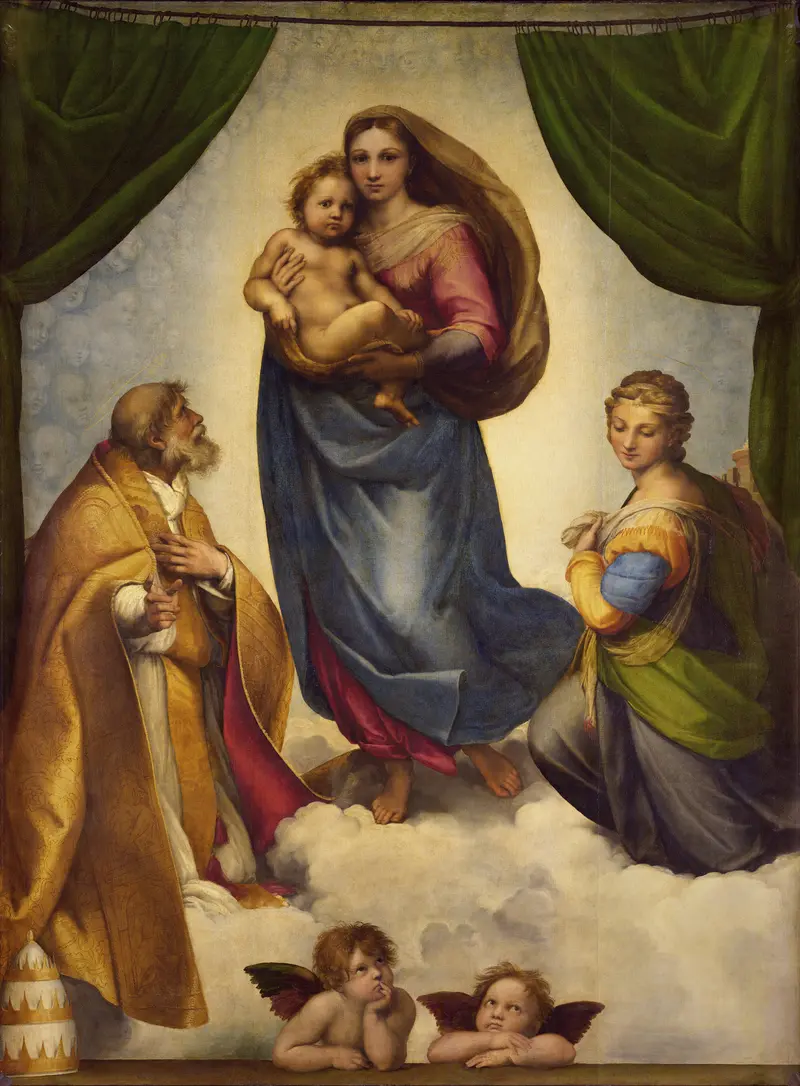
The softness of the modeling and the subtle interplay of light recall Raphael’s late style, inviting comparison with his Sistine Madonna in Dresden, though here the atmosphere is quieter, more introspective. The painting’s journey from obscurity to the spotlight is as remarkable as its artistry. Long held in the Galleria Estense, it was catalogued but little noticed until recent technical analysis revealed underdrawing and stylistic features linking it to Raphael’s workshop, if not the master himself. The uncertainty surrounding its authorship has made it a touchstone in debates about attribution and workshop practice in the High Renaissance.
Today, Perla di Modena remains in Modena, a testament to the enduring allure of Raphael’s Madonnas and the ongoing detective work of art historians.