
Madonna and Child (Madonna della Seggiola) — History & Facts
Few images of the Virgin and Child have achieved the intimate immediacy of Madonna and Child (Madonna della Seggiola), a painting that became so beloved in the 19th century that it was copied, engraved, and reproduced in countless homes and churches across Europe. The painting’s fame was such that Stendhal, visiting Florence, wrote of being “overwhelmed by the tenderness in the Madonna’s embrace.” The origins of the work remain shrouded in mystery: no commission documents survive, and the identity of the model—whose features are so alive and contemporary—has long been the subject of speculation. What is certain is that this circular painting, or tondo, stands apart in Raphael’s oeuvre for its warmth and informality. At the heart of the scene is a young mother, the Virgin Mary, seated on a simple wooden chair, her arms wrapped protectively around her son.
The Christ Child, chubby and restless, nestles against her, his gaze directed outward as if aware of his destiny. The Madonna’s head is covered with a striped scarf, a touch of everyday life, while her robe’s deep blue and red hues allude to purity and sacrifice. The small figure of St.
John the Baptist, barely visible at the edge, clasps his hands in prayer, foreshadowing the roles these children will play. Unlike the hieratic calm of Leonardo’s Madonnas, Raphael chooses a moment of maternal affection, the figures pressed together in a tight embrace, their faces nearly touching—a composition that radiates both intimacy and humanity. Painted during Raphael’s Florentine period, likely around 1513–1514, Madonna and Child (Madonna della Seggiola) reflects the artist’s fascination with the tondo format popular in Renaissance Florence. Its early history is uncertain, but by the 16th century, it was already admired in the Medici collection, and later entered the holdings of the Grand Dukes of Tuscany.
Today, the painting resides in the Palazzo Pitti in Florence, where it continues to draw visitors with its gentle beauty. The work marks a turning point in Raphael’s career, as he moved from the more formal Madonnas of his early years to a style characterized by warmth, naturalism, and psychological depth.
More Artworks by Raphael

Madonna of the Goldfinch
Raphael

Madonna with the Fish
Raphael
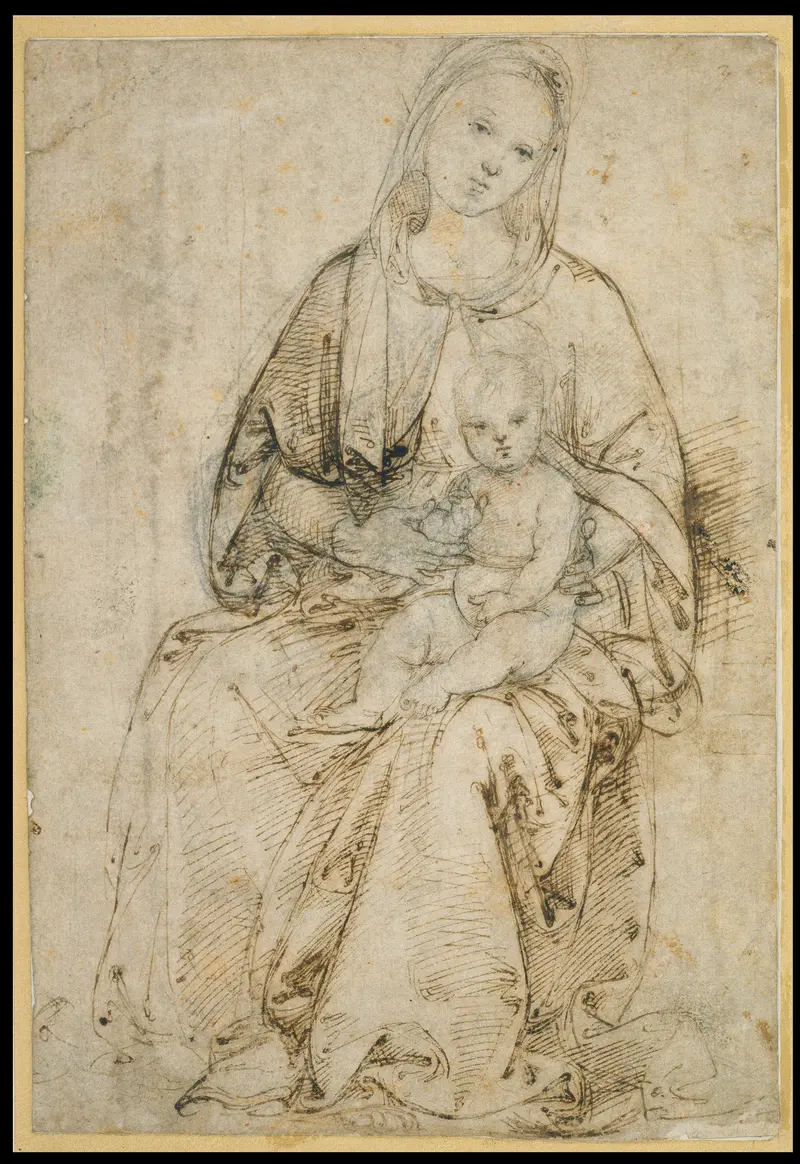
Seated Madonna and Child
Raphael
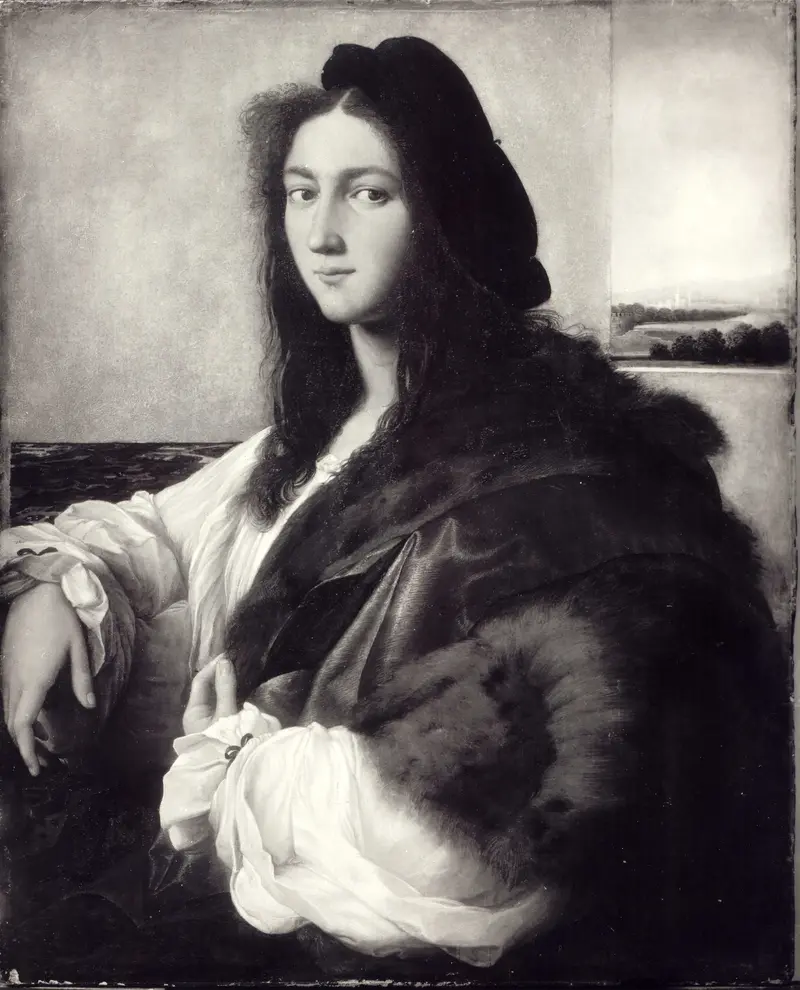
Portrait of a Young Man
Raphael
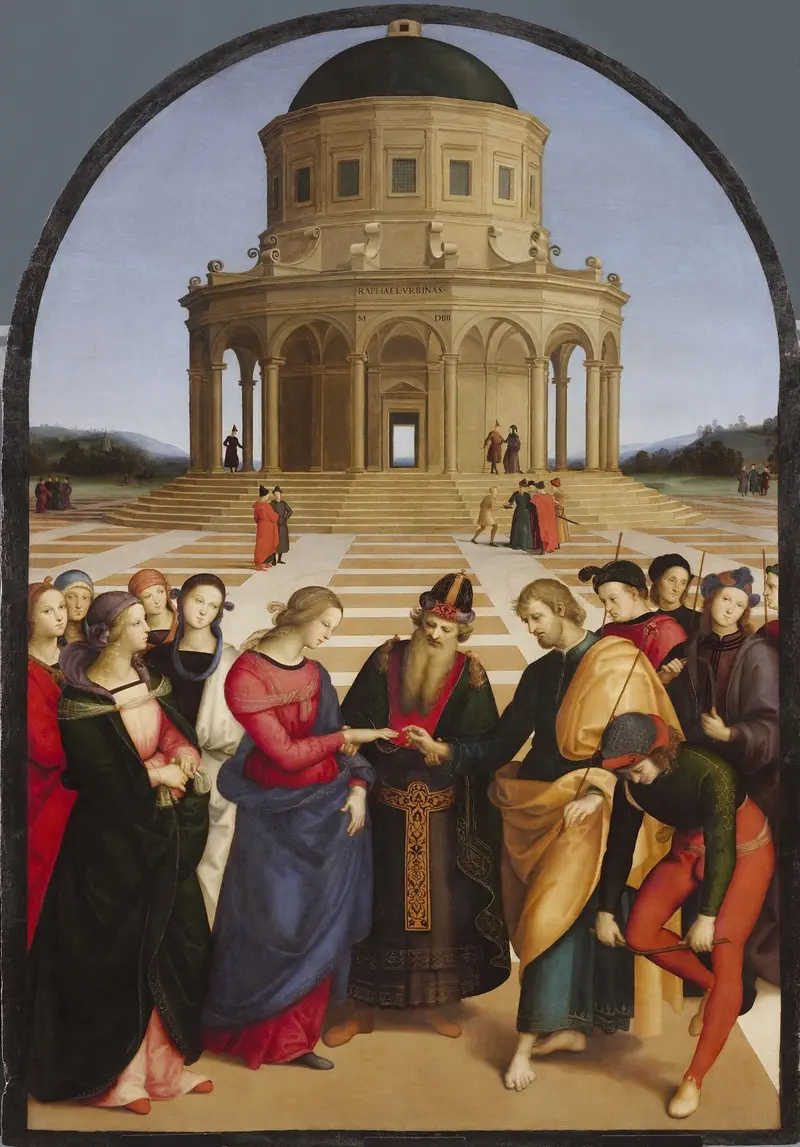
The Marriage of the Virgin
Raphael
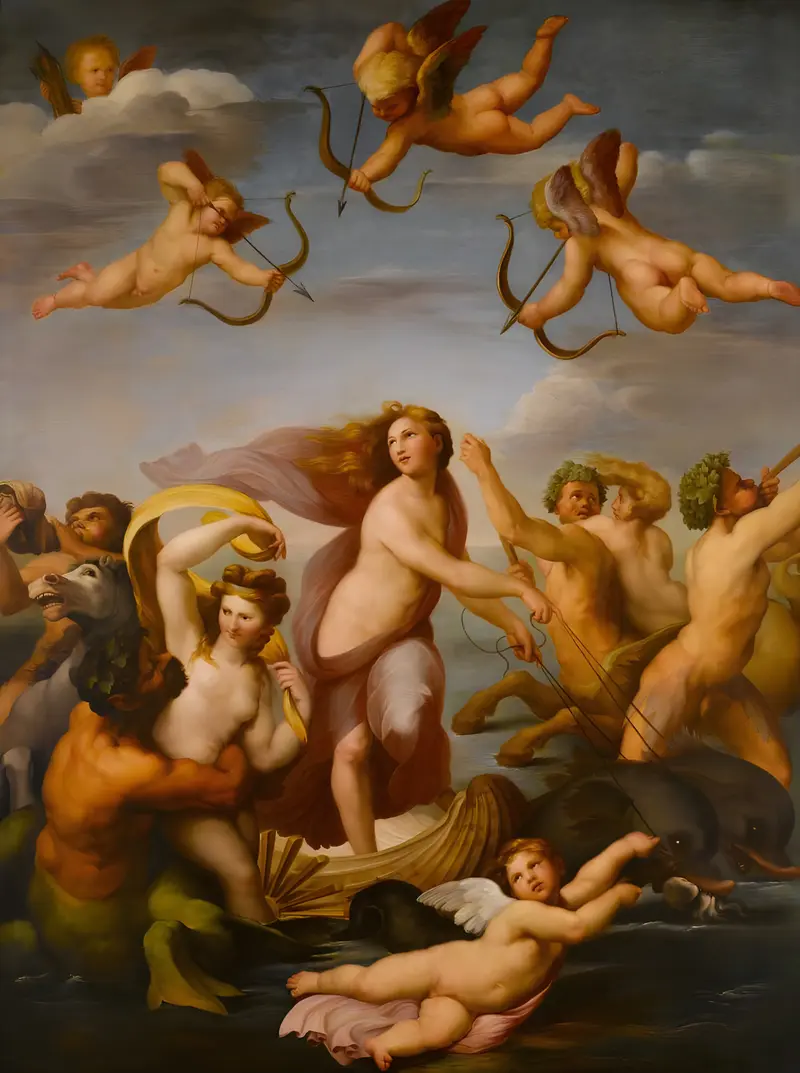
The Triumph of Galatea (copy after Raphael)
Raphael
Poetry
Raphael
Sistine Madonna
Raphael
Madonna and Child Enthroned with Saints
Raphael
The Adoration of the Kings
Raphael




