Pflanzenwachstum — History & Facts
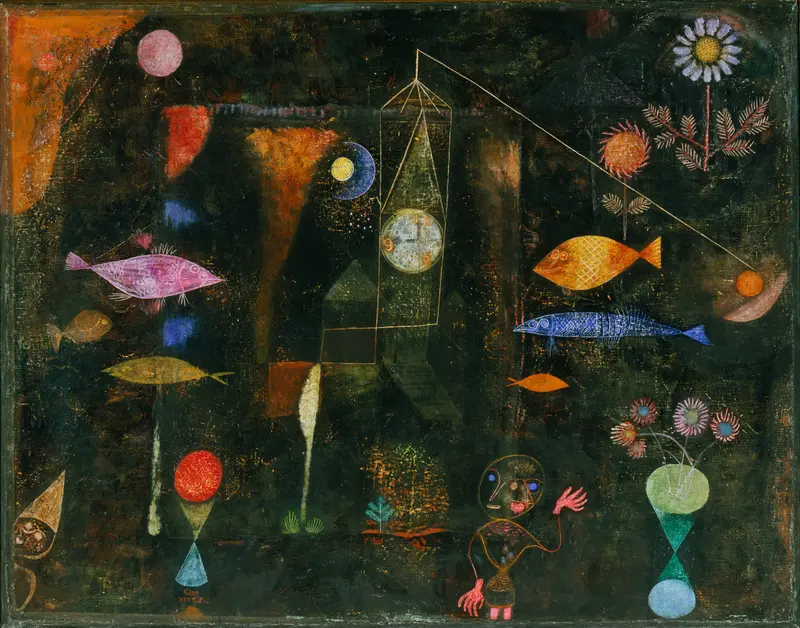
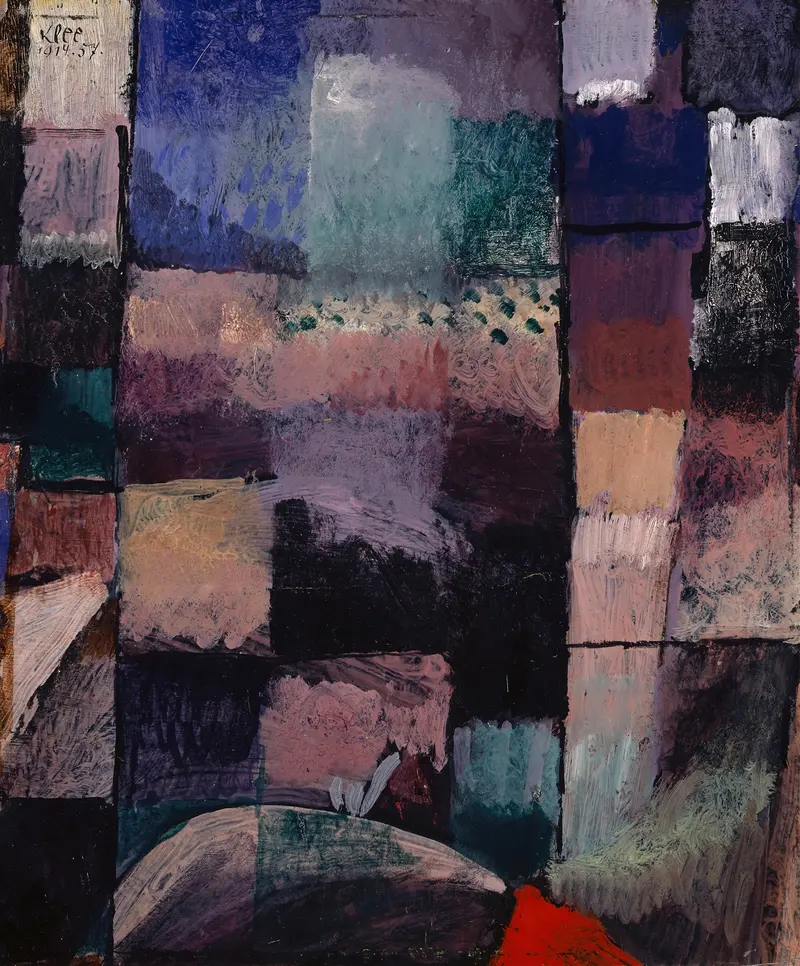
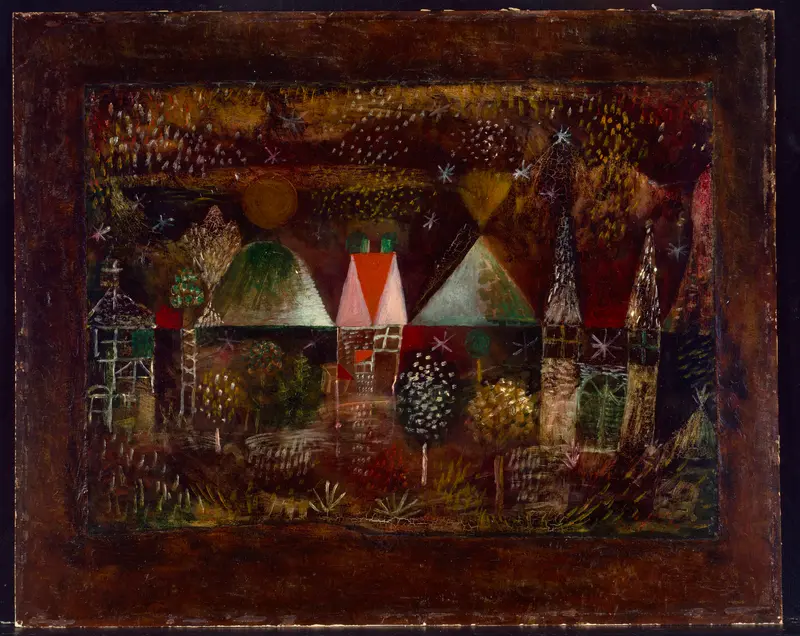
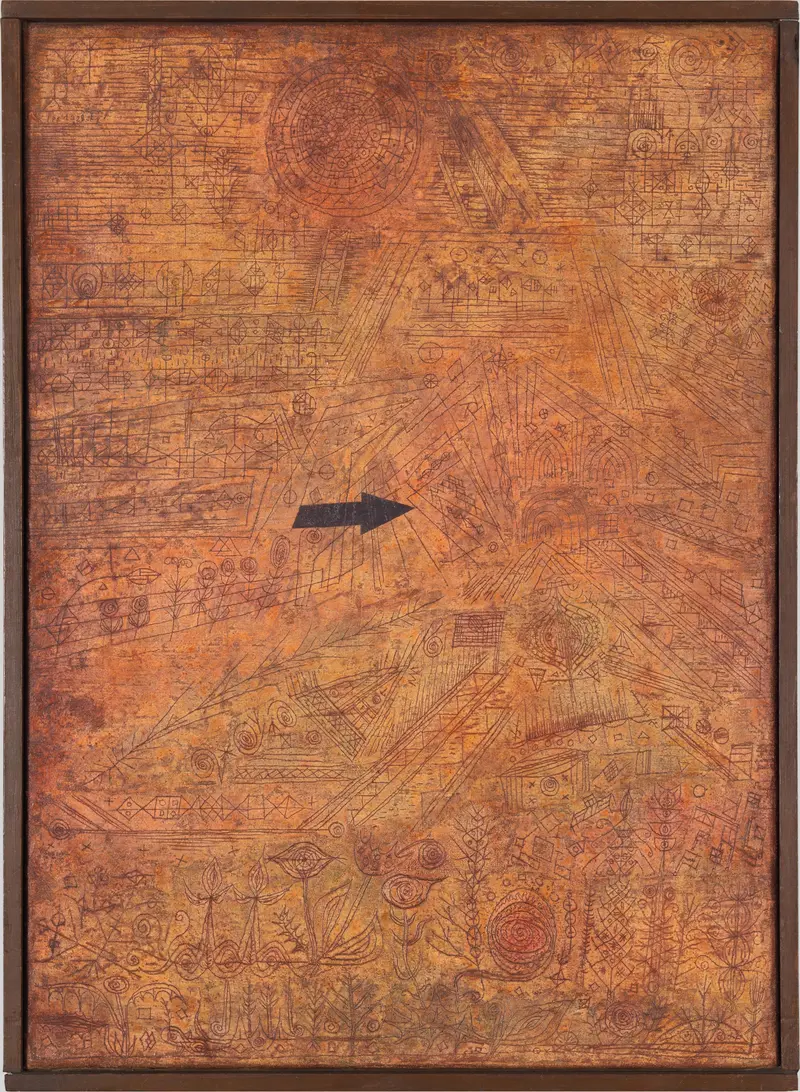
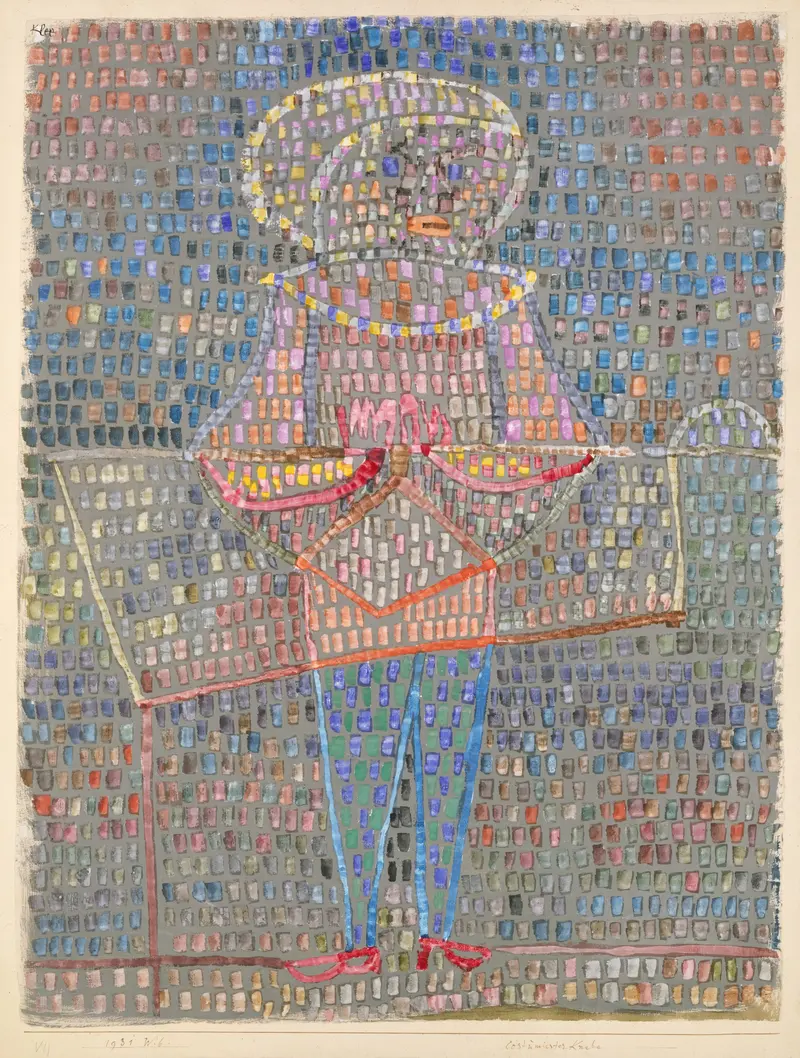
In Pflanzenwachstum, Paul Klee employs a vibrant palette dominated by greens, yellows, and blues. The painting features abstract forms that suggest the growth of plants, intertwining and overlapping in a rhythmic manner. The composition is lively, with shapes that evoke leaves and stems, creating a sense of movement.
Klee's characteristic use of line adds a playful quality to the work, inviting the viewer into a world of botanical imagination. The painting is executed in oil on canvas, a medium that allows for rich color application and texture. Klee's technique involves layering colors to create depth and dimension, enhancing the organic feel of the forms. The approximate dimensions of the artwork are 60 x 80 cm, making it a medium-sized piece that can be appreciated both up close and from a distance.
The abstract nature of the work encourages viewers to interpret the shapes in their own way, fostering personal connections. Paul Klee was a Swiss painter associated with the Expressionist movement, known for his unique style that blends abstraction and figuration. Pflanzenwachstum, created in the 1920s, reflects Klee's fascination with nature and growth. An interesting fact about this work is that it embodies Klee's belief in the spiritual connection between art and nature, illustrating how he perceived the world around him.
This painting is housed in the Kunsthaus Zürich, a museum known for its collection of modern art.