
Phaleron near Athens. From the journey to Greece — History & Facts
In the stillness of Phaleron near Athens, an unease permeates the tranquil vista, as if the landscape itself is haunted by echoes of past sorrows. Look to the left at the gentle, lapping waves that shimmer under a muted sun; they cradle traces of temporality. The soft blues and greens blend harmoniously, yet beneath this beauty lies a haunting contrast, where jagged cliffs loom ominously in the distance. The brushwork captures not only the physical elements but also an emotional restlessness, suggesting a world on the brink of change.
The composition's balance is deceptive, inviting yet unsettling, drawing the viewer deeper into the painted scene. The emotional tension in this artwork reveals a profound dichotomy: the idyllic shores juxtaposed with the foreboding cliffs symbolize the precariousness of memory and the inevitability of loss. Each stroke conveys a narrative of longing, reminding us that beauty often harbors hidden fears. As the landscape unfolds, one is left with the sense that what appears serene may also be fleeting, a poignant reminder of life's fragility. In 1905, during his time in Greece, Jan Ciągliński found himself at the intersection of personal and artistic evolution.
The world was wrestling with modernization, and as Ciągliński sought to capture the essence of a place steeped in history, his works reflected his inner struggle between nostalgia and the fear of the unknown. This painting stands as a testament to his journey and the turbulent era in which he created it, a moment when the past was both a sanctuary and a shadow.
More Artworks by Jan Ciągliński
Browse all →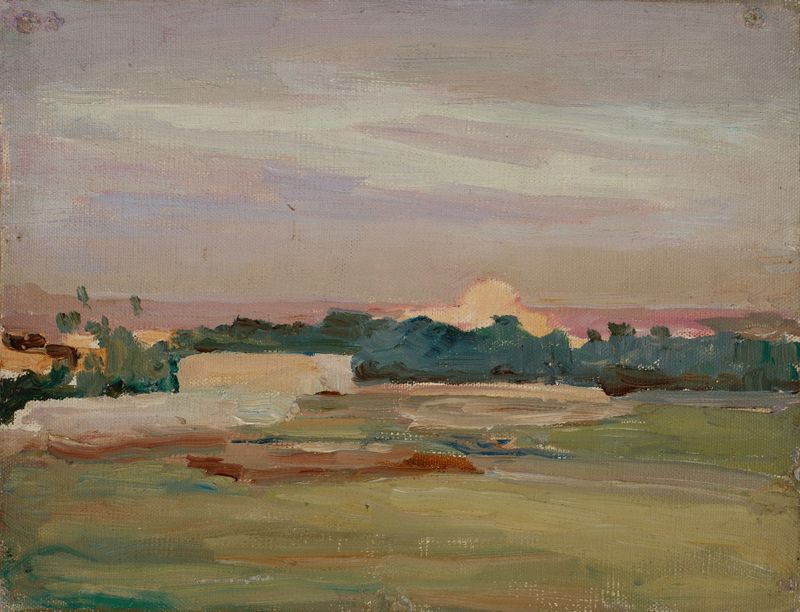
The Sirocco
Jan Ciągliński
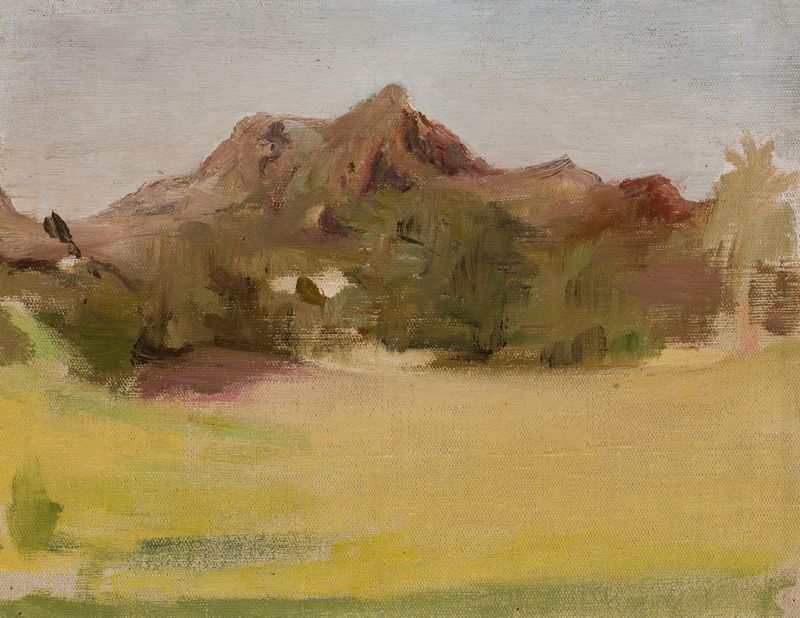
Mountain landscape. From the journey to India
Jan Ciągliński
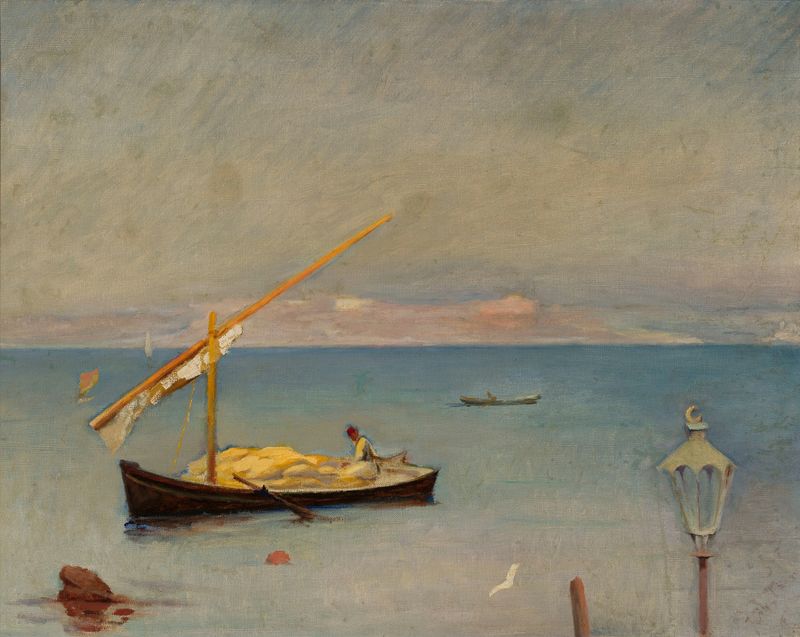
At Bosporus
Jan Ciągliński
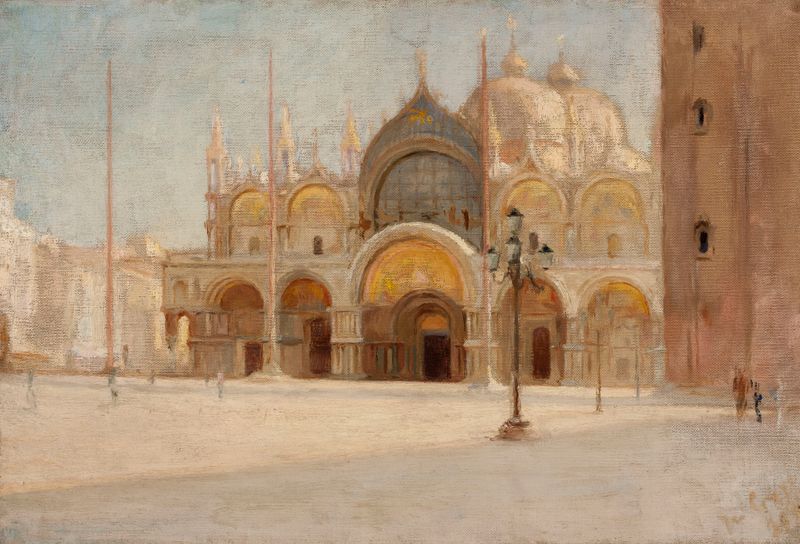
St Mark’s Square in Venice
Jan Ciągliński
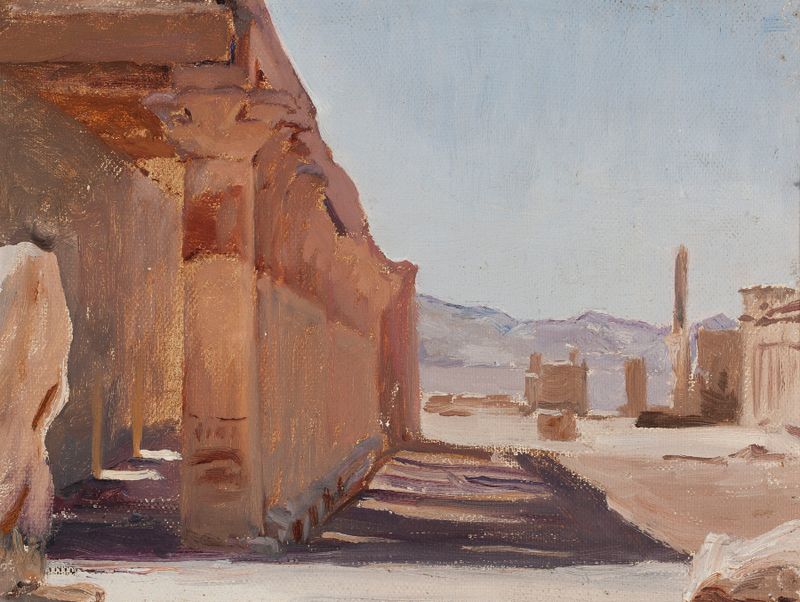
Temple. From the journey to Egypt
Jan Ciągliński
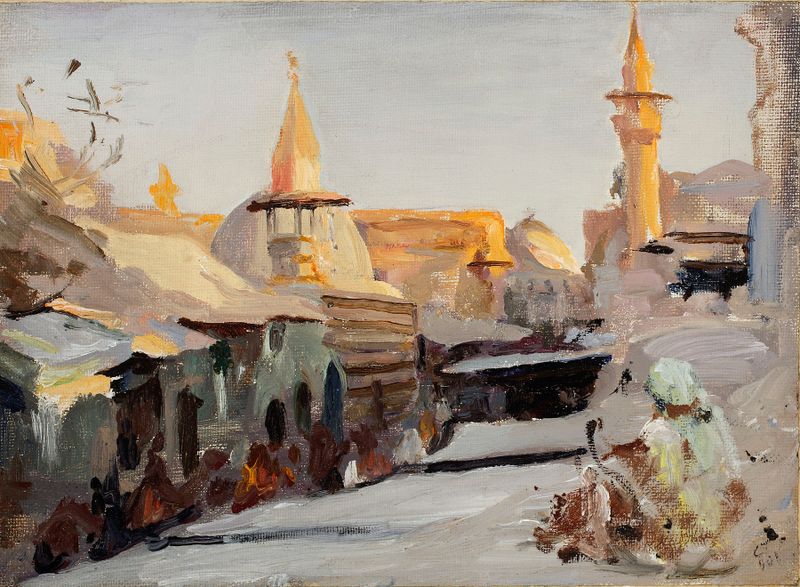
Street in Damascus. From the journey to Palestine
Jan Ciągliński
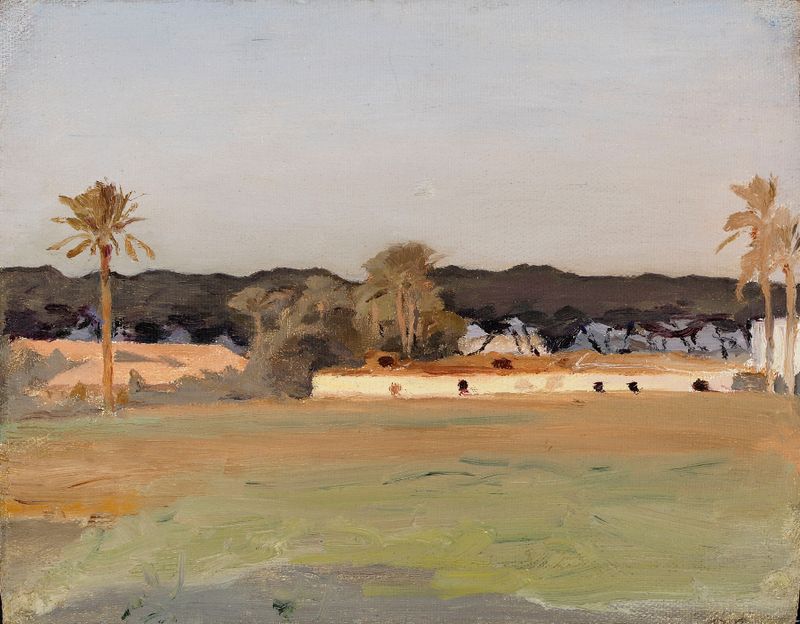
Evening. From the journey to Egypt
Jan Ciągliński
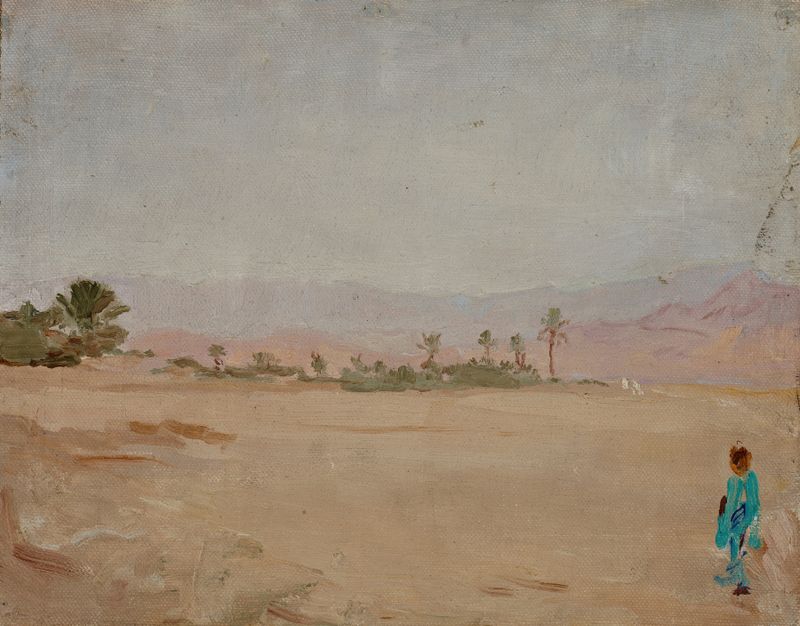
Sahara (Desert)
Jan Ciągliński
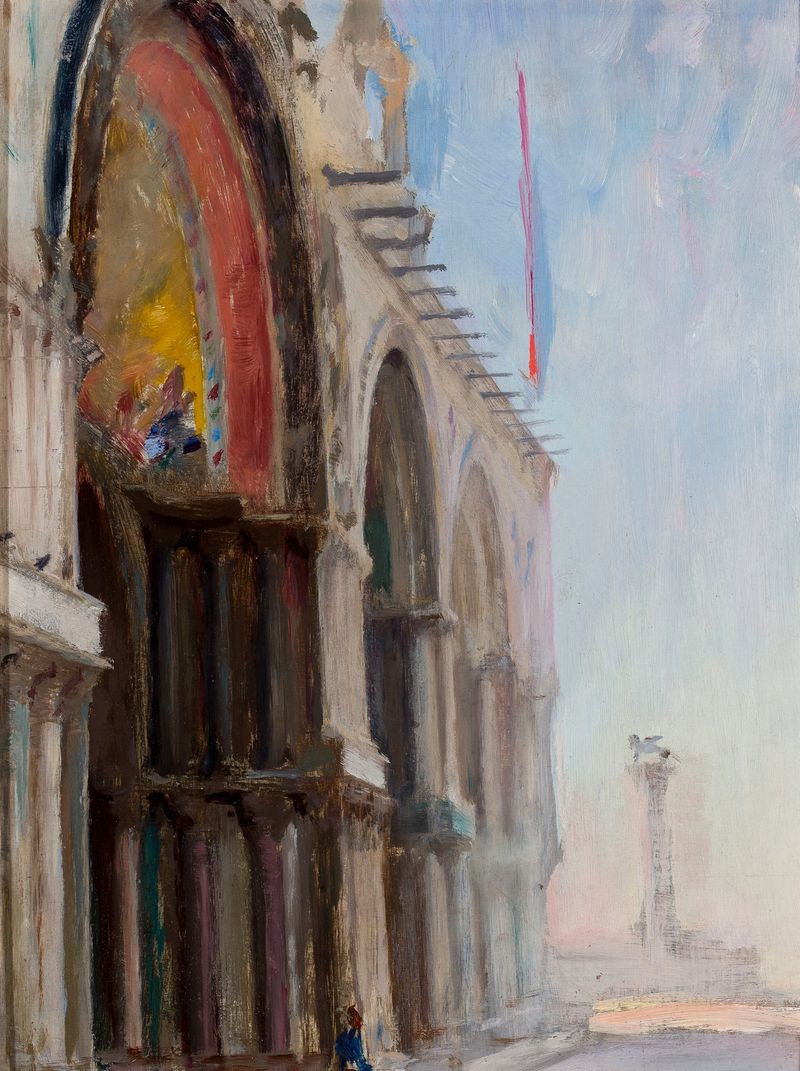
Venice – San Marco. From the journey to Italy
Jan Ciągliński
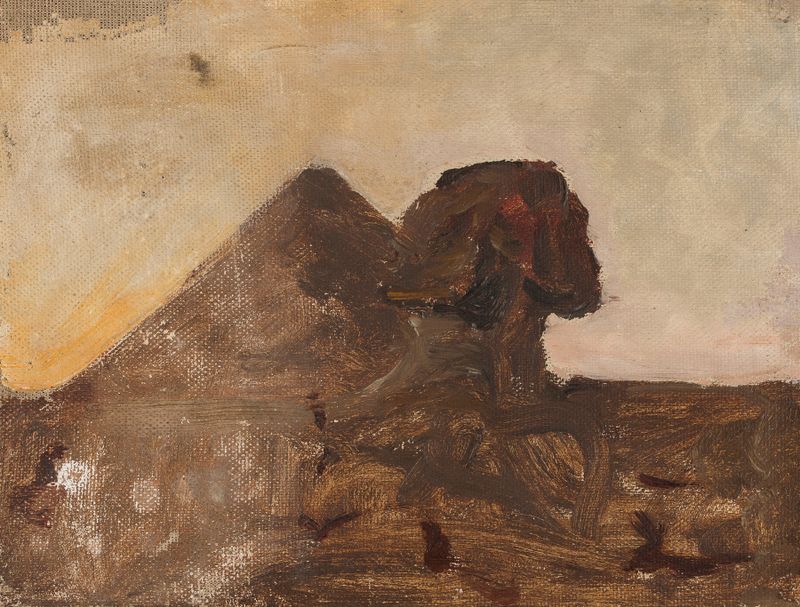
Evening in the desert – Sphinx and pyramid. From the journey to Egypt
Jan Ciągliński





