
Pierrot à la grappe — History & Facts
Pierrot à la grappe by Juan Gris features a harlequin figure surrounded by a cluster of grapes. The colors are rich and varied, with deep blues, greens, and warm earth tones. The composition is geometric, typical of Cubism, with fragmented shapes that create a sense of depth.
The background is abstract, enhancing the focus on the central figure and the grapes. The painting is executed in oil on canvas, showcasing Gris's distinctive Cubist style. The dimensions are approximately 65 x 54 cm, making it a medium-sized work. The use of color and form reflects the influence of both Picasso and Braque, pioneers of the Cubist movement.
The arrangement of elements invites viewers to explore the relationships between the figure and the still life. Juan Gris was a key figure in the development of Cubism, known for his innovative approach to form and color. Pierrot à la grappe is a notable example of his work, created around 1910. An interesting fact about this painting is its playful combination of a theatrical figure and still life, merging two genres into one cohesive piece.
Gris's ability to blend these elements showcases his unique perspective within the Cubist movement.
More Artworks by Juan Gris
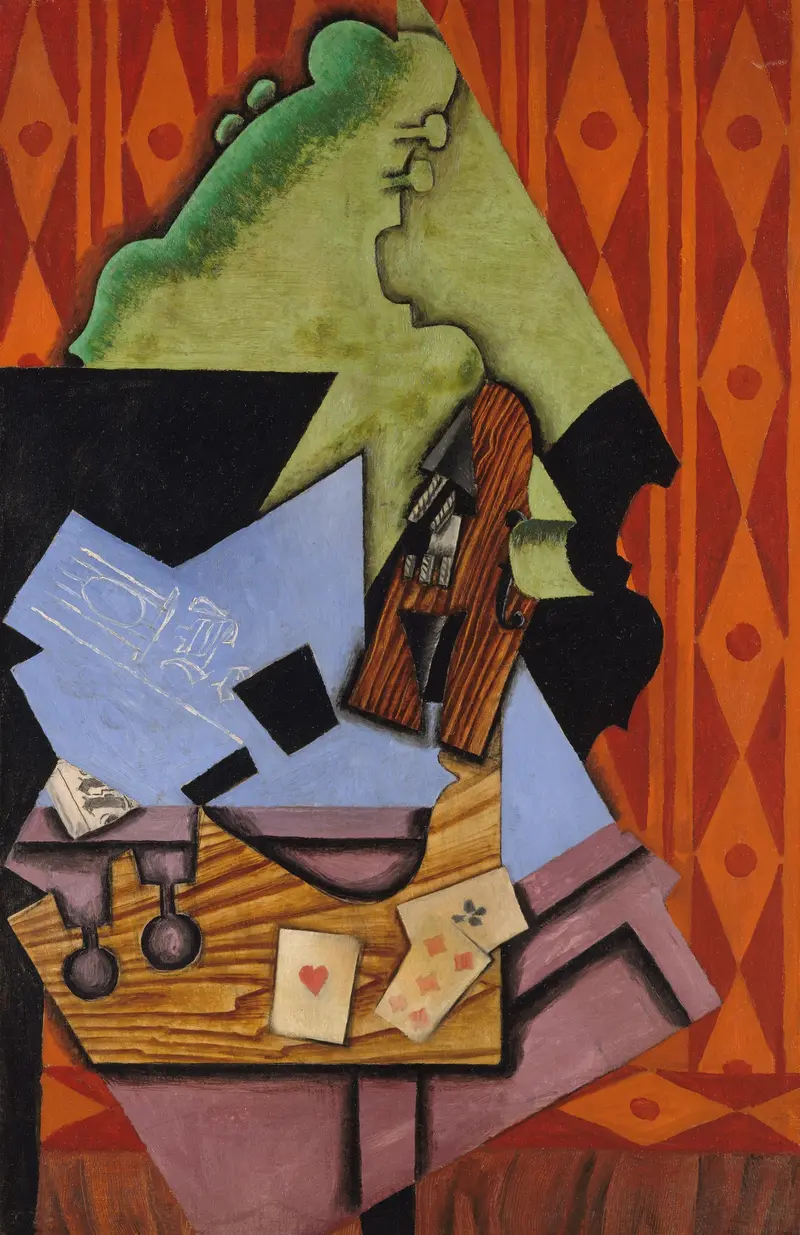
Violin and Playing Cards on a Table
Juan Gris

Portrait of Picasso
Juan Gris
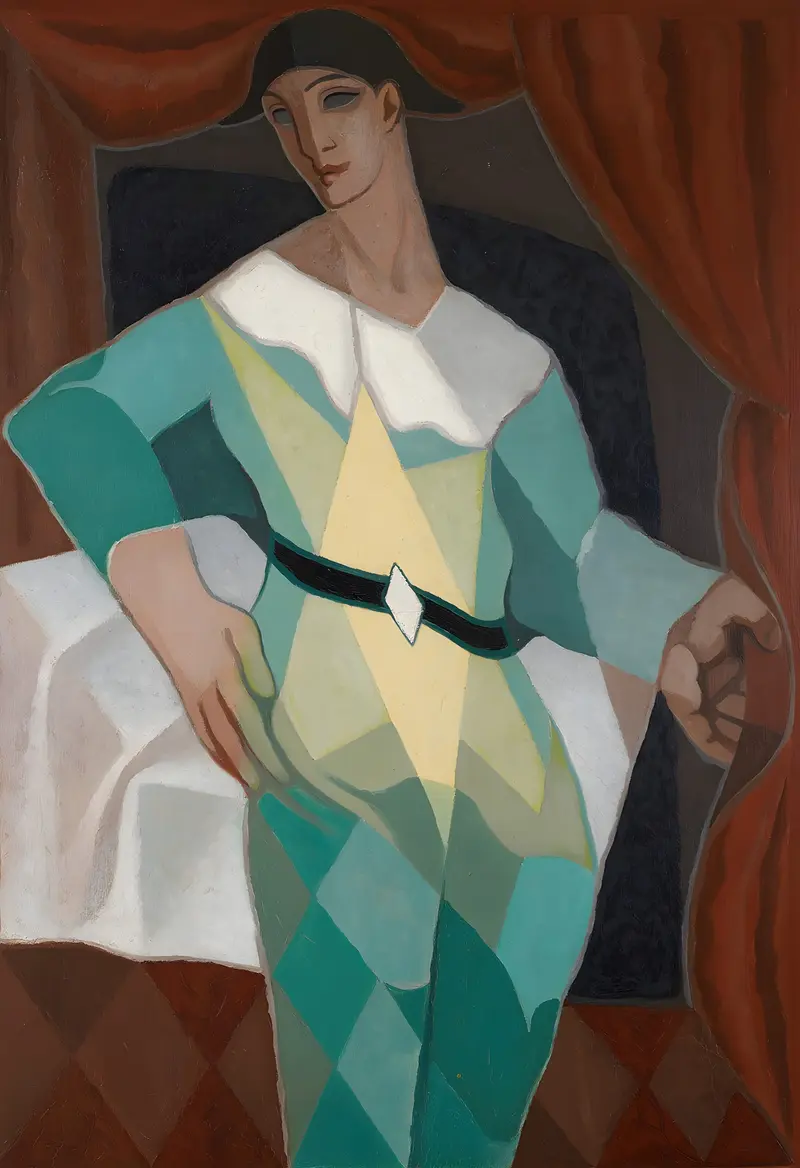
Arlequin
Juan Gris

A Guitar, Glasses and a Bottle
Juan Gris
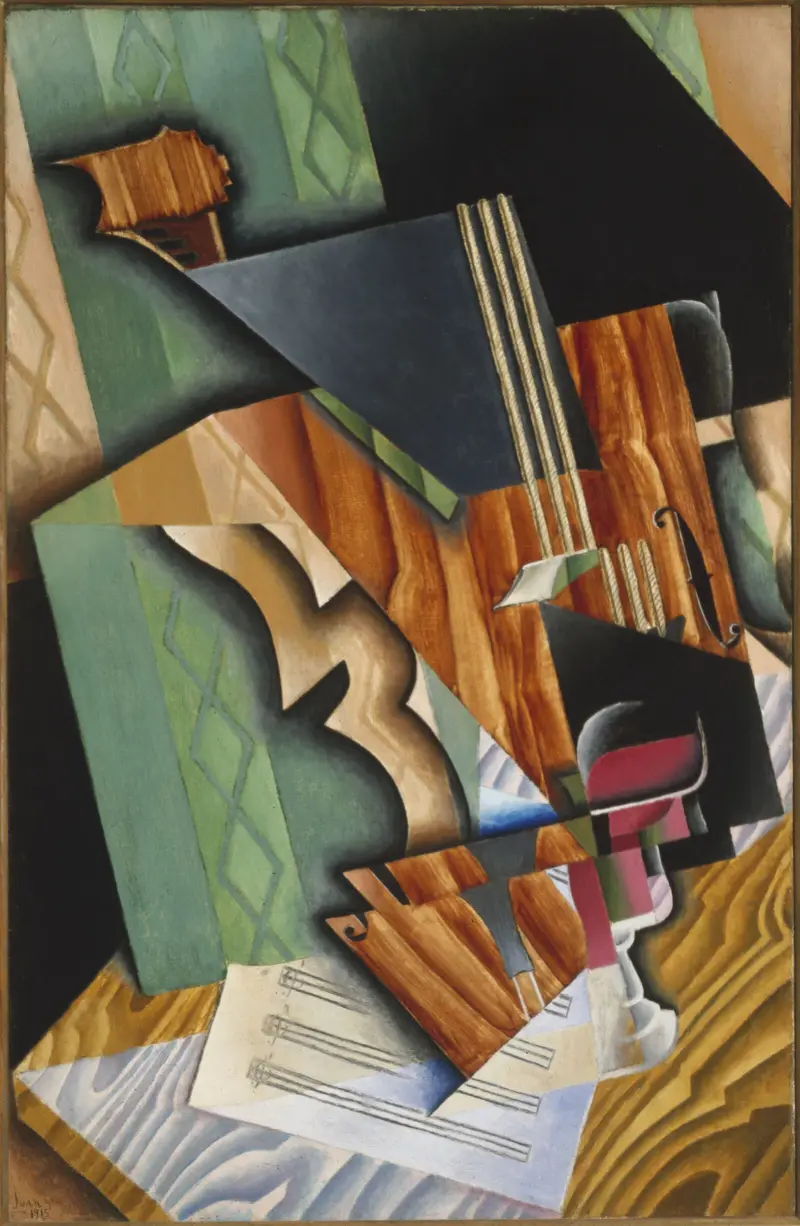
Violin and Glass
Juan Gris

Bottle and fruit bowl
Juan Gris
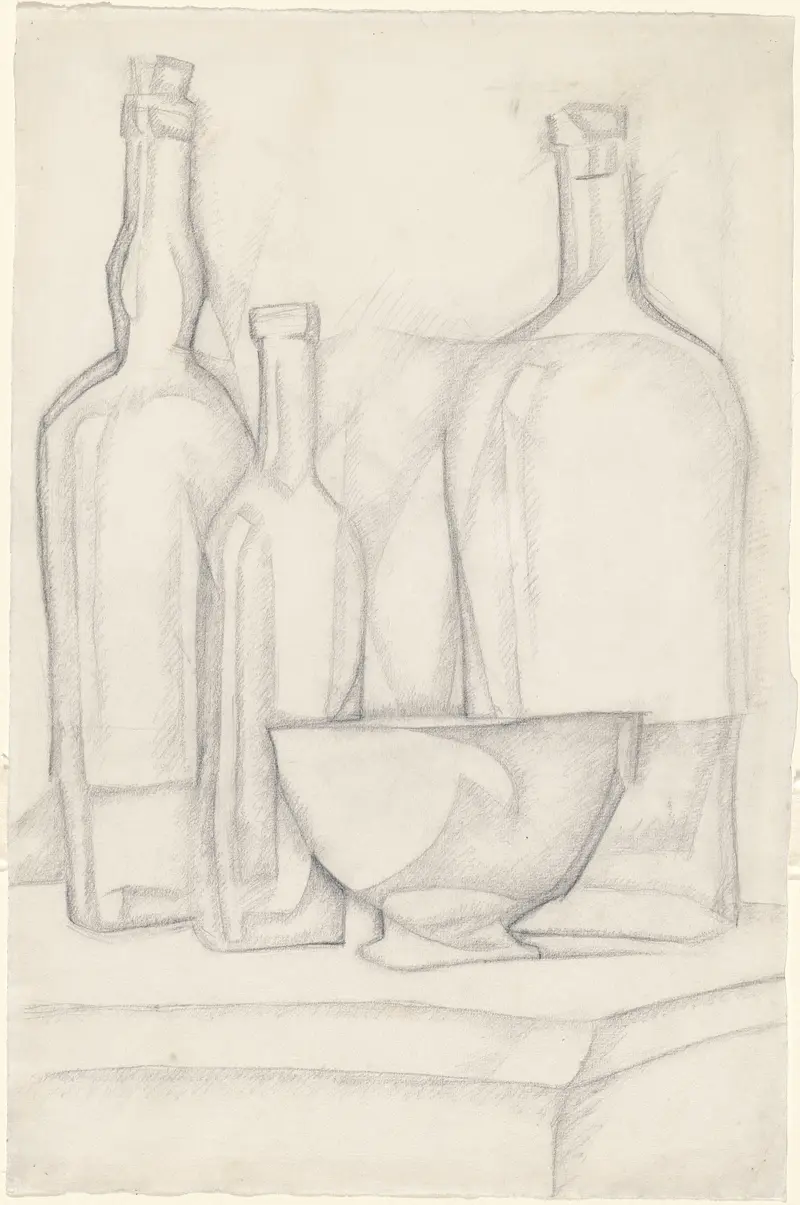
Bottles and Bowl
Juan Gris
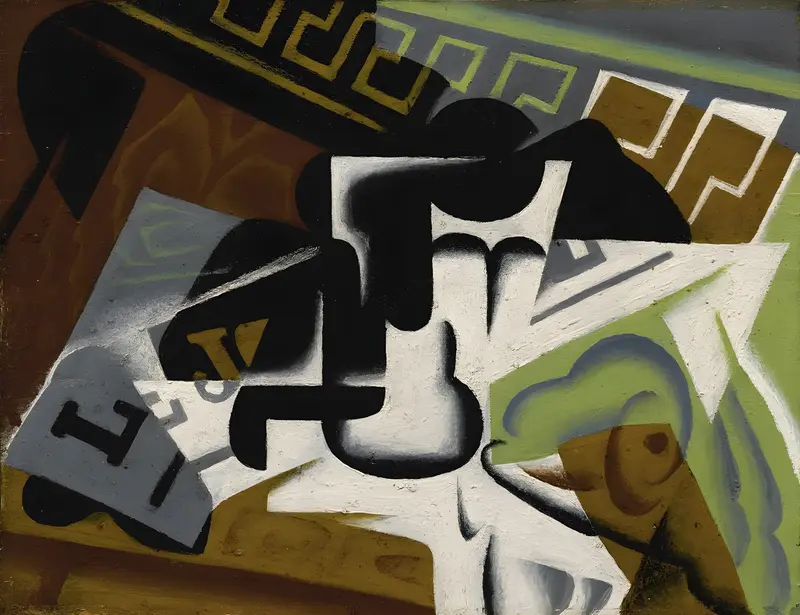
Journal et compotier
Juan Gris
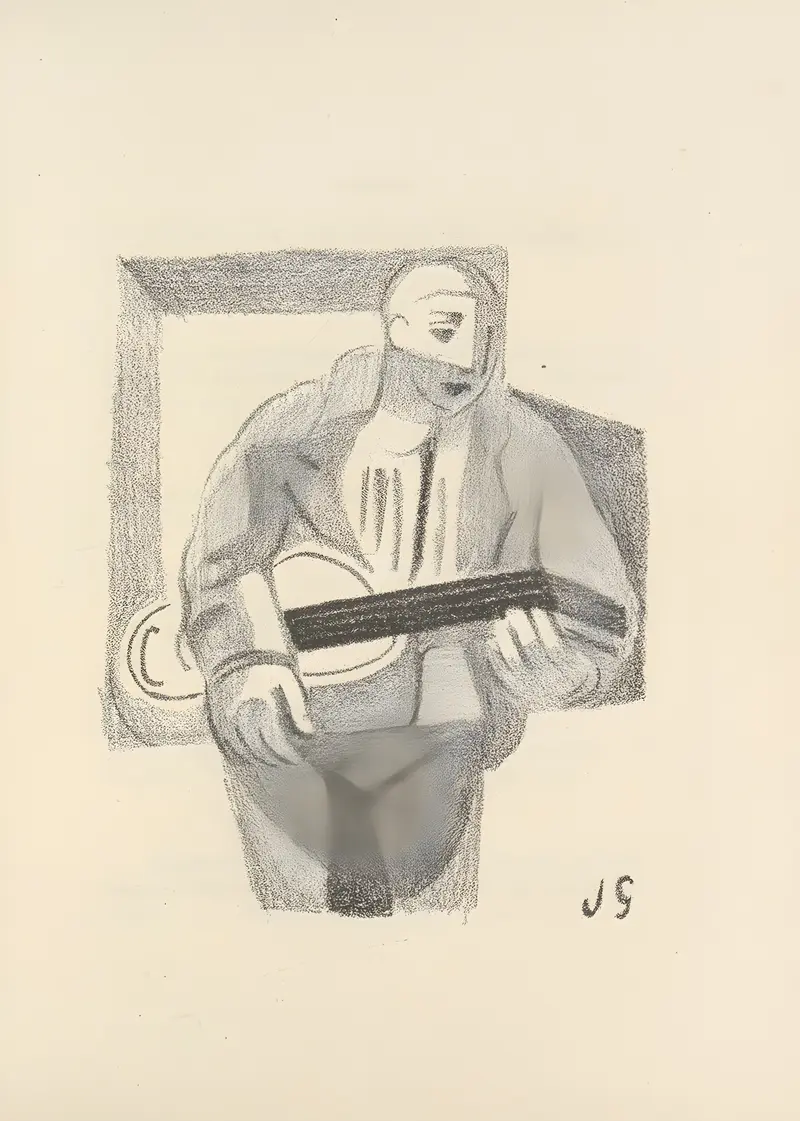
As a wife has a cow Pl.2
Juan Gris
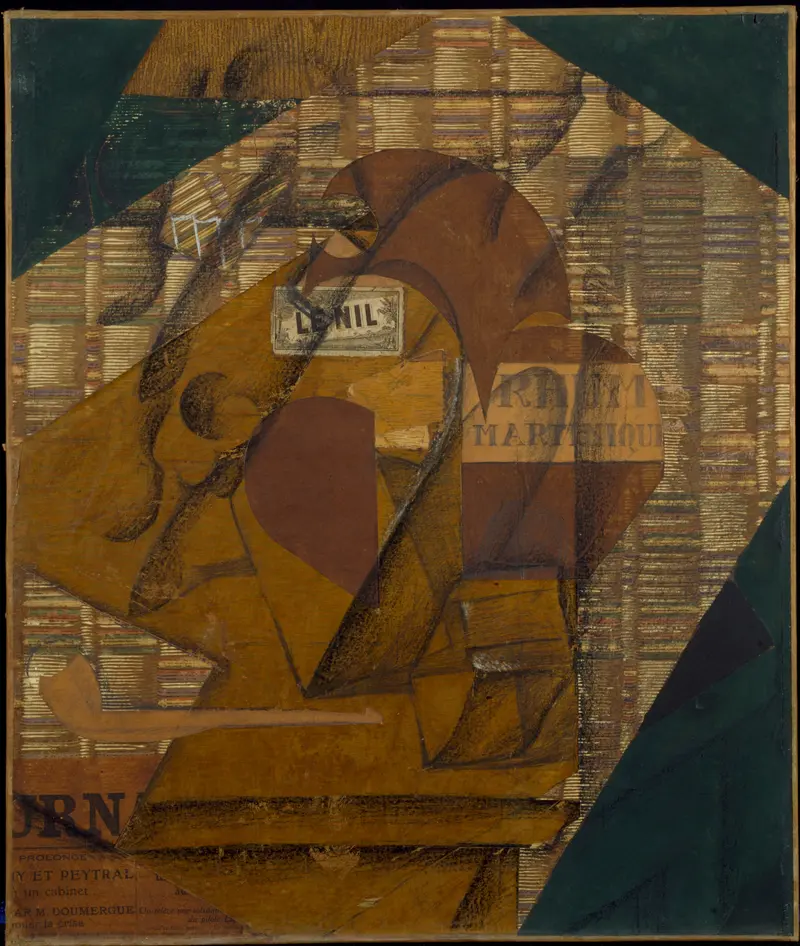
Bottle of Rum and Newspaper
Juan Gris





