
Place de Grève et l’Hôtel de Ville en 1740 — History & Facts
The weight of time hangs heavy in the air, whispering the tales of decay and resilience that linger in forgotten corners. Look to the center, where the grand architecture of the Hôtel de Ville looms, its once-vibrant façade now dulled by years of neglect. The stark contrast between the crumbling structures and the soft, muted hues of the surrounding landscape speaks volumes about the passage of time. Notice how the brushwork captures the ethereal quality of fading light, with shadows pooling in the recesses of the buildings, creating a poignant tension between past glory and present desolation. The painting subtly contrasts life and decay, where the bustling square once held a vibrant community now feels eerily quiet.
The scattered figures in the foreground, rendered with a sense of isolation, evoke a longing for connection amidst the crumbling beauty. Each detail—the broken cobblestones, the peeling paint—carries a weight of history, inviting viewers to reflect on the fragile nature of existence and the inevitable march of time. During the years between 1915 and 1945, Fédor Hoffbauer painted Place de Grève et l’Hôtel de Ville en 1740 amidst the turbulence of two World Wars. Living in Paris, he witnessed the shifting tides of culture and society, which profoundly influenced his work.
This period marked a time of introspection for many artists, as they grappled with the effects of conflict on their surroundings, using their art as a means to engage with the complexities of their reality.
More Artworks by Fédor Hoffbauer
Browse all →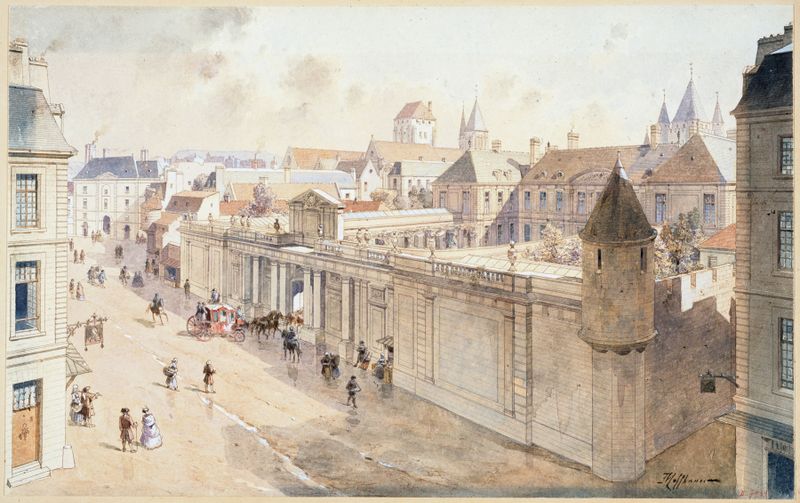
Le palais du Grand Prieur au Temple, en 1770
Fédor Hoffbauer
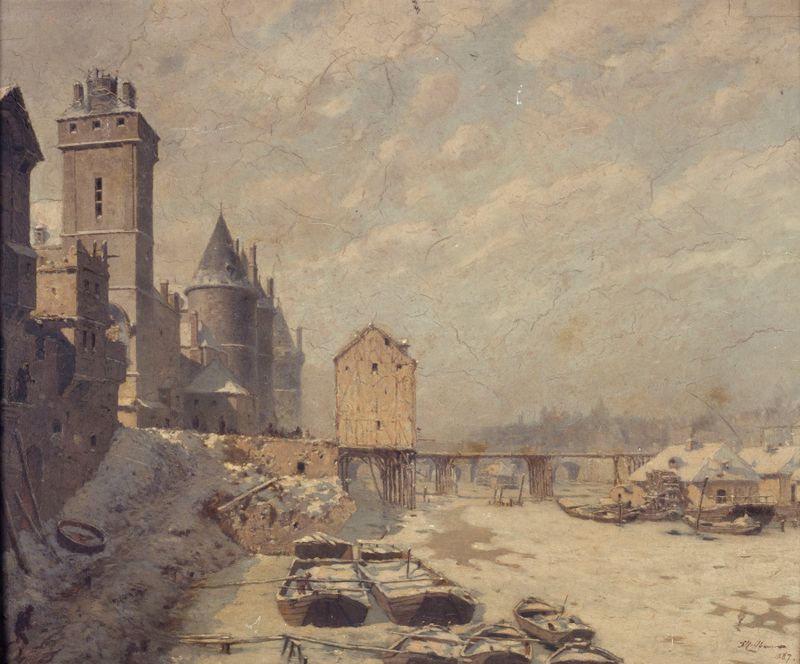
La tour de l’Horloge, la Conciergerie et le pont au Change, en 1621
Fédor Hoffbauer

Banquet des officiers de la marine Russe, dans la salle des fêtes à l’Hôtel de Ville. Fêtes Franco-Russes à Paris
Fédor Hoffbauer

Le Grand Châtelet et le pont de Bois, 1621-1645
Fédor Hoffbauer
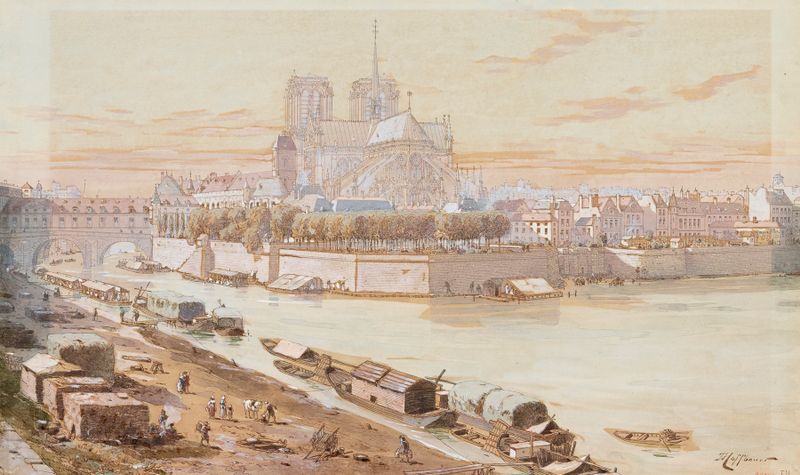
Notre-Dame et l’Evêché en 1750
Fédor Hoffbauer

Vue panoramique de Paris en 1588, depuis les toits du Louvre, avec le Pont-Neuf en construction
Fédor Hoffbauer
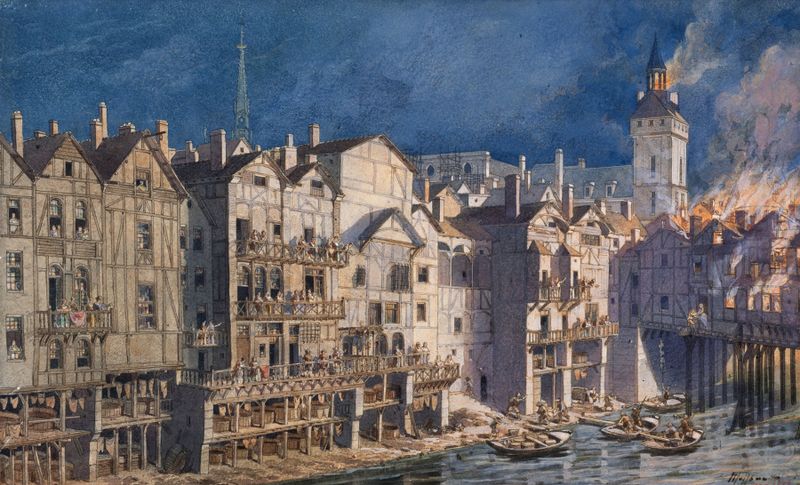
La Cité entre le pont Notre Dame et le pont au Change en 1621
Fédor Hoffbauer

L’Hôtel de Ville et le pont d’Arcole en 1842
Fédor Hoffbauer

Le Cimetière des Innocents en 1750
Fédor Hoffbauer
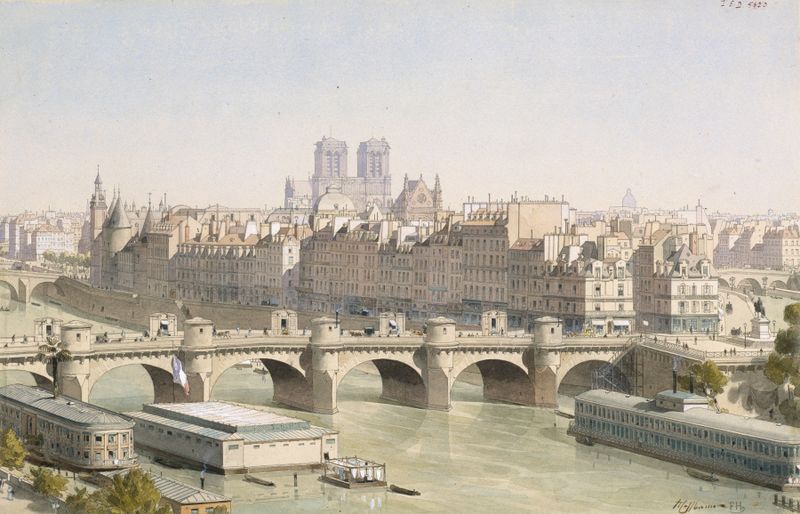
Vue de l’île de la Cité et le pont-Neuf avec ses boutique, vers 1840
Fédor Hoffbauer
More Architecture Art
Browse all →
The statue of Liberty
Frédéric Auguste Bartholdi

View of Houses in Delft, Known as ‘The Little Street’
Johannes Vermeer

View of Houses in Delft, Known as ‘The Little Street’
Johannes Vermeer

The Cathedral in Rouen. The portal, Grey Weather
Claude Monet

The yellow house
Vincent van Gogh

The Church in Auvers-sur-Oise, View from the Chevet
Vincent van Gogh