
pond catacombs — History & Facts
A hush settles over the pond, broken only by the brushwork’s suggestion of a gentle breeze. The eye is drawn first to the mysterious stone arch—half-swallowed by trees and crowned with moss—its shadowed mouth inviting speculation. Sunlight dapples the grass and glimmers across the water, which mirrors the tangled green canopy above.
The painter’s choice to let the reflection blur into abstraction makes the pond itself a second, softer world, as if the secrets of the landscape could be glimpsed only in passing. The palette, all lush greens and earthy browns, sets a mood of quiet enclosure, while the birch at left frames the scene like a stage curtain, inviting us to step closer. Painted by Apollinari Mikhailovich Vasnetsov between 1903 and 1917, this work belongs to a Russian tradition that found poetry in the overlooked corners of nature and history. Artists of this era, often working in the shadow of rapid modernization, turned to landscapes not just for beauty but as vessels of memory and myth.
The pond, the overgrown catacombs, the dense forest—these are not just features of a place but hints at stories half-remembered, at Russia’s layered past. Now held in a Russian state collection, this painting stands as a quiet testament to a vanished world, inviting the viewer to linger and look for what lies beneath the surface.
More Artworks by Apollinari Mikhailovich Vasnetsov

Landscape With Lake
Apollinari Mikhailovich Vasnetsov
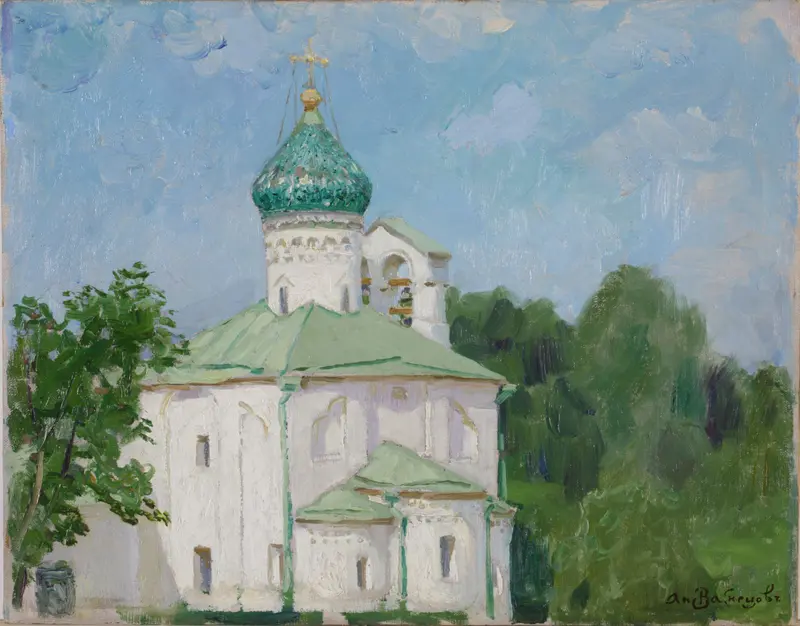
Sergius Luzhki
Apollinari Mikhailovich Vasnetsov
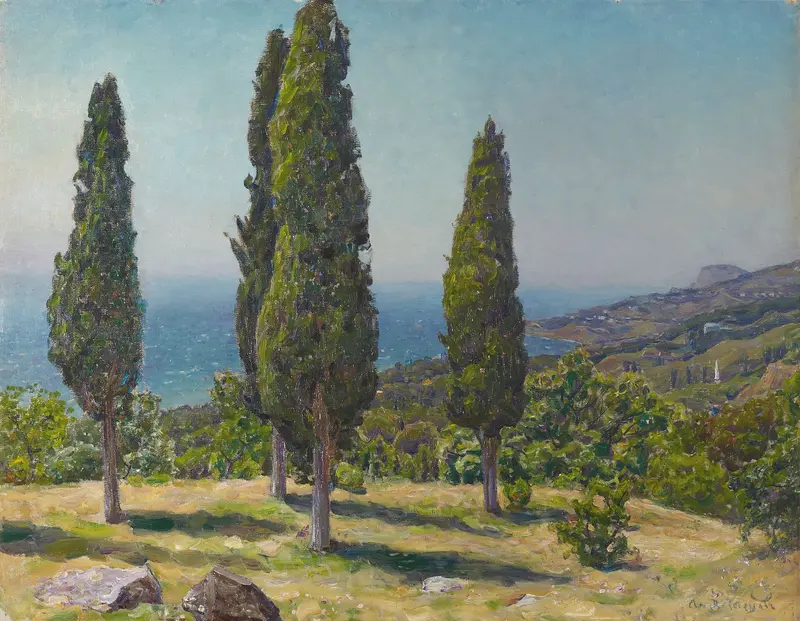
cypresses. Crimea
Apollinari Mikhailovich Vasnetsov
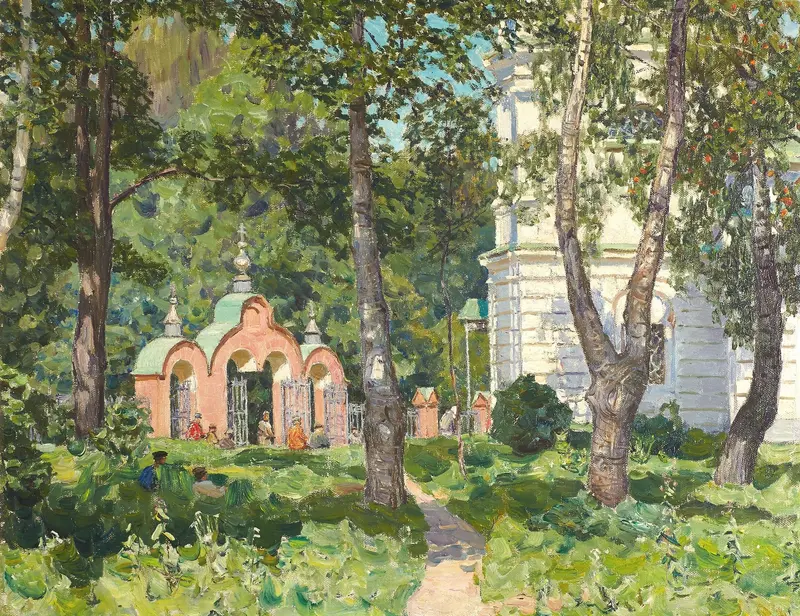
Demyanovo. At the churchyard
Apollinari Mikhailovich Vasnetsov
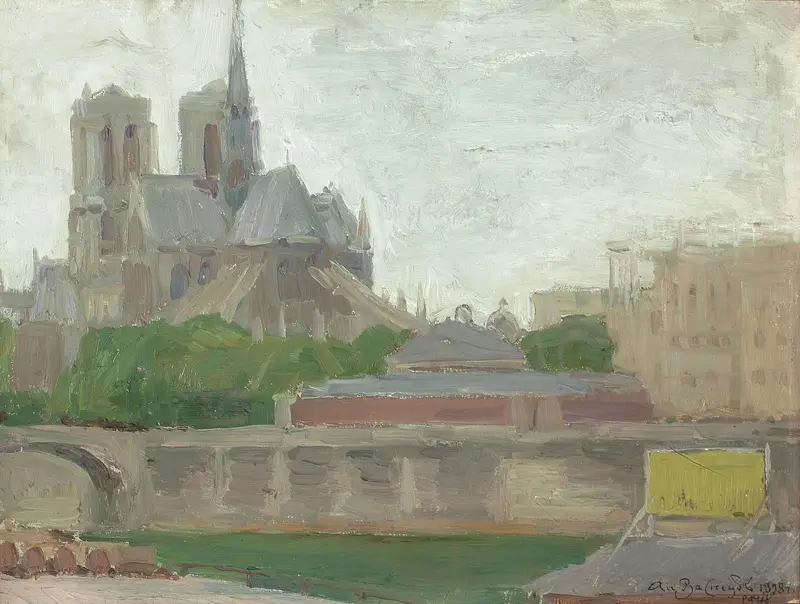
Notre Dame de Paris
Apollinari Mikhailovich Vasnetsov
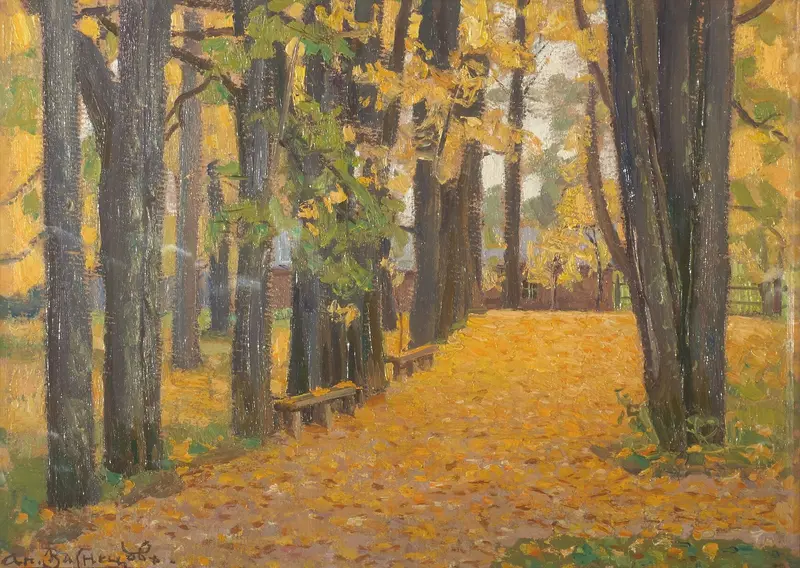
Autumn park
Apollinari Mikhailovich Vasnetsov
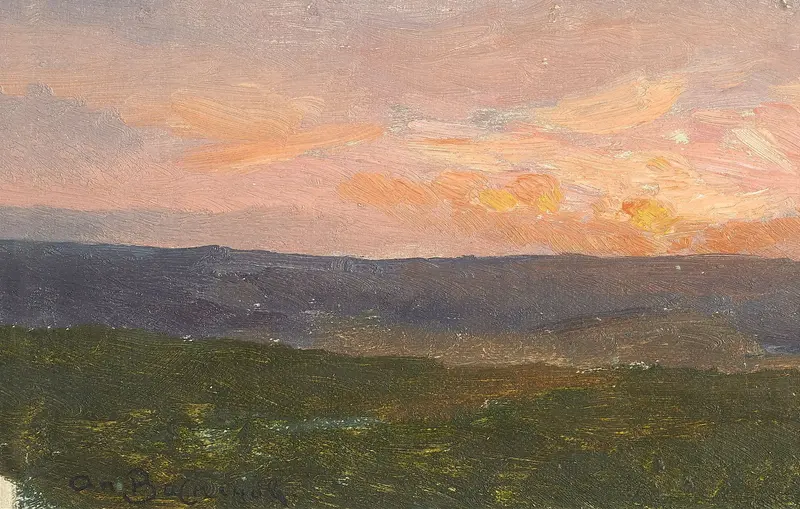
Sunset. Shurma
Apollinari Mikhailovich Vasnetsov

Via delle Tombe Pompeii
Apollinari Mikhailovich Vasnetsov
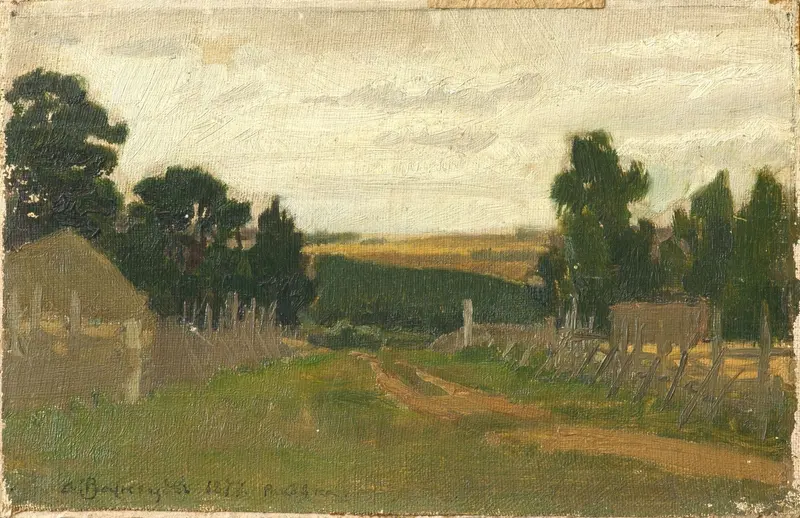
Rakovka
Apollinari Mikhailovich Vasnetsov
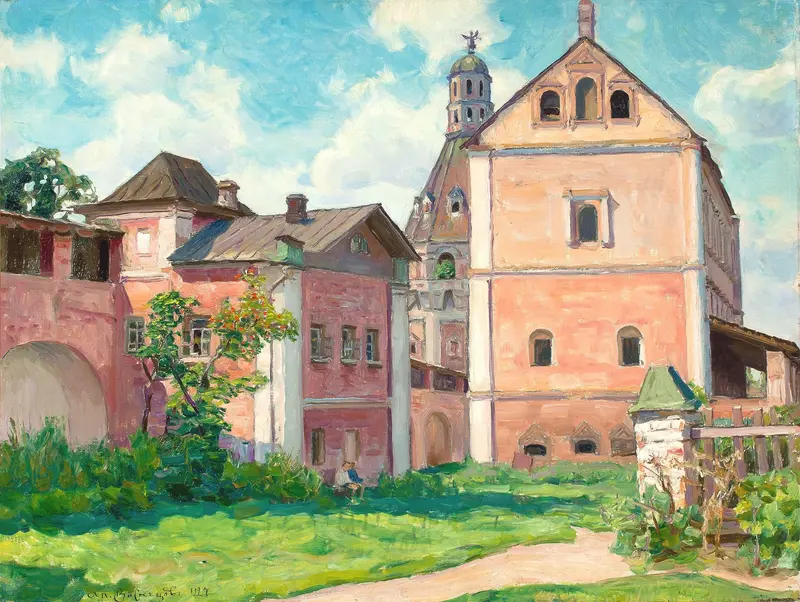
Simonov tower
Apollinari Mikhailovich Vasnetsov
More Landscape Art

The Starry Night
Vincent van Gogh

View of Delft
Johannes Vermeer

Water Lilies
Claude Monet

The Grand Canal, Venice, looking north-west from the Ca' Corner to the Ca' Contarini degli Scrigni, with the campanile of Santa Maria della Carità
Canaletto

Windsor Castle
Canaletto

The Grand Canal looking North-East from the Palazzo Dolfin-Manin to the Rialto Bridge
Canaletto