
Ponte Molle, Rome — History & Facts
Is this a mirror — or a memory? The still waters of the Tiber reflect a world where madness and tranquility intertwine, inviting the viewer to ponder the thin veneer of reality. Look to the left, where the sun spills its golden light over the ancient bridge, illuminating the weathered stones with a warmth that feels both alive and haunting. The meticulous brushwork captures not just the architecture but the very essence of time, as wisps of clouds drift lazily overhead, blurring the line between permanence and decay. The composition, framed by the arch of the bridge, draws the eye deeper into the scene, encouraging a contemplative journey across the fabric of history. Within this tranquil setting, the juxtaposition of bustling figures against serene nature reveals an undercurrent of tension.
The lively conversations and gestures of the townsfolk evoke a sense of chaos amidst the stillness of the landscape. The shadows cast by the overhanging trees suggest a looming presence, a reminder of the madness that often lurks beneath the surface of everyday life, hinting at the fragility of this picturesque moment. During the 18th century, Vernet painted this piece while navigating a vibrant yet tumultuous artistic landscape in France, where the Rococo was giving way to Neoclassicism. He was in Rome, inspired by its ruins and history, capturing not just physical beauty, but also the emotional weight of time.
In an era marked by revolution and shifting ideologies, his work reflects a profound engagement with both the natural world and the complexities of human experience.
More Artworks by Claude-Joseph Vernet
Browse all →
An Italian Harbour in Stormy Weather
Claude-Joseph Vernet
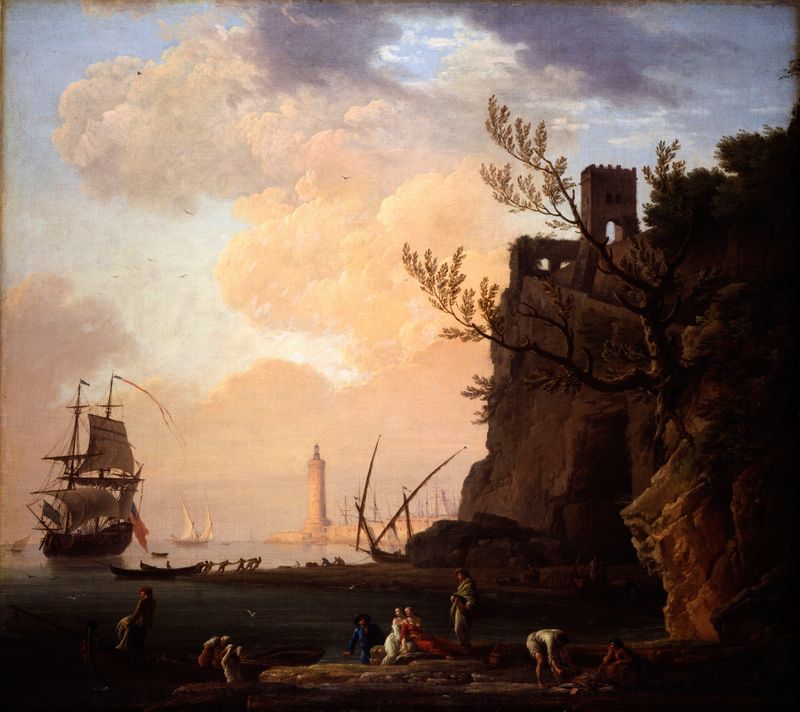
An Italianate Harbour Scene
Claude-Joseph Vernet
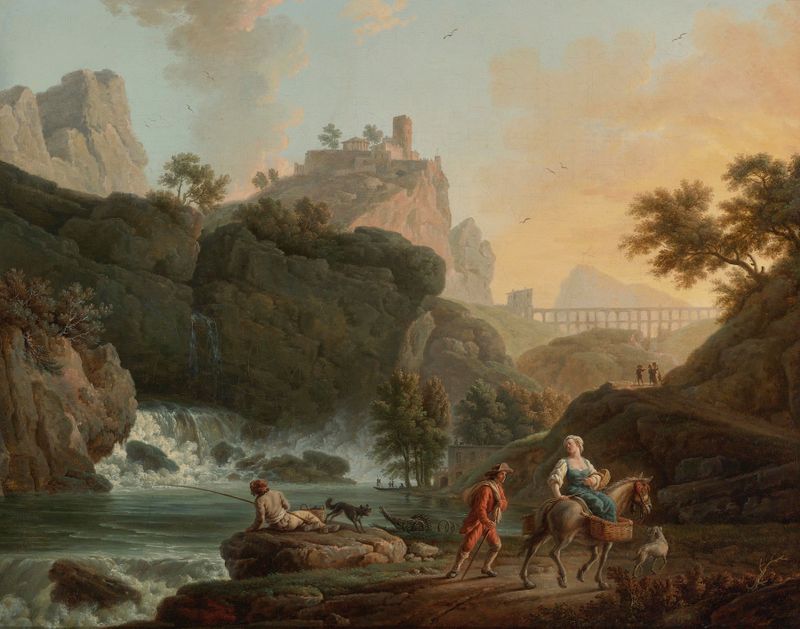
A Rocky Landscape With A fisherman And Travellers By A River With A Waterfall, An Aqueduct In The Distance
Claude-Joseph Vernet
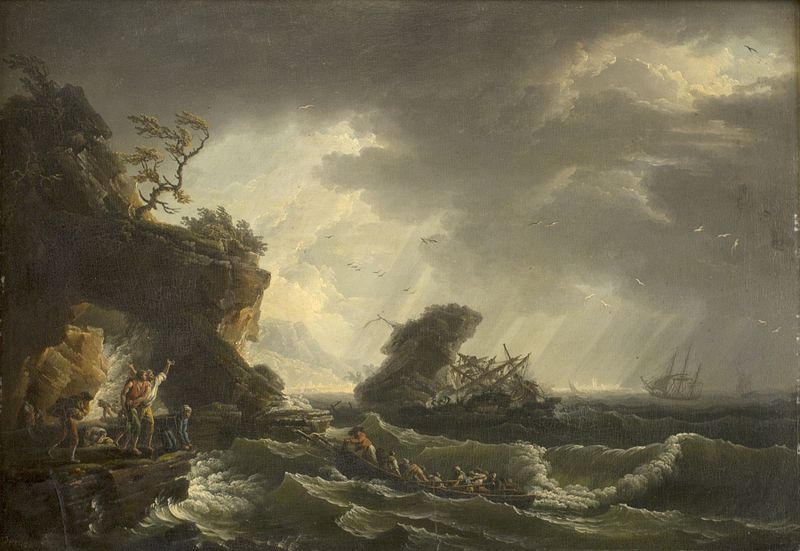
A Shipwreck
Claude-Joseph Vernet

A Mediterranean Harbor At Sunset With Fisherfolk At The Water’s Edge, A Lighthouse And A Man Of War At Anchor In The Bay
Claude-Joseph Vernet
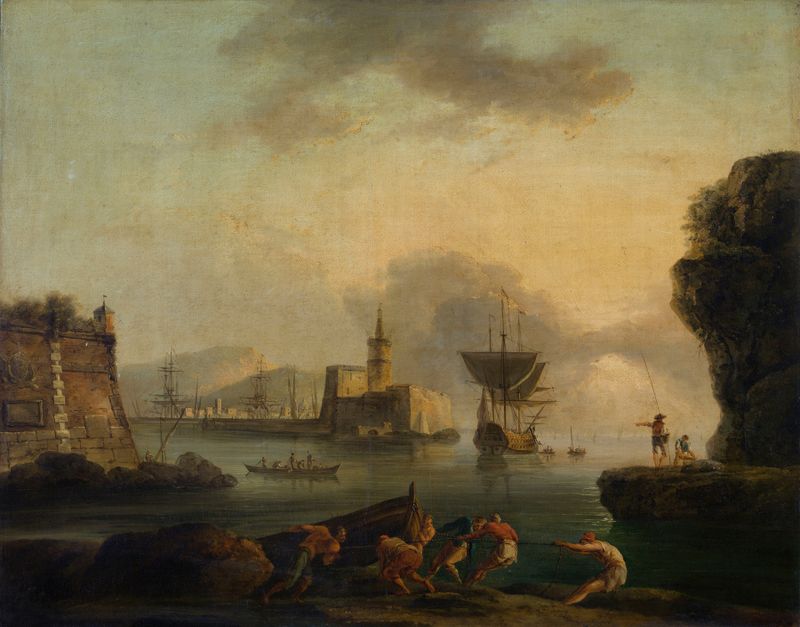
Naples
Claude-Joseph Vernet
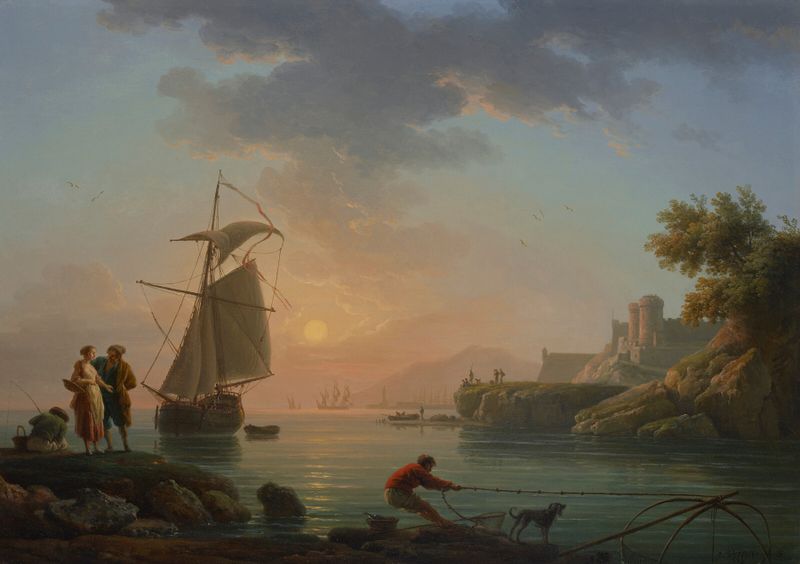
Mediterranean port at sunset, with a fisherman in the foreground
Claude-Joseph Vernet
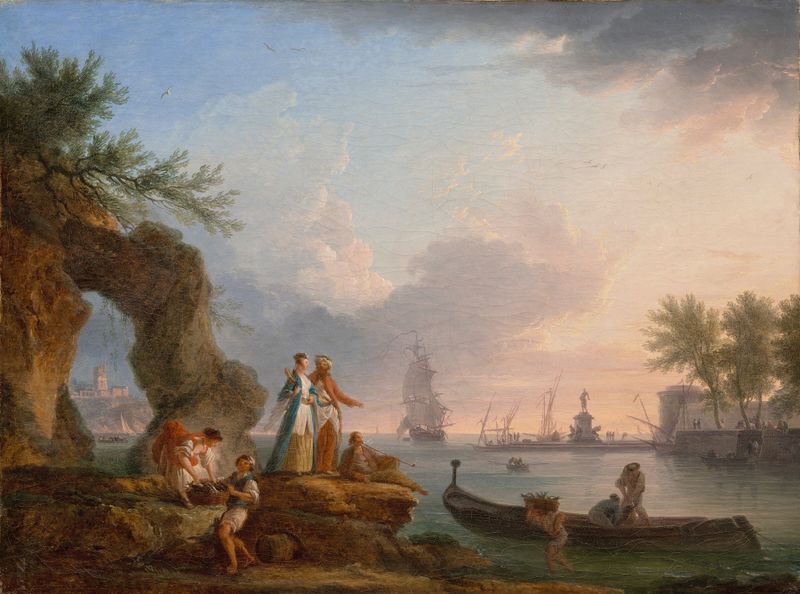
View of a port at sunset with fishermen and a couple in oriental dress
Claude-Joseph Vernet

A Calm at a Mediterranean Port
Claude-Joseph Vernet

A Grand View Of The Sea Shore Enriched With Buildings, Shipping And Figures
Claude-Joseph Vernet





