
Ponte San Rocco and Waterfalls, Tivoli — History & Facts
In the stillness of a moment captured on canvas, violence often lingers beneath the surface, masked by beauty. Here lies a tranquil scene, yet one holds the breath of turmoil that art subtly unveils. Look to the foreground, where the tumultuous waterfall cascades with a fierce energy, its white froth contrasting sharply against the dark stones. The bridge, gracefully arching over the rushing water, draws the eye with its rustic majesty.
Notice how the light dances on the water's surface, illuminating the lush greens of the foliage that frame this delicate balance between serenity and chaos. Granet’s choice of muted earth tones intermingled with vibrant greens creates a harmonious yet tension-filled atmosphere. On closer inspection, the juxtaposition of nature's ferocity with the tranquility of the architectural elements suggests an underlying conflict—one that may hint at the violence of nature itself or the human struggle against it. The untouched beauty of the landscape may mask the harsh realities of life, reminding us that peace often coexists with turmoil.
This silent commentary on existence invites reflection on the fragility of harmony in a world that can erupt into chaos. During the years between 1810 and 1820, Granet was immersed in the Romantic movement, capturing the sublime beauty of landscapes while grappling with the emotional depths of human experience. Living in France, he was influenced by the shifting artistic landscape, as artists sought to express the tumult of their time through powerful imagery. It was here, in this context of artistic evolution, that this piece emerged, embodying both the serenity and violence that life encompasses.
More Artworks by François-Marius Granet
Browse all →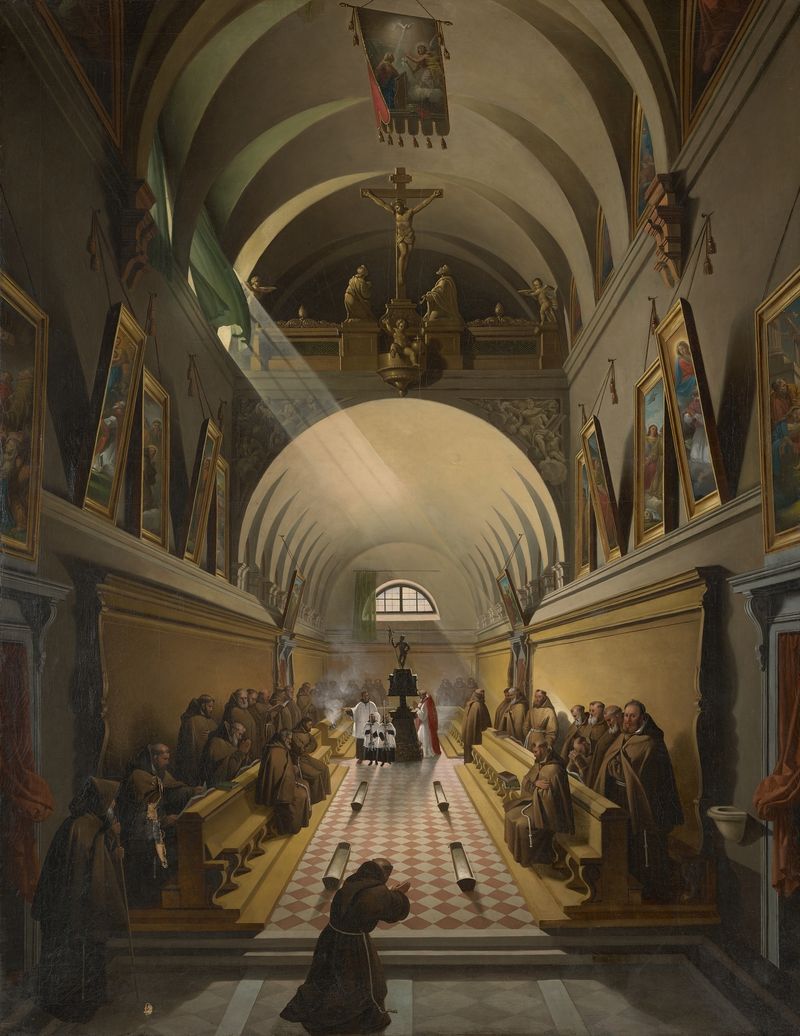
Interior of a Capuchin Convent
François-Marius Granet
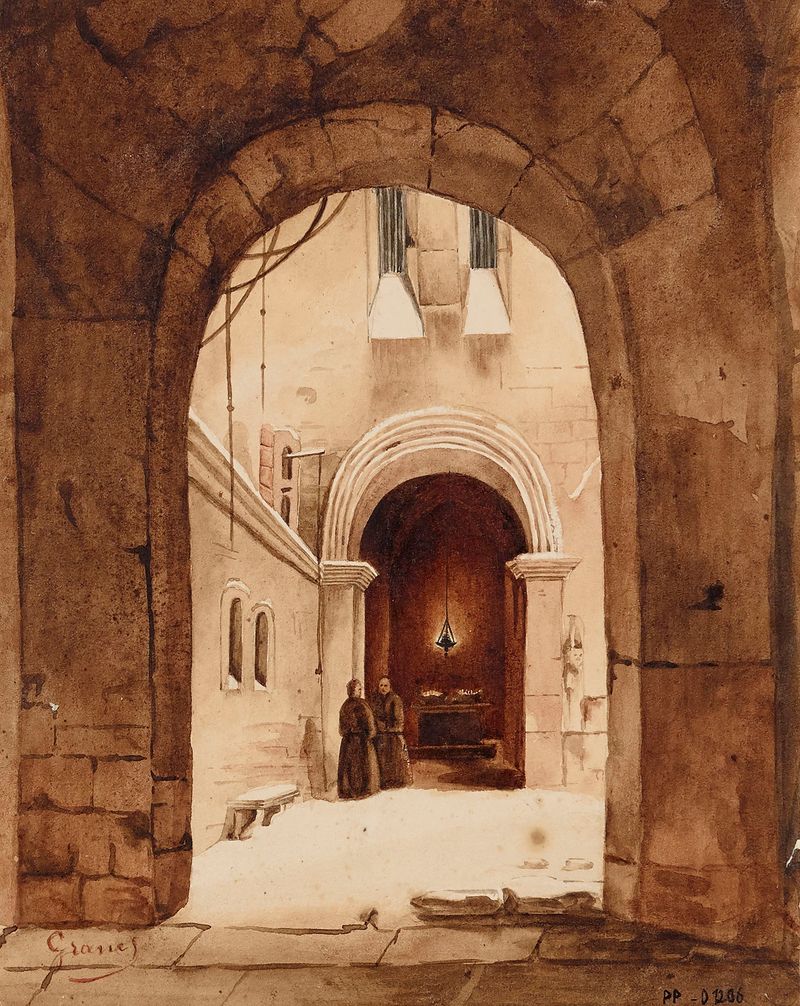
Deux ermites se promenant sous des voûtes
François-Marius Granet
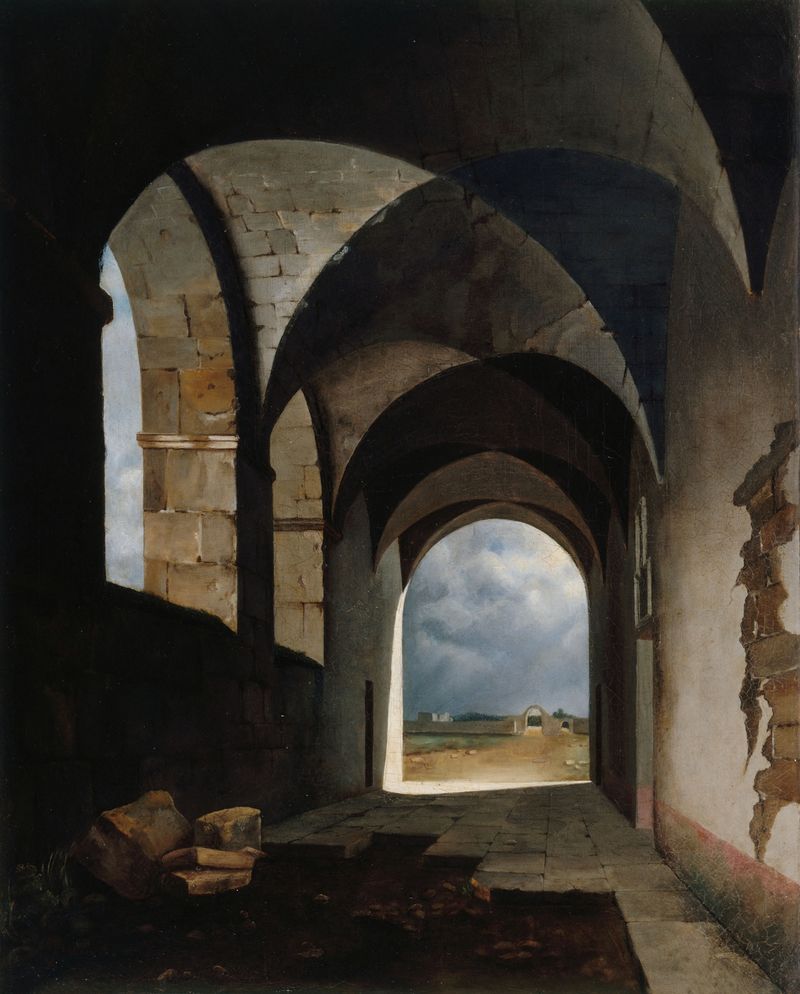
Effet de lumière dans les ruines
François-Marius Granet
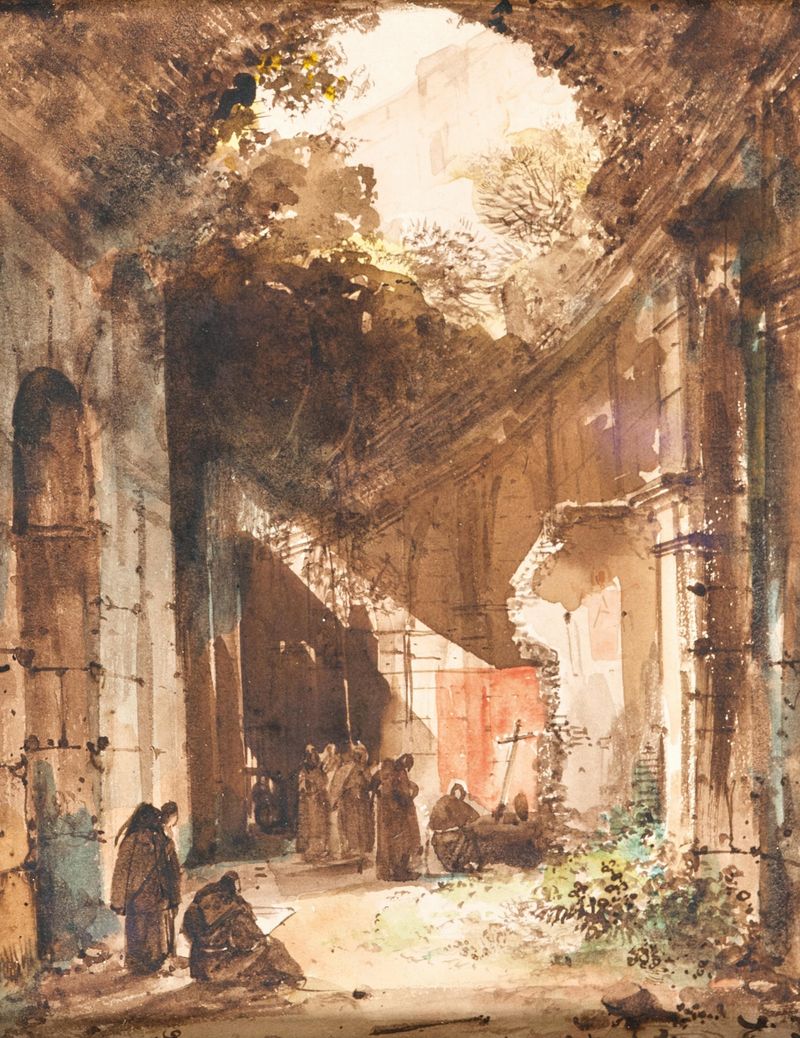
Monks in the Colosseum
François-Marius Granet
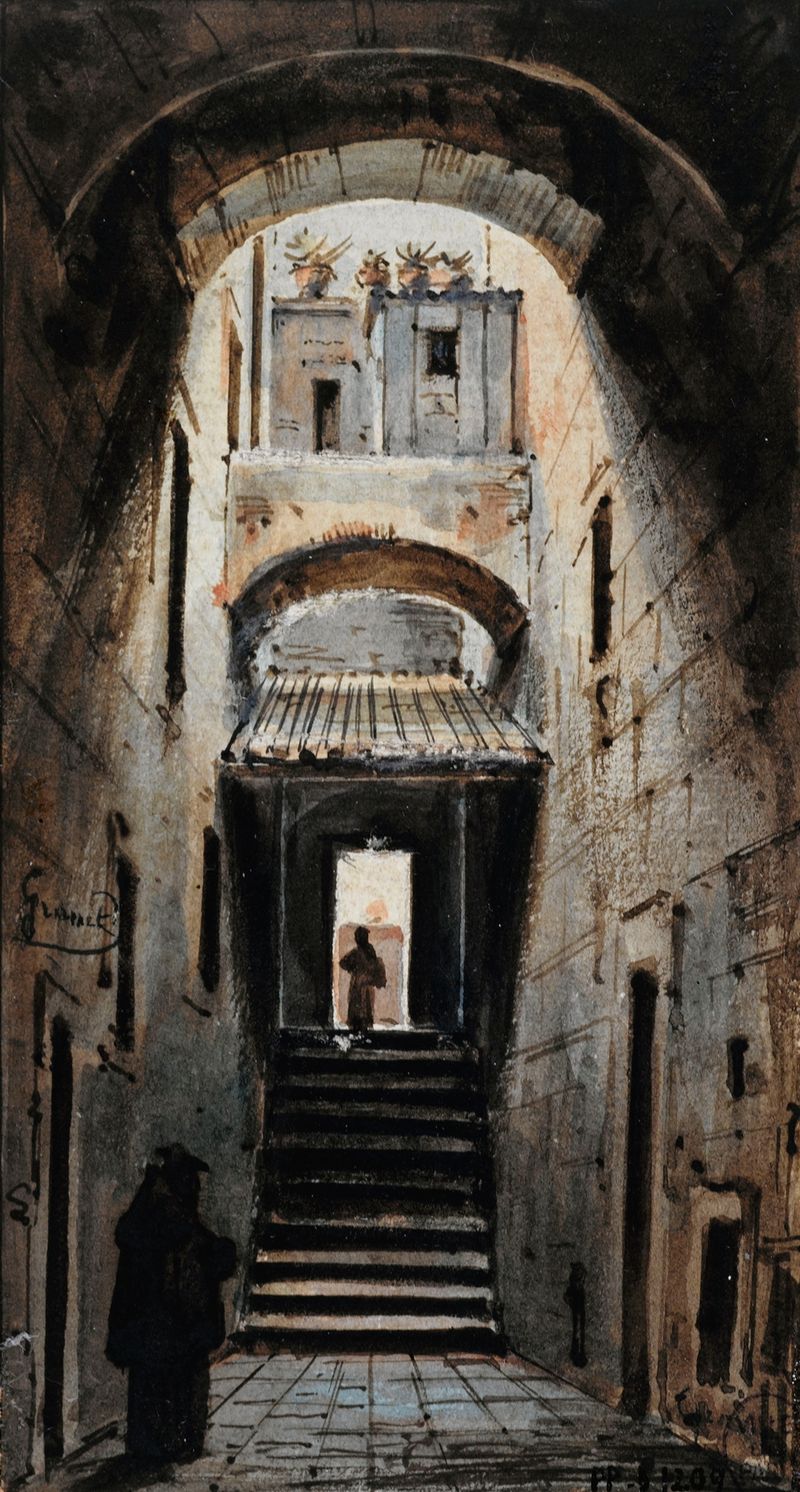
Une rue sous les voûtes
François-Marius Granet
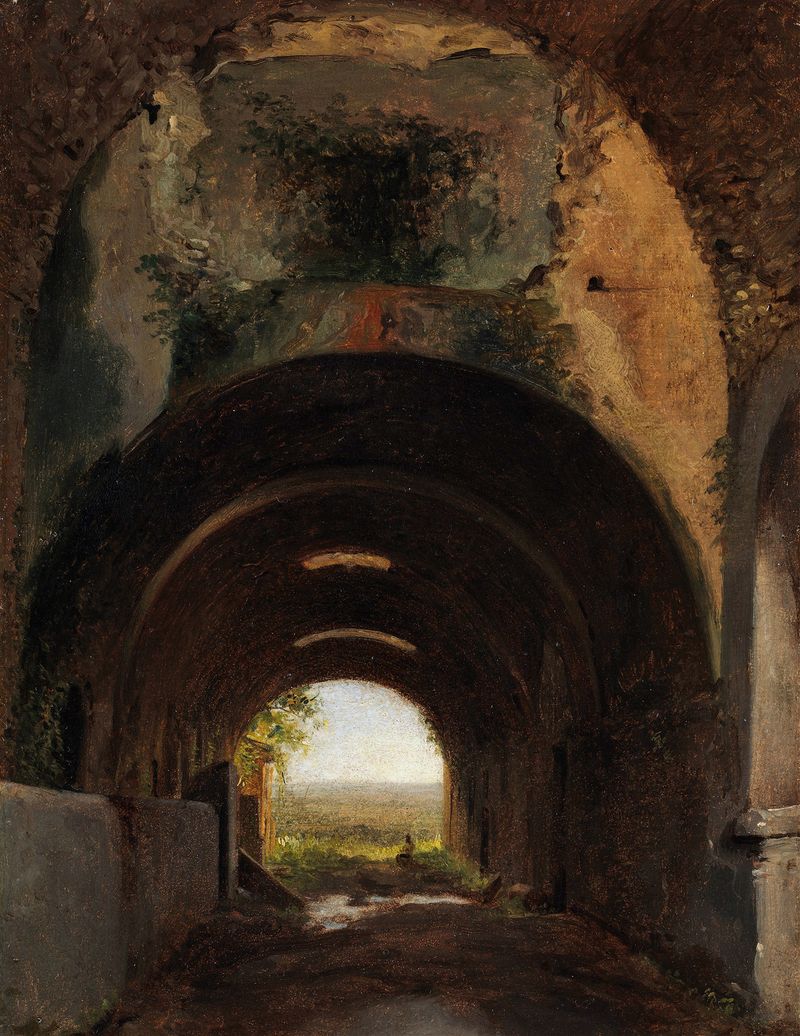
View in the Stables of the Villa of Maecenas, Tivoli
François-Marius Granet
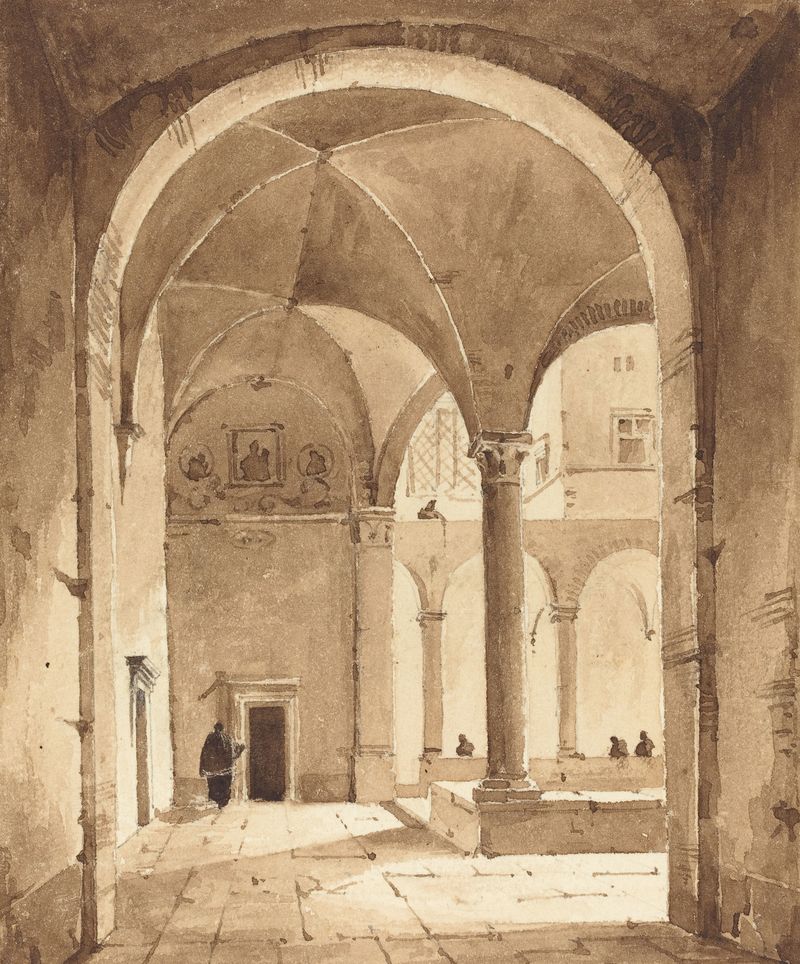
A Cloister
François-Marius Granet
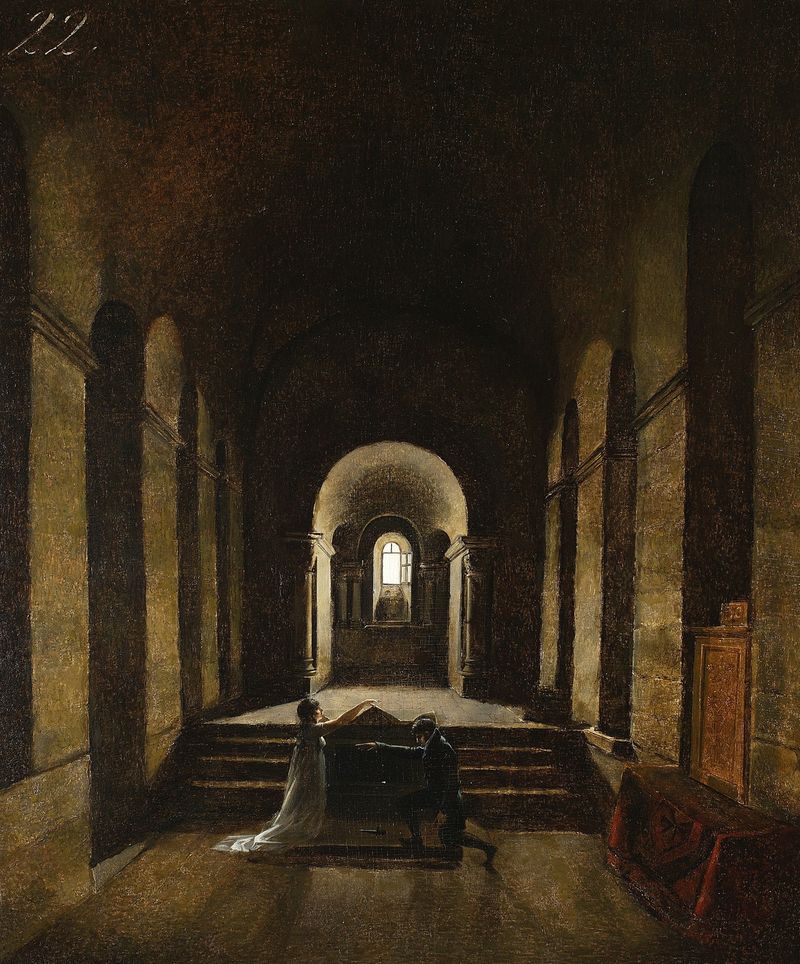
Vow (chapel interior)
François-Marius Granet
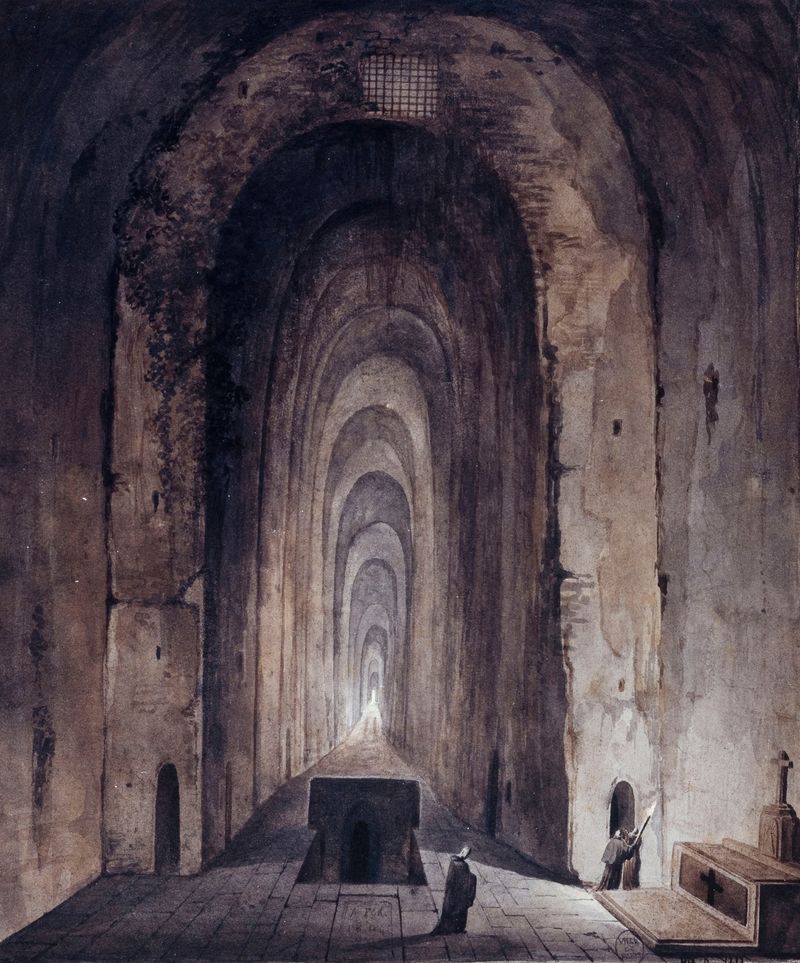
Les Catacombes de Saint-Agnès à Naples
François-Marius Granet
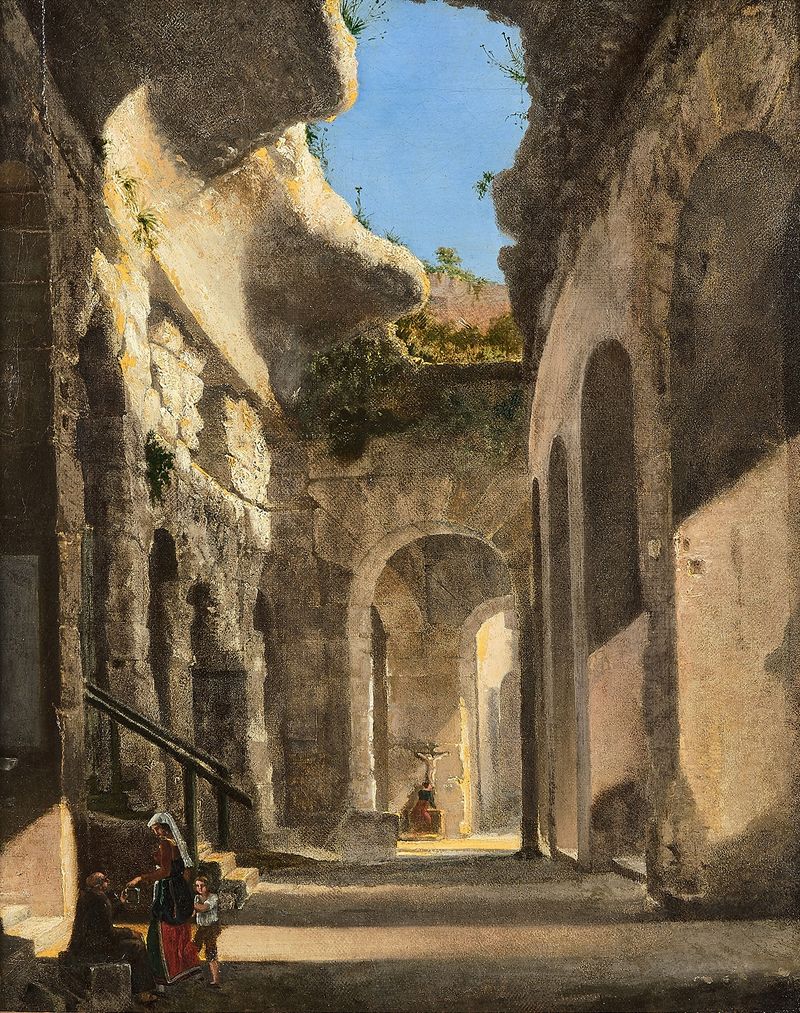
Les ruines du Colisée animées de personnages
François-Marius Granet





