
Les Catacombes de Saint-Agnès à Naples — History & Facts
What violence lurks beneath the surface of beauty, waiting to be unearthed? In the depths of Les Catacombes de Saint-Agnès à Naples, the viewer is drawn into a silent confrontation between light and shadow, where the echoes of the past linger heavily. Look to the lower left corner, where the intricate arrangement of bones forms a hauntingly beautiful tapestry against the cool stone walls. The artist’s meticulous attention to detail invites the eye to trace the contours of the skulls, their hollow sockets gazing out into the void. Notice how the subdued palette of browns and grays contrasts sharply with the flickers of light that dance upon the surface, creating a somber yet reverent atmosphere.
The composition’s depth pulls you in, making the catacombs feel both expansive and claustrophobic, a testament to the intertwining of life and death. Yet, within this stark setting lies a plethora of emotions. The juxtaposition of the meticulously arranged skulls and the disorder of scattered bones evokes a sense of both reverence and dread. Each element speaks to the fragility of existence, a reminder of mortality that compels introspection.
The tension created by light illuminating specific areas while casting others into darkness reflects the duality of beauty and violence, suggesting that peace often rests uncomfortably close to chaos. In 1804, Granet painted this work amidst a time when Romanticism began to flourish, allowing artists to explore themes of emotion, nature, and the sublime. Working in Naples, he was influenced by the city's rich history and the lingering remnants of past tragedies. This period marked a shift in artistic focus—from the idealized forms of Neoclassicism to a more introspective exploration of human experience, a movement that Granet embodied with his unique perspective on both beauty and the macabre.
More Artworks by François-Marius Granet
Browse all →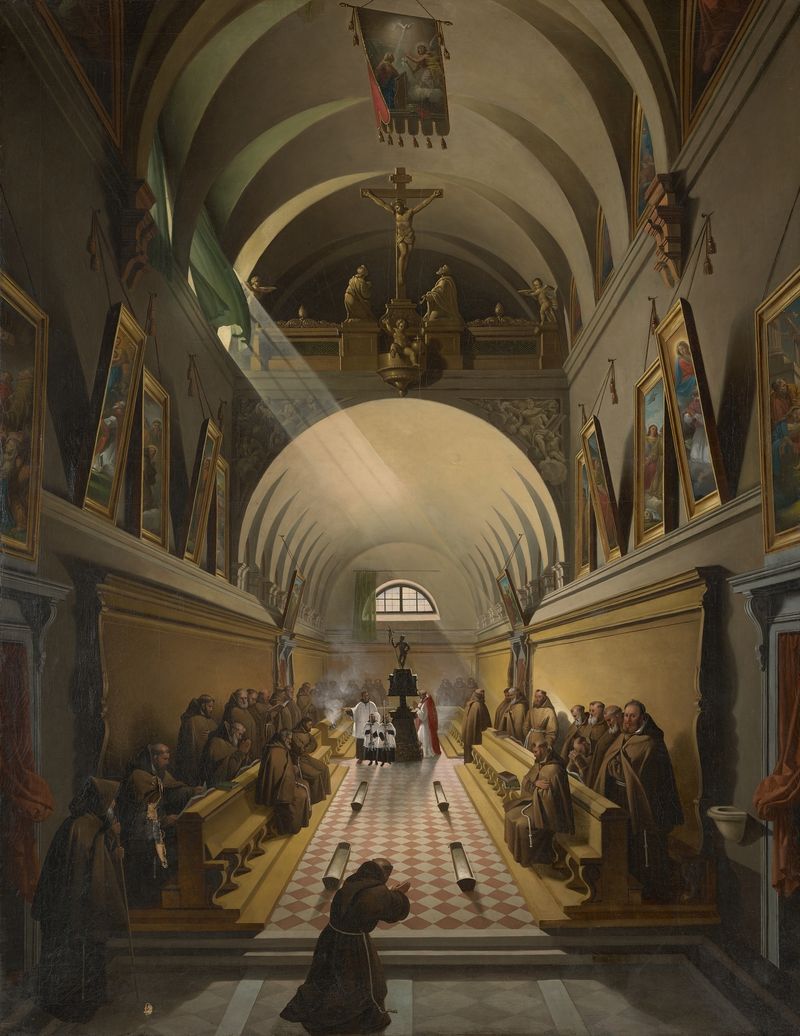
Interior of a Capuchin Convent
François-Marius Granet
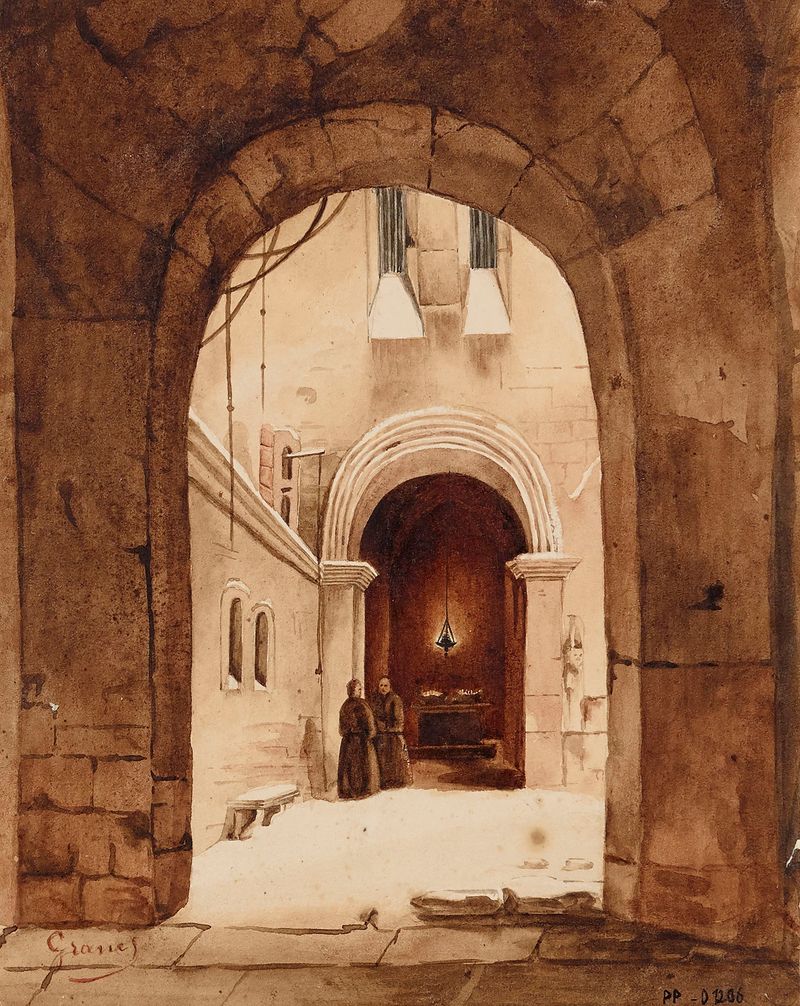
Deux ermites se promenant sous des voûtes
François-Marius Granet
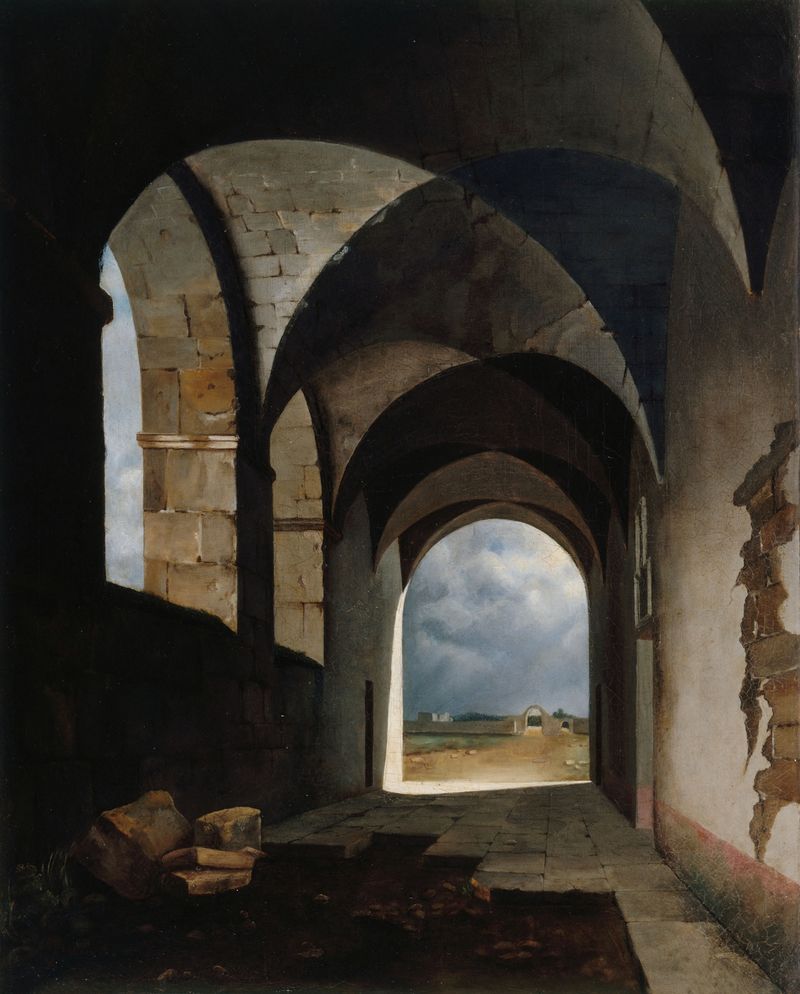
Effet de lumière dans les ruines
François-Marius Granet
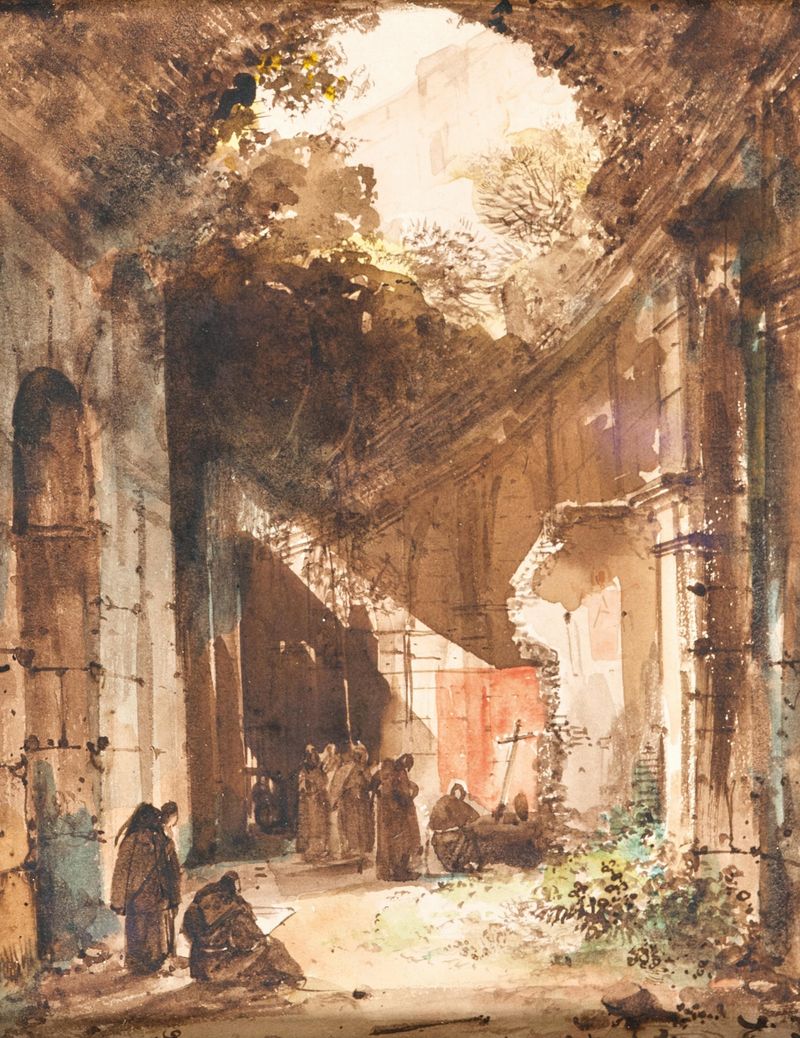
Monks in the Colosseum
François-Marius Granet
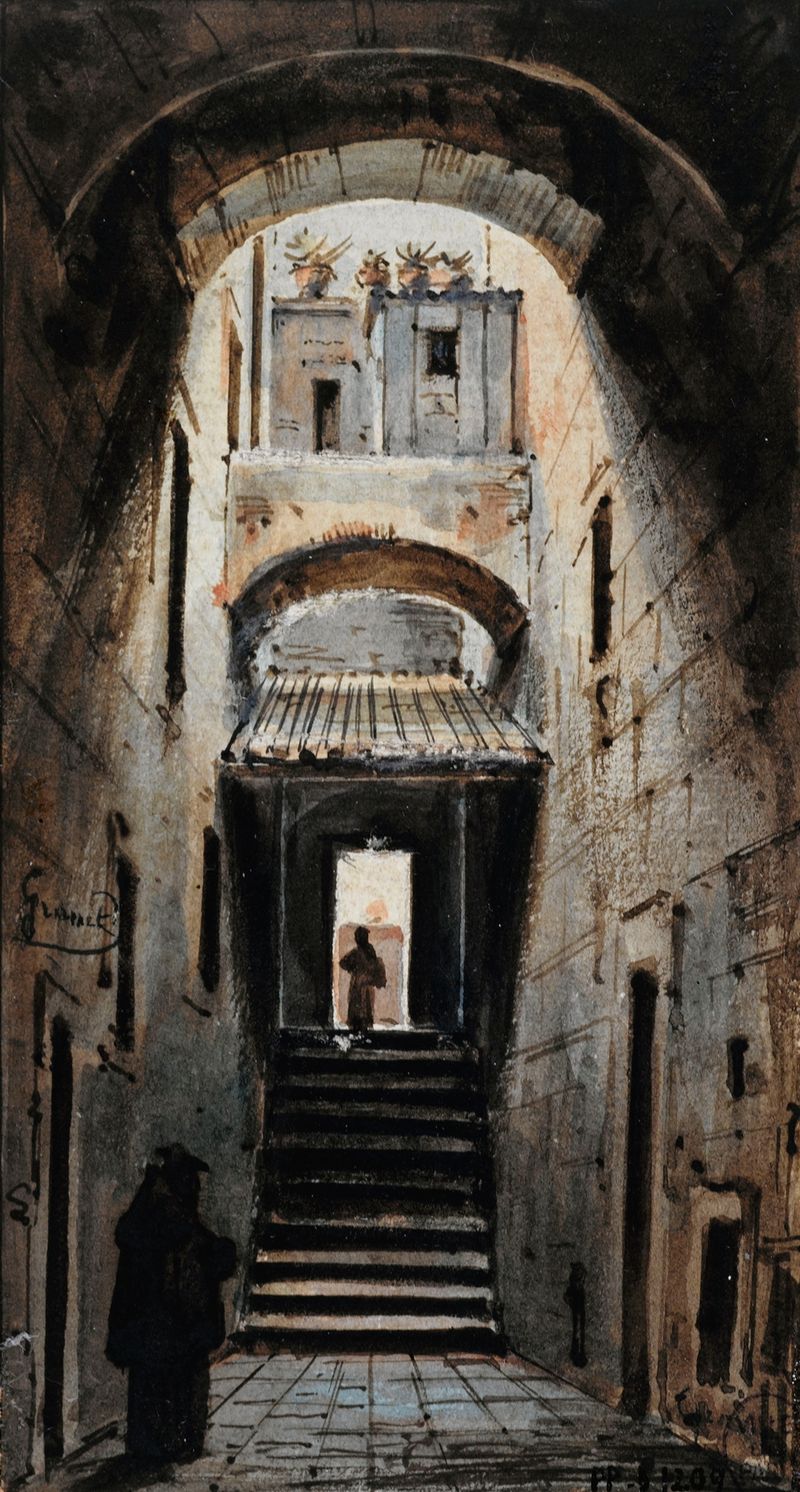
Une rue sous les voûtes
François-Marius Granet
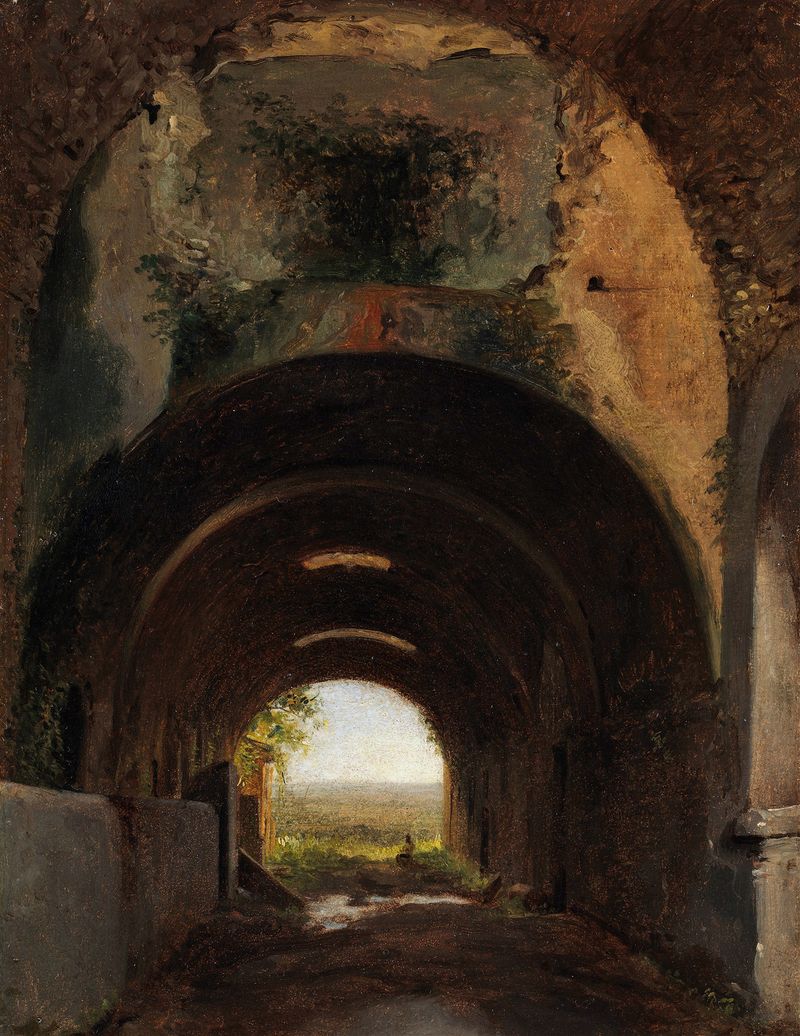
View in the Stables of the Villa of Maecenas, Tivoli
François-Marius Granet
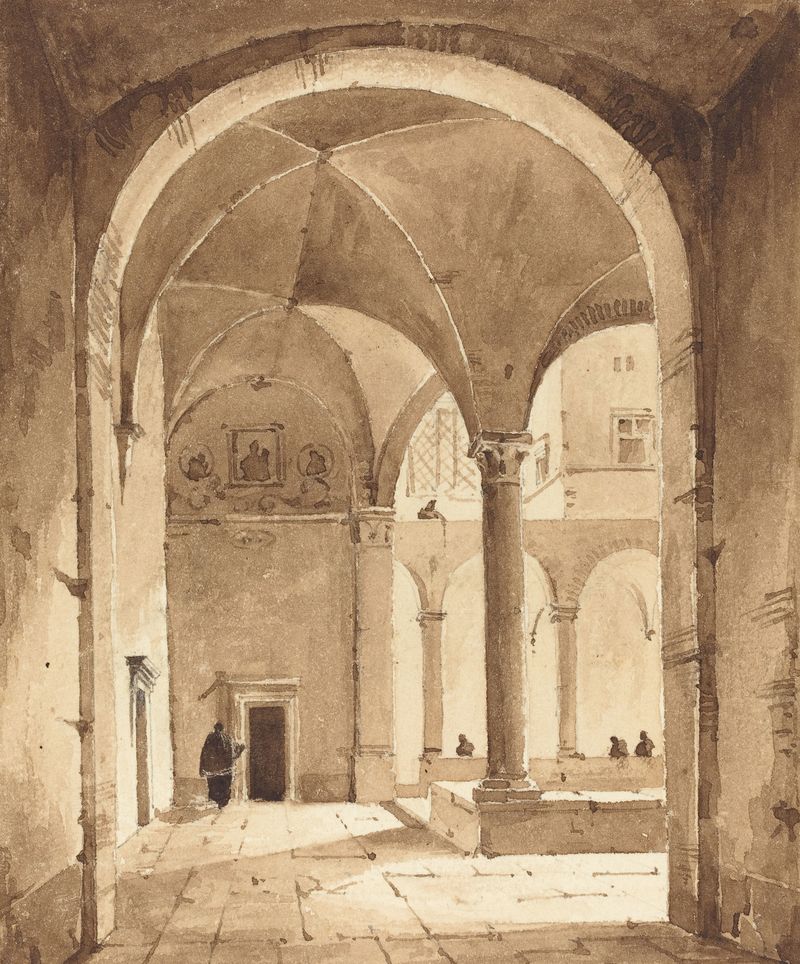
A Cloister
François-Marius Granet
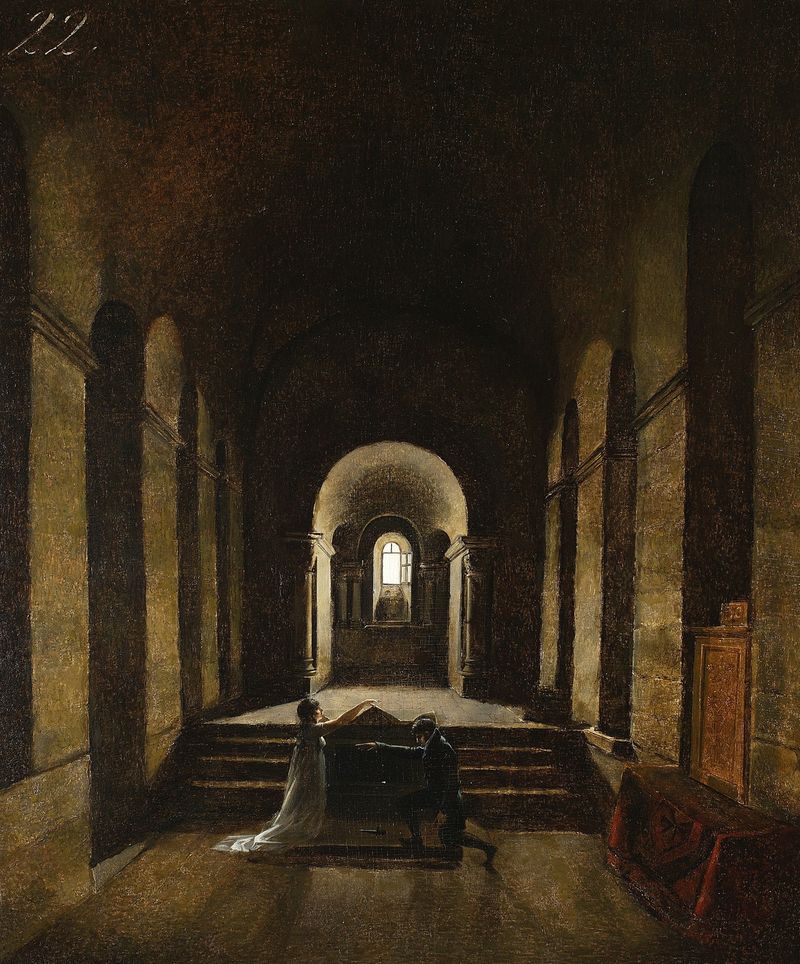
Vow (chapel interior)
François-Marius Granet
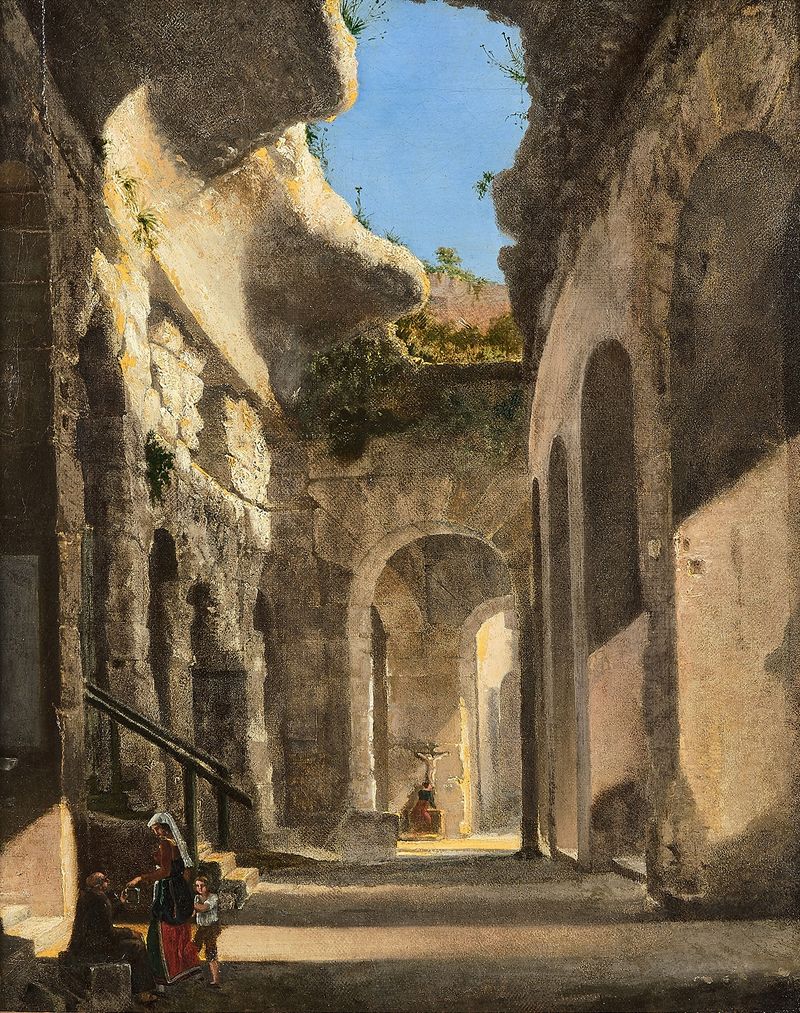
Les ruines du Colisée animées de personnages
François-Marius Granet
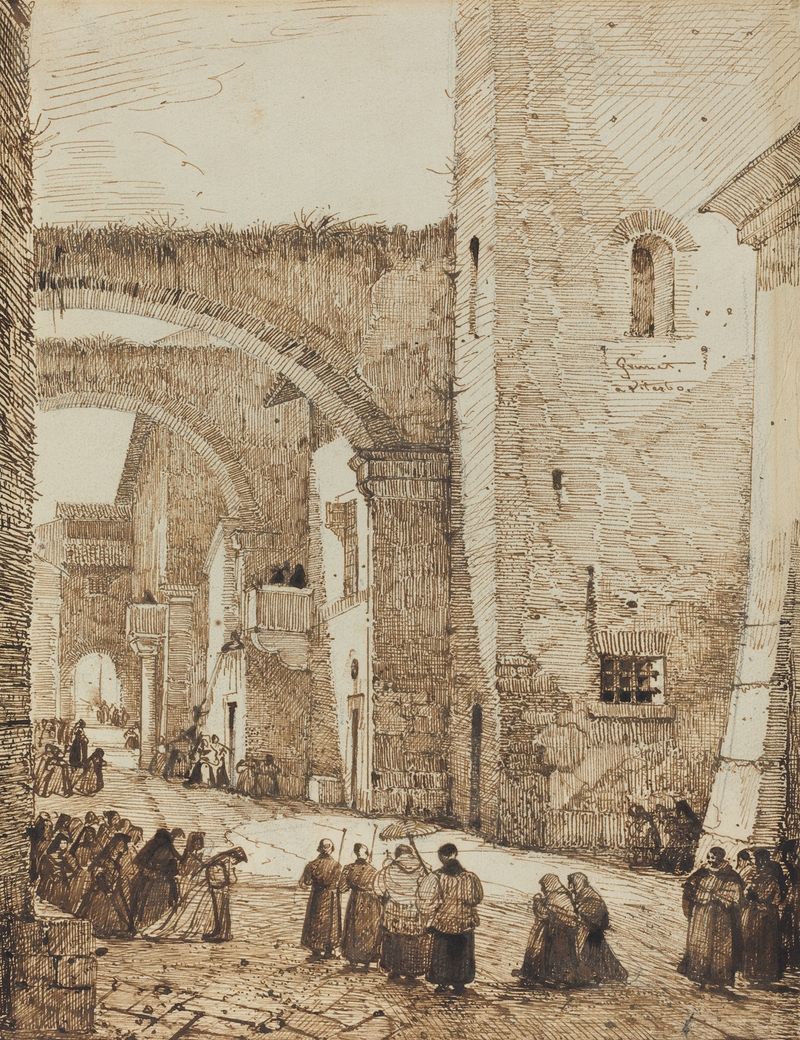
A Priest Processing through a Medieval Street in Viterbo
François-Marius Granet
More Historical Art
Browse all →
The Night Watch Militia Company of District II under the Command of Captain Frans Banninck Cocq
Rembrandt van Rijn
Lincoln Memorial
Henry Bacon
The Third of May 1808
Francisco de Goya

Isaac and Rebecca, Known as ‘The Jewish Bride’
Rembrandt van Rijn
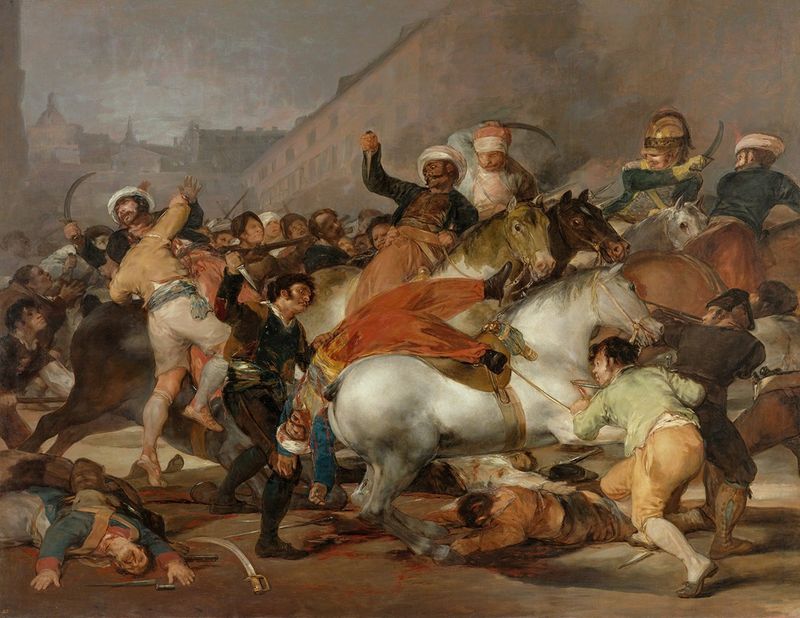
The Charge of the Mamelukes (1814)
Francisco de Goya

De vier ruiters van de apocalyps
Albrecht Dürer