
Port de Fécamp — History & Facts
What if beauty was never meant to be finished? In Port de Fécamp, an enchanting coastal scene emerges, a fleeting moment suspended in time that invites contemplation and awakening. Look to the left at the soft, sun-kissed hues of the sky, where cerulean blends seamlessly into the warm glow of the horizon. This delicate gradient captures the essence of dawn, suggesting the promise of a new day. Notice how the brushstrokes are both spontaneous and deliberate, creating a fluidity that mirrors the gentle lapping of waves against the harbor.
The boats, mere silhouettes against the vibrant backdrop, carry a sense of tranquility, yet their positions hint at stories untold, woven into the fabric of the scene. The contrast between the calm water and the textured rocks along the shore speaks to the duality of nature—its serenity and its raw power. Each stroke echoes a whisper of the past, where the viewer is drawn into a dialogue with the work; the awakening of light and color seems to signify both a literal and metaphorical rebirth. Perhaps it is a reflection on the transient nature of life, each moment a canvas of endless possibilities. In 1906, Marquet painted this artwork while immersed in the Fauvist movement, characterized by bold colors and expressive brushwork.
Living in Paris at the time, he was influenced by a vibrant artistic community that sought to break from realism, pursuing a new vision of beauty. This piece captures his commitment to exploring emotional resonance through landscape, as he imbues the harbor with a vivacity that transcends both time and place.
More Artworks by Albert Marquet
Browse all →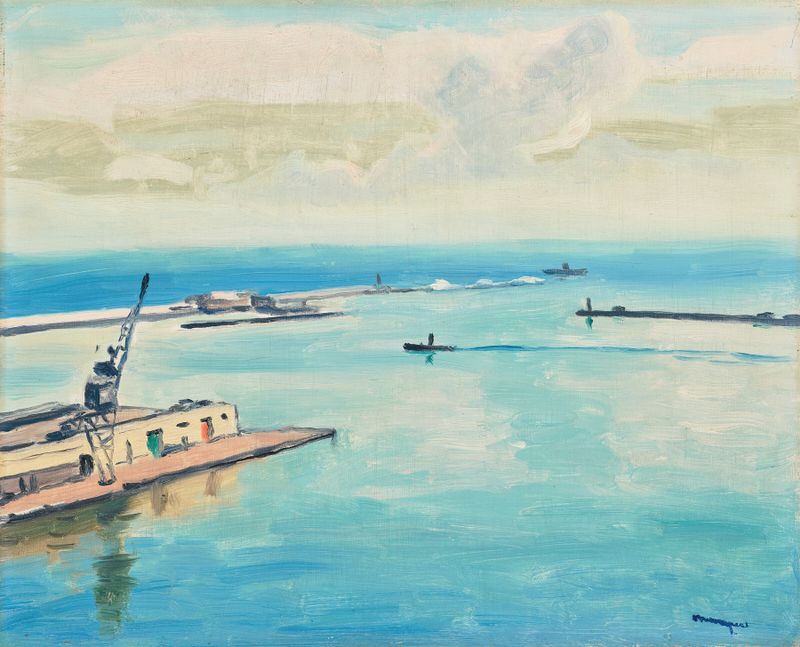
Le Port d’Alger
Albert Marquet
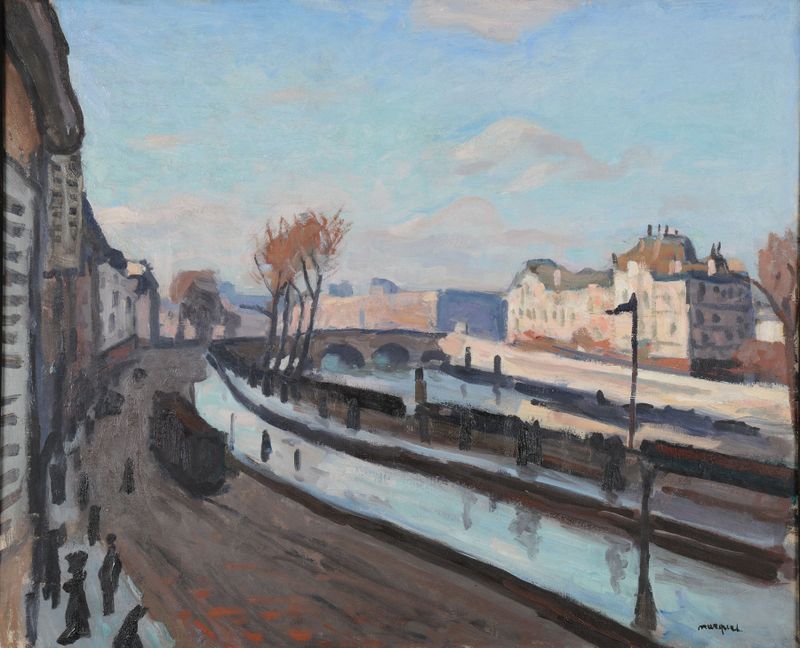
Le quai des Grands Augustins
Albert Marquet
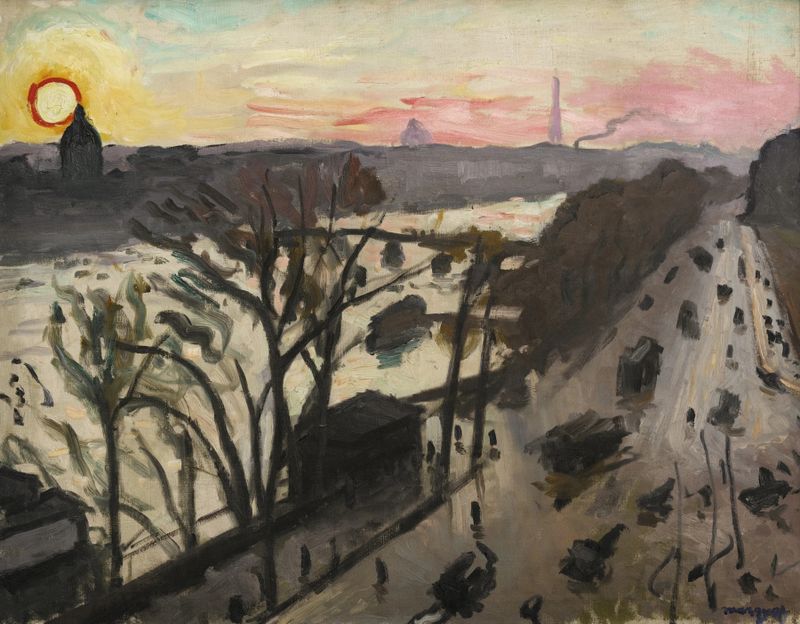
Paris, quai du Louvre, soleil d’hiver
Albert Marquet
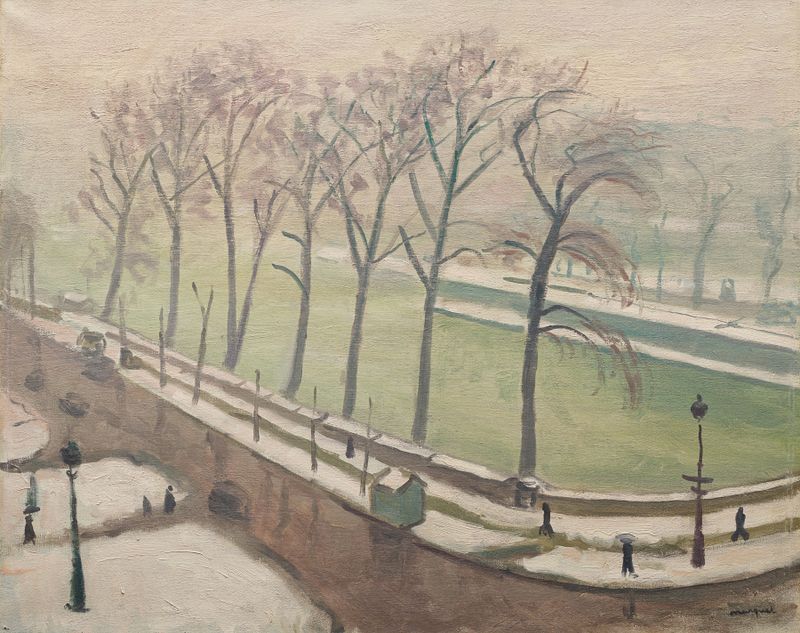
Pont-Neuf sous la neige
Albert Marquet
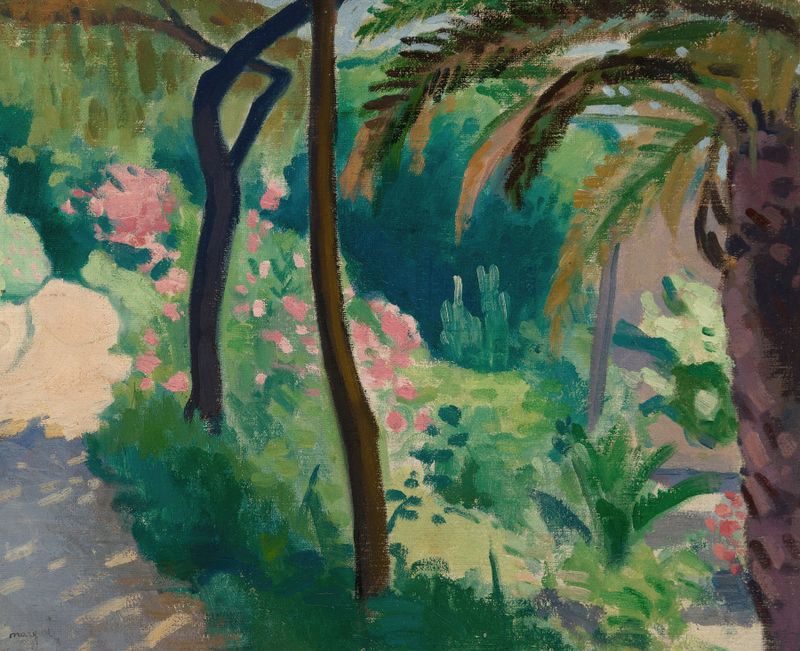
Le jardin à l’Estaque
Albert Marquet
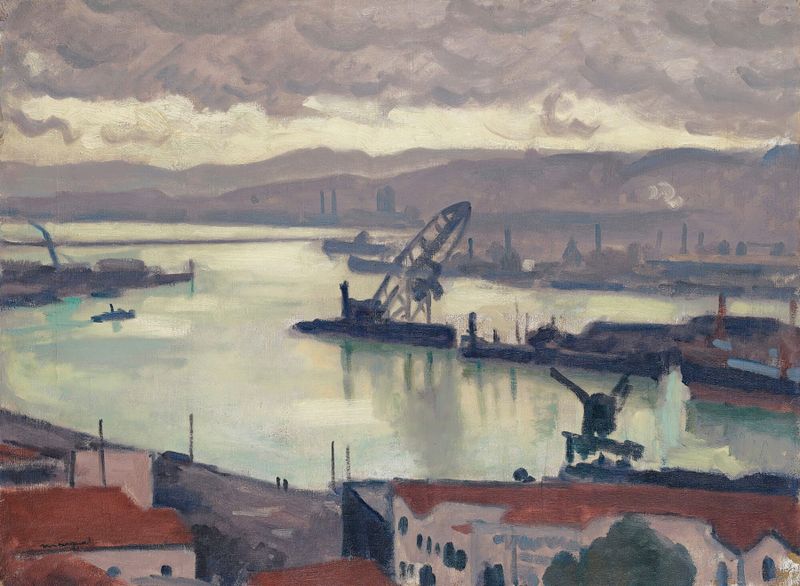
Alger, Temps Gris
Albert Marquet
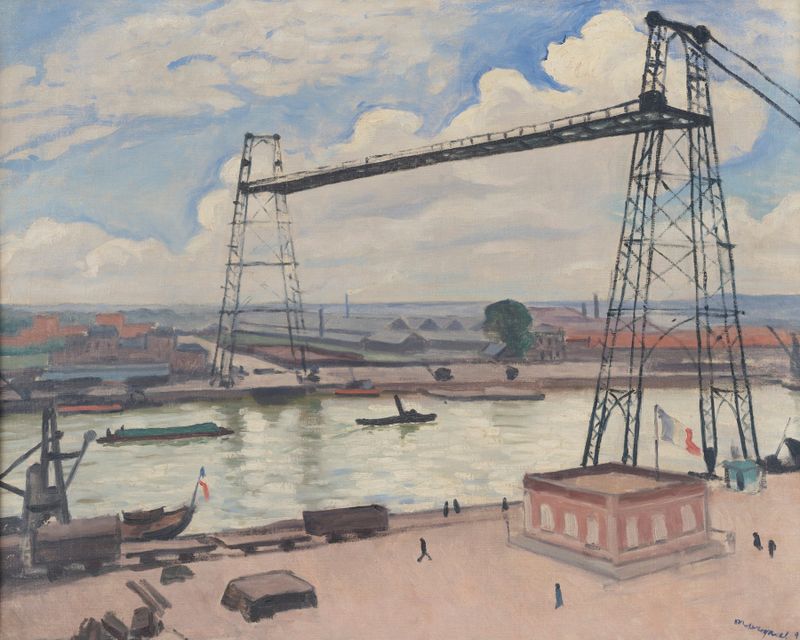
Rouen, le pont transbordeur
Albert Marquet
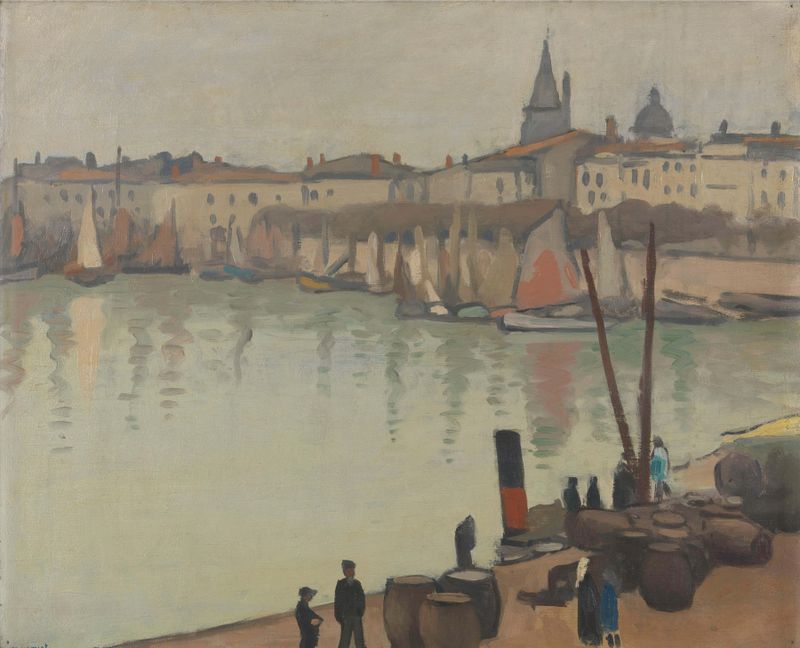
Port of La Rochelle
Albert Marquet

Berge de la Seine à Méricourt
Albert Marquet
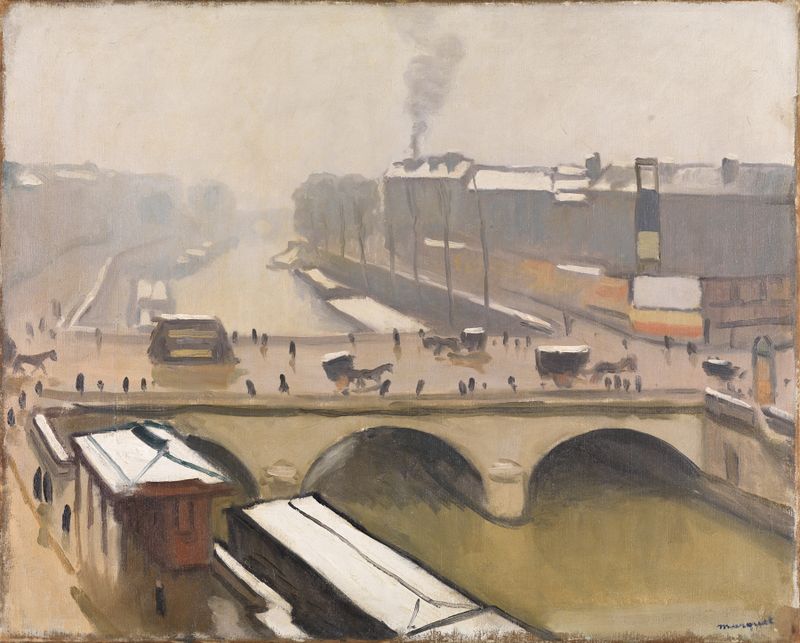
View of the Pont Saint-Michel in Paris
Albert Marquet





