
Port Ruysdael — History & Facts
Could a single brushstroke hold eternity? In the delicate interplay of color and form, Port Ruysdael beckons the viewer to explore the boundless depths of emotion woven into a seemingly tranquil seascape. The painting invites contemplation, stirring questions about existence and the ephemeral nature of life itself. Focus on the gentle sweep of the horizon where sky meets water, a hazy blend of blues and grays. The light dances across the surface, captured through Turner's masterful brushwork, creating a sense of movement that evokes the eternal ebb and flow of the tide.
Notice the subtle gradations, the way shadows are woven with glimmers of sunlight, imparting a sense of both calm and tension. The silhouettes of distant vessels stand as reflections of humanity, silently navigating the vastness around them. In the composition, contrasts abound. The dynamic interplay between light and shadow suggests the transient nature of human endeavors against the backdrop of an indifferent universe.
The void of the open sea introduces feelings of isolation, while the soft hues evoke a bittersweet nostalgia, reminding us that within the scope of beauty lies an inherent fragility. Each stroke seems to whisper of the vastness of time, capturing a moment that feels both fleeting and infinite. During the years of 1826 to 1827, Turner was immersed in a period of profound creative exploration, deeply influenced by the rise of Romanticism and his fascination with the sublime. He painted Port Ruysdael in his studio in London, reflecting his admiration for Dutch maritime scenes and the interplay of light over water.
At this time, he was also grappling with personal loss, which informed the emotional depth of his work and solidified his reputation as one of the foremost landscape painters of his era.
More Artworks by Joseph Mallord William Turner
Browse all →
Dort or Dordrecht- The Dort Packet-Boat from Rotterdam Becalmed
Joseph Mallord William Turner
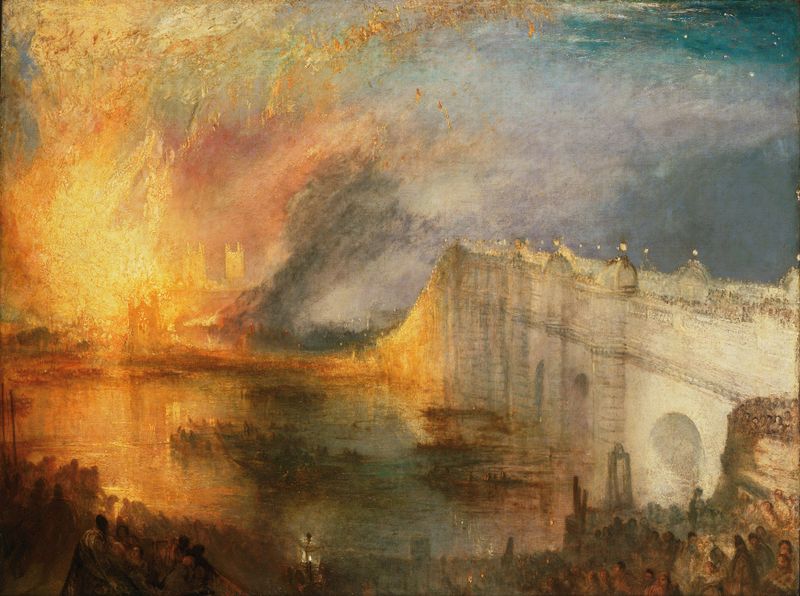
The Burning of the Houses of Lords and Commons, October 16, 1834
Joseph Mallord William Turner
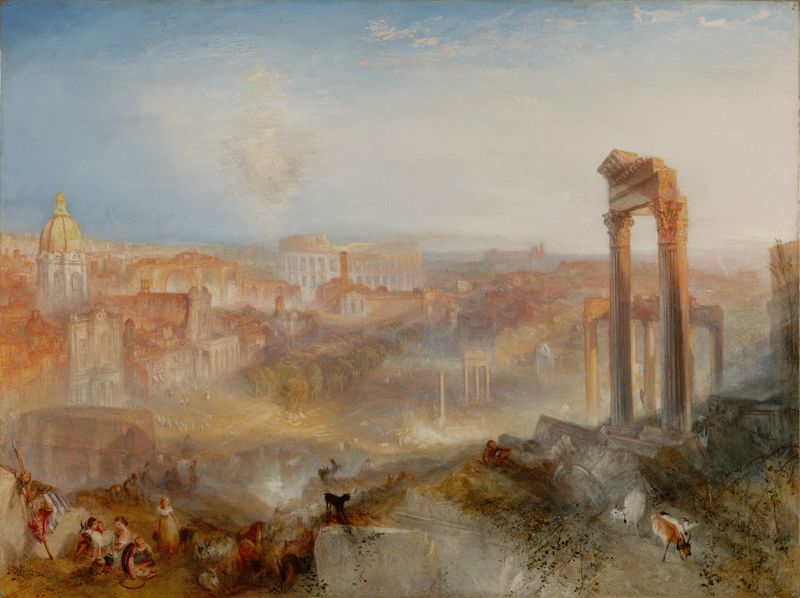
Modern Rome – Campo Vaccino
Joseph Mallord William Turner
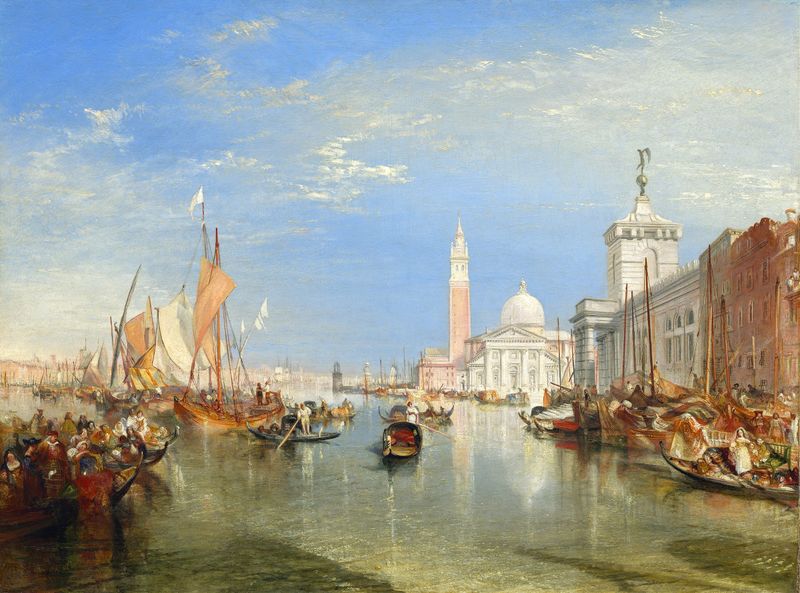
Venice – The Dogana and San Giorgio Maggiore
Joseph Mallord William Turner

The Burning of the Houses of Lords and Commons, 16 October 1834
Joseph Mallord William Turner
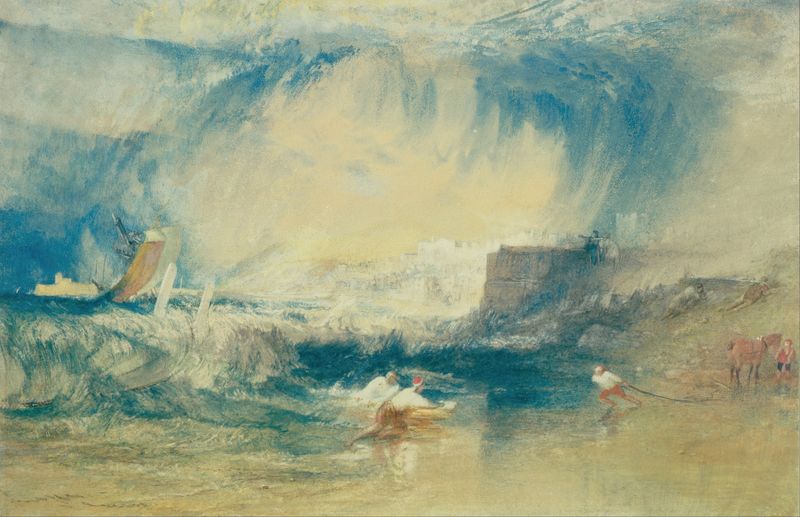
Lyme Regis, Dorsetshire, England
Joseph Mallord William Turner
The Dogana and Santa Maria della Salute, Venice
Joseph Mallord William Turner
Venice, from the Porch of Madonna della Salute
Joseph Mallord William Turner
Scarborough town and castle; morning; boys catching crabs
Joseph Mallord William Turner
High Street, Edinburgh
Joseph Mallord William Turner




