
Porte Maillot ; effet de neige, la nuit — History & Facts
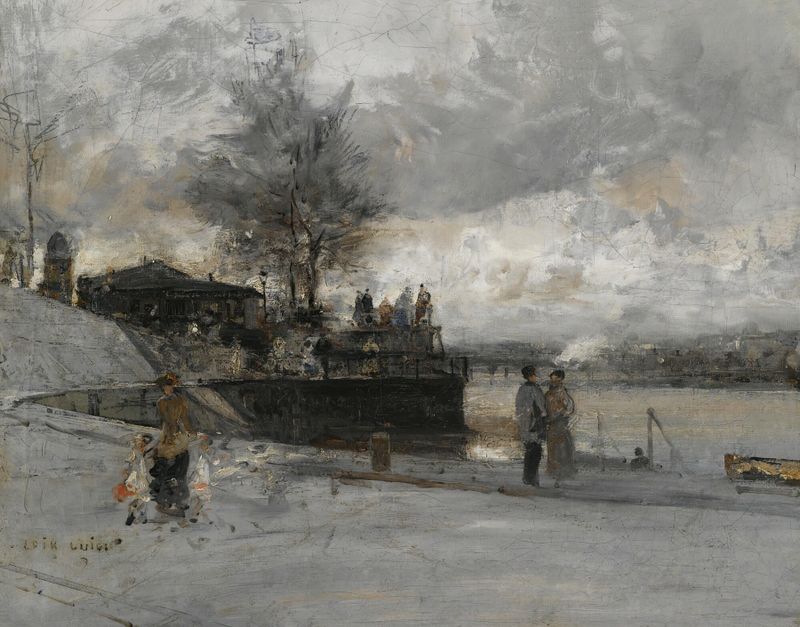
Could beauty survive in a century of chaos? In Porte Maillot; effet de neige, la nuit, an enchanting transformation unfolds, hinting at resilience amidst the turmoil of life. Look to the center of the canvas where the softly glowing lampposts spill warm, golden light onto a blanket of pristine white snow, creating a stark contrast against the deep blue of the night sky. The intricate details of the snowflakes, each unique and delicately rendered, invite the viewer into a winter wonderland. The gentle brushstrokes evoke movement, as if the falling snow is whispering secrets, while the shadows cast by the trees frame the scene, adding a layer of depth and intrigue. Amidst this serene landscape, the stillness of the night carries an underlying tension.
The quiet beauty of the snow-covered street captures a fleeting moment, where nature’s purity coexists with the encroaching shadows of modernity. The bustling life of Paris is hinted at in the distant silhouettes and muted colors, emphasizing a contrast between the tranquility of the scene and the chaos of the city that operates beyond its edges. Luigi Loir painted this piece in 1900, during a period of great artistic transformation in France, as the Impressionist movement was giving way to a new era of experimentation. Loir, embracing the effects of light and atmosphere, sought to capture fleeting moments of beauty that resonated with both the optimism and uncertainty of the time.
This work reflects not just the snowy nights of Paris but the artist’s own desire to find solace in a rapidly changing world.
More Artworks by Luigi Loir
Browse all →
Marché aux fleurs sous la neige
Luigi Loir

Le Louvre, Paris
Luigi Loir
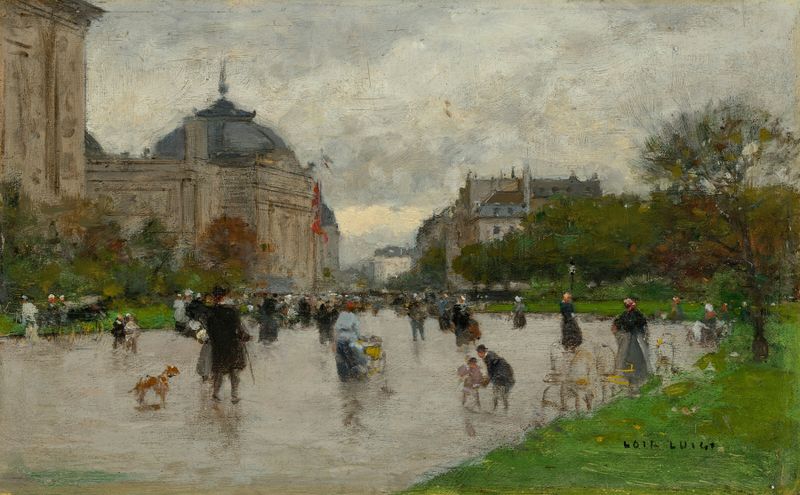
The Champs Élysées, Paris
Luigi Loir
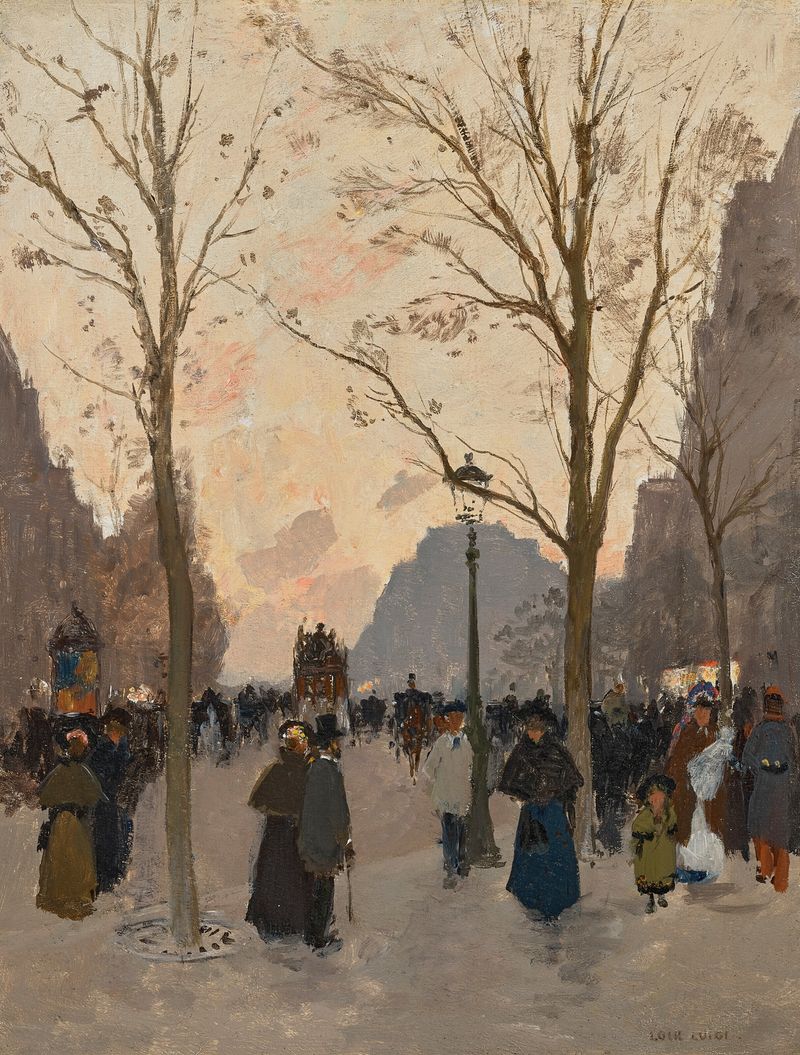
La Place de la République, Paris
Luigi Loir

Le boulevard du Palais, vu de la place Saint-Michel
Luigi Loir

La fête foraine
Luigi Loir
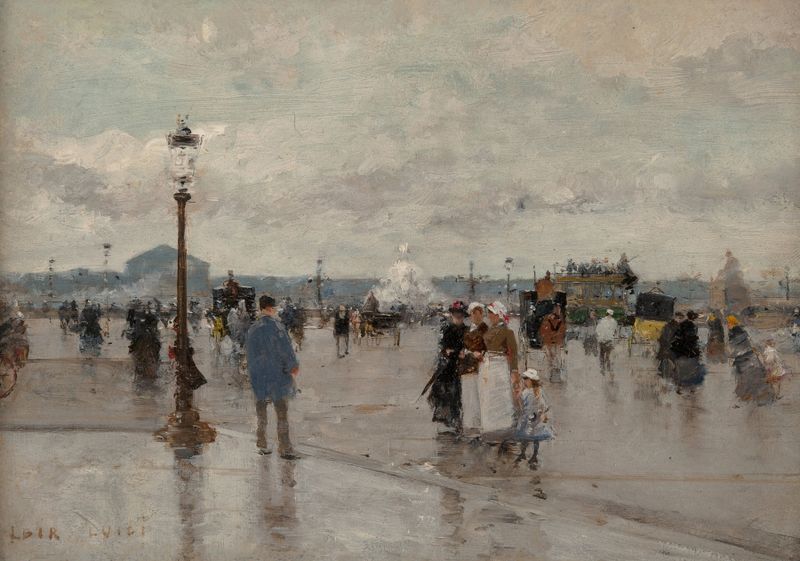
La sortie de Paris, Porte d’Asnières
Luigi Loir
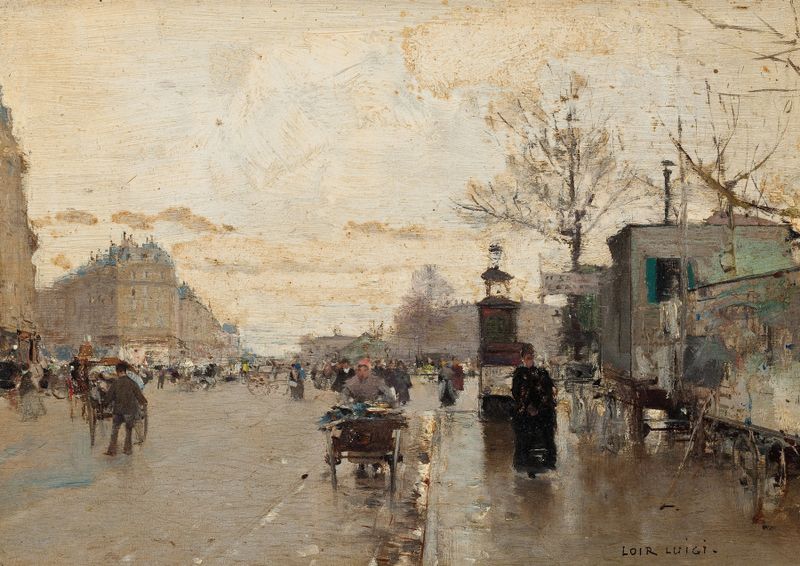
Parisian Street Scene
Luigi Loir

Les Quais De La Seine, 1900
Luigi Loir
Quai Au Bord De La Seine, Paris
Luigi Loir





