
Portrait of a Highlander — History & Facts
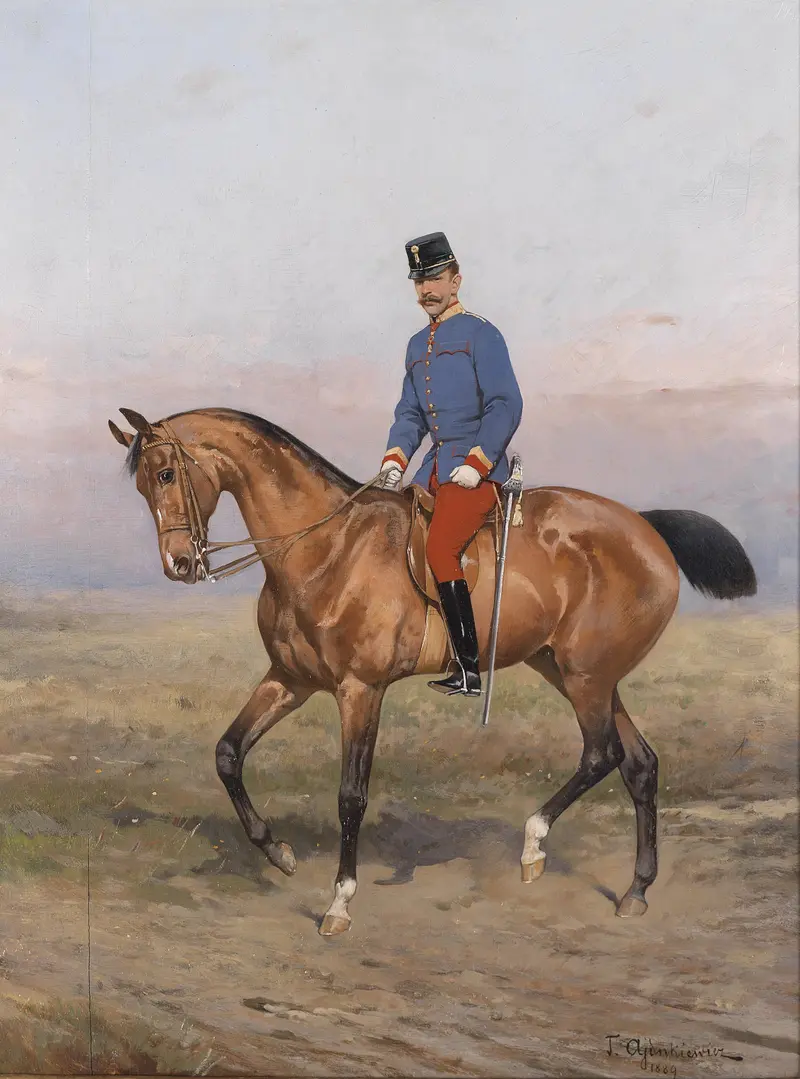
No one knows for certain who the Highlander was, but Portrait of a Highlander by Tadeusz Ajdukiewicz has long intrigued viewers and scholars alike for its enigmatic subject and the mystery surrounding its creation. Unlike many of his celebrated equestrian portraits of European nobility, this work stands apart for its focus on a solitary, anonymous figure from the Scottish Highlands—a rare subject for a Polish painter working in the late nineteenth century. Some speculate that the painting was inspired by Ajdukiewicz’s travels in Western Europe, where fascination with Scottish culture was at its height, fueled by the novels of Walter Scott and the romantic vision of the Highlands. The Highlander stands, proud and solitary, dressed in traditional tartan and armed with a dirk, his gaze fixed somewhere beyond the canvas.
The play of light across his face and the careful rendering of his garments suggest both dignity and resilience, while the muted, misty background evokes the rugged Scottish landscape. The artist’s attention to detail—the glint of metal on the sporran, the intricate weave of the plaid—signals respect for the sitter’s heritage. Unlike Sir Henry Raeburn’s famous The Skating Minister, which places its Scottish subject in motion and in society, Ajdukiewicz presents his Highlander as an emblem of stoic isolation, inviting viewers to ponder both his story and his silence. The precise origins of Portrait of a Highlander remain uncertain: neither the date of its creation nor the circumstances of its commission are firmly established.
It is likely the work was painted during Ajdukiewicz’s years abroad, when he was known to accept commissions from a cosmopolitan clientele. Over time, the painting has passed through private hands and, lacking a clear provenance, has sometimes been misattributed or overlooked in surveys of Ajdukiewicz’s oeuvre. Today, it is valued as a rare testament to the artist’s curiosity about cultures beyond his own, and as a window onto the romantic imagination of nineteenth-century Europe.
More Artworks by Tadeusz Ajdukiewicz
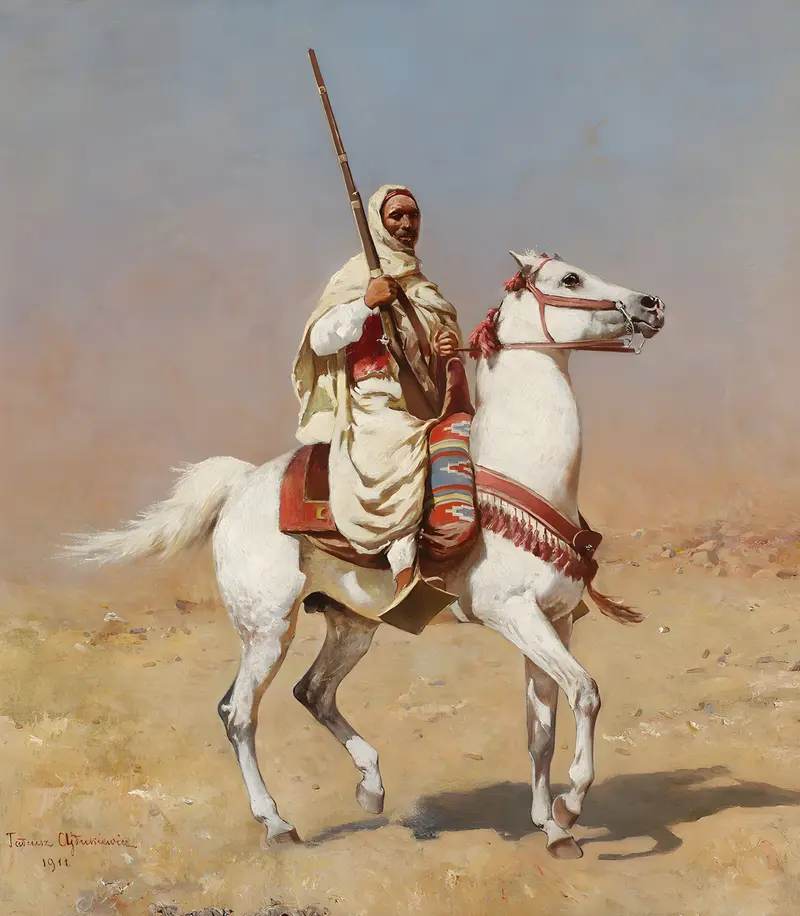
Arab on a grey horse
Tadeusz Ajdukiewicz
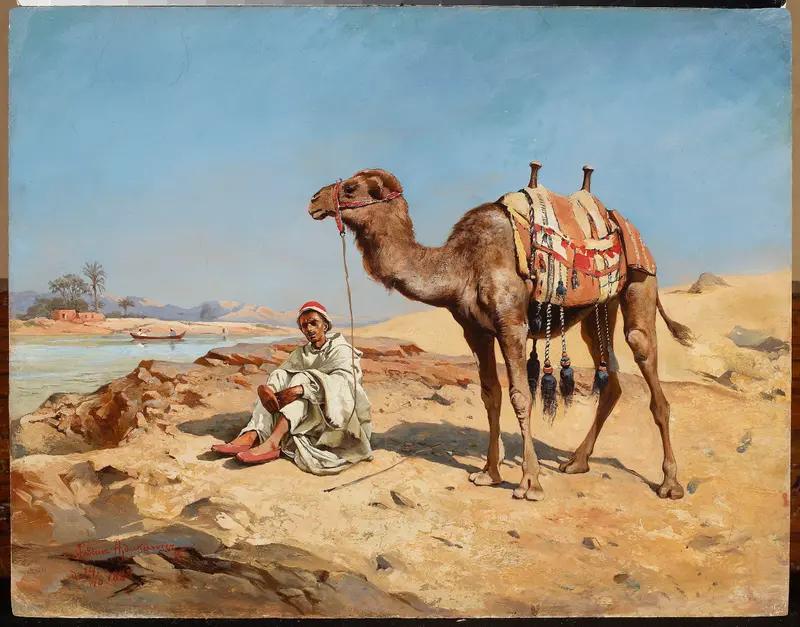
Arab in the desert
Tadeusz Ajdukiewicz
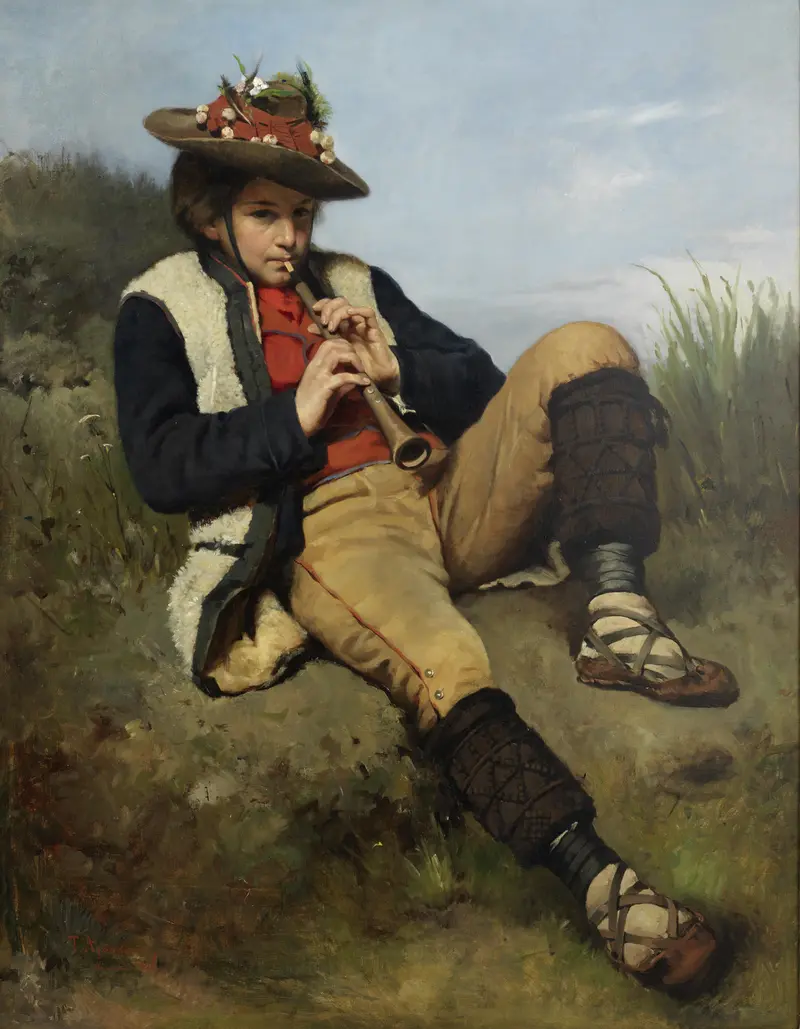
The shepherd boy
Tadeusz Ajdukiewicz

A Parforce Rider in the Forest
Tadeusz Ajdukiewicz
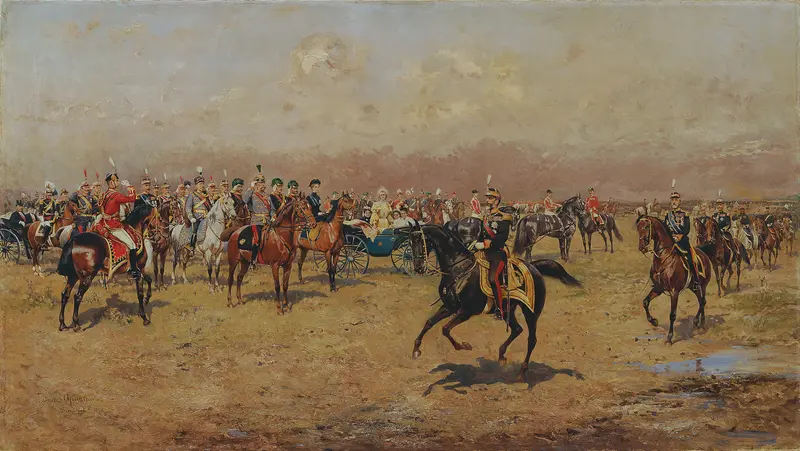
Militärparade vor Kaiser Franz Joseph I.
Tadeusz Ajdukiewicz
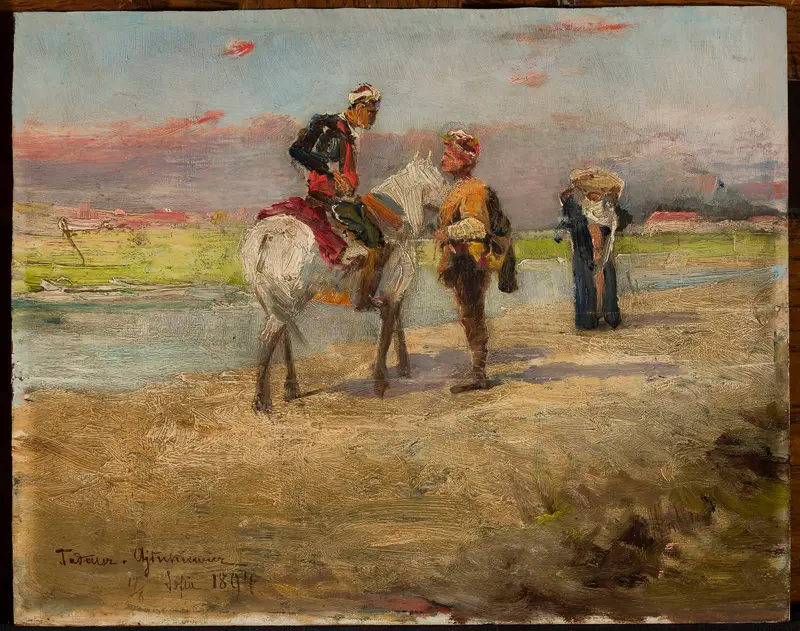
Eastern scene against a landscape
Tadeusz Ajdukiewicz
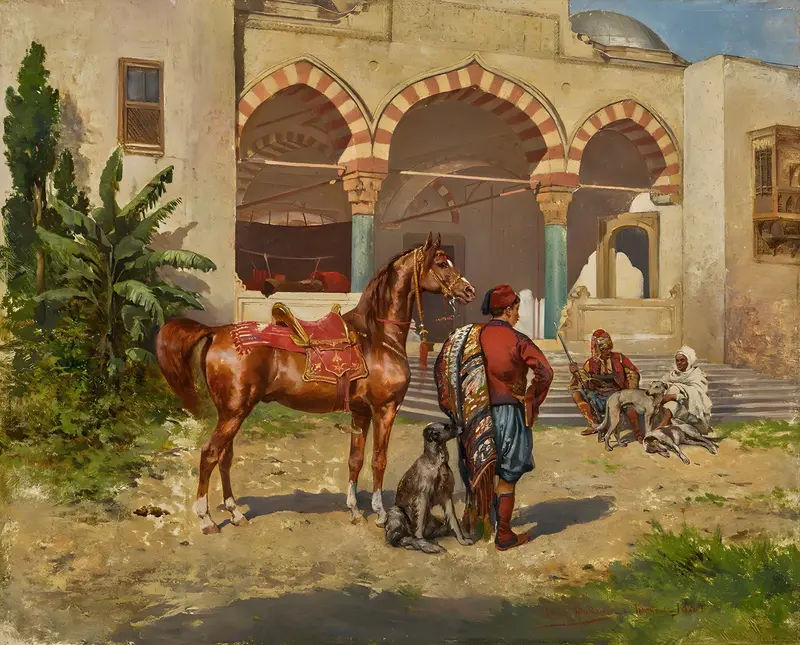
A turkish courtyard
Tadeusz Ajdukiewicz
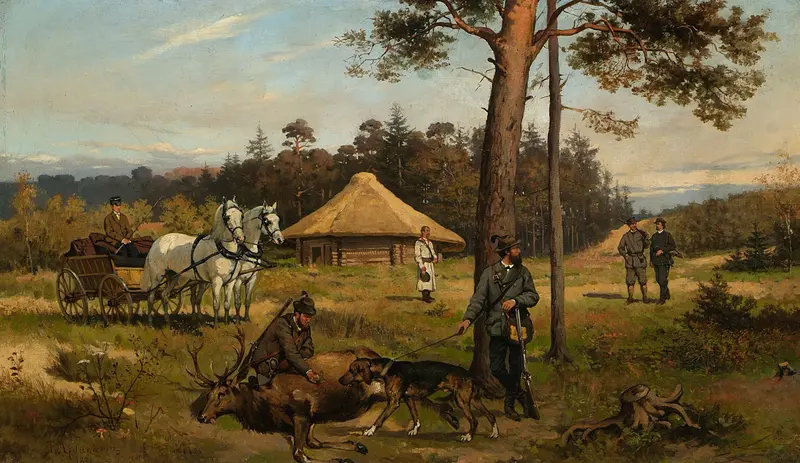
After hunting for a deer
Tadeusz Ajdukiewicz
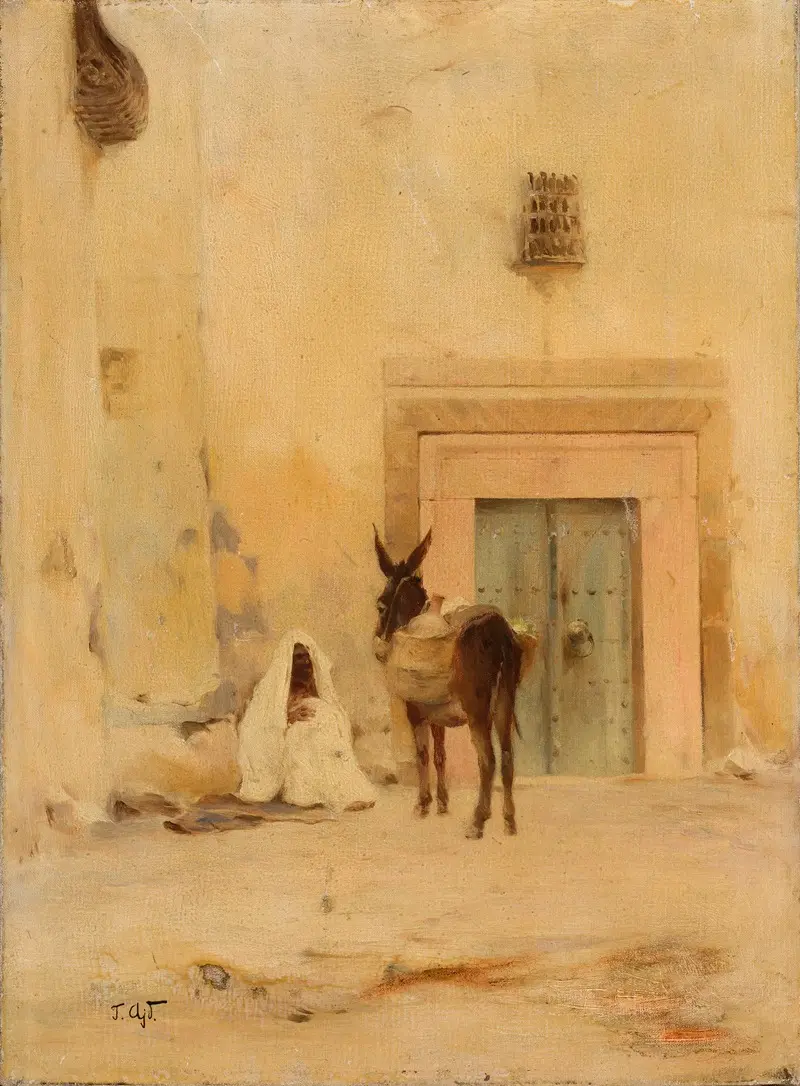
Arab and a donkey at the wall of a house
Tadeusz Ajdukiewicz
Kronprinz Rudolf zu Pferd
Tadeusz Ajdukiewicz





