Portrait of a man — History & Facts
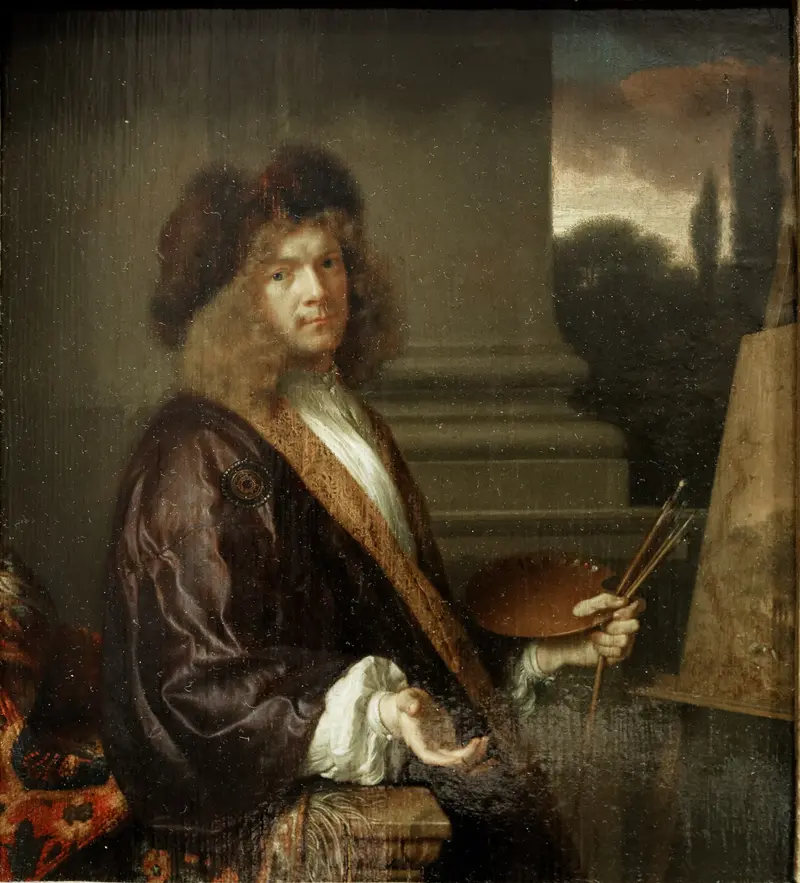
What first draws the eye in Portrait of a man by Ary de Vois is the sitter’s direct, unflinching gaze—a look that seems to weigh the viewer as much as he is being weighed himself. The half-length figure is anchored by a hand resting on his lap, fingers relaxed but poised, suggesting a moment of quiet self-possession. Light falls across his face and hand, pulling these features forward from the enveloping darkness of his attire and the shadowed interior, while a subtle landscape glows in the background, hinting at a world beyond the balustrade.
The crisp white collar, with its decorative tassels, frames the face and signals a certain status, but it is the interplay of light and shadow that gives the portrait its gravity, inviting us to linger over the sitter’s expression and wonder at his story. Painted between 1660 and 1680, this work belongs to a period when portraiture in the Dutch Republic was both a statement of personal achievement and a record for posterity. The sober costume and restrained palette speak to the values of the era: dignity, modesty, and a quiet confidence. Portraits such as this were often commissioned by prosperous citizens—merchants, scholars, or officials—eager to assert their place in a rapidly changing society.
Today, Portrait of a man resides in the Rijksmuseum’s collection, a reminder that while history has kept few traces of this sitter’s name or life, the artist’s brush has preserved his presence for us to meet, centuries later, eye to eye.